Was Akaka Falls in Jurassic Park? A Guide Fact-Checks the Rumor
Guests ask me this at the lookout every week. The famous helicopter waterfall is on Kauai, and here is the honest, sourced story of the mix-up.
 By Kekoa Kalani, Akaka Falls tour guide and island nature specialist
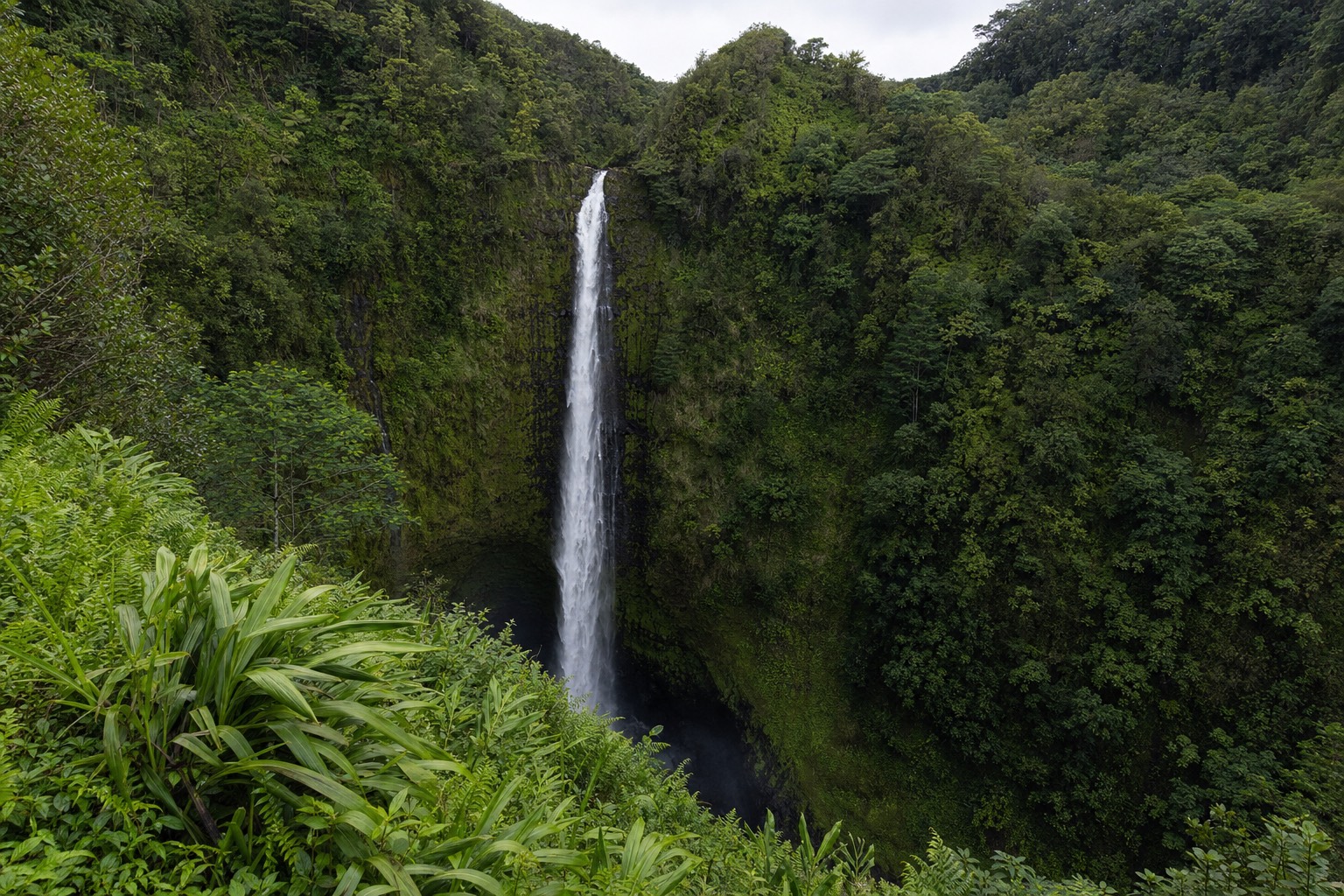
A man in a dinosaur T-shirt once stood next to me at the ʻAkaka Falls lookout, spread his arms, and hummed the John Williams theme. His family filmed it. I did not have the heart to interrupt, and honestly the scene in front of us deserved the soundtrack. But since people search this exact question before their trip, and since I get asked it at the railing more than almost anything except "can we swim," let me give you the answer I give guests, with the receipts.
No. ʻAkaka Falls is not the Jurassic Park waterfall. The waterfall you are picturing is on a different island entirely.
The waterfall in the movie is on Kauai
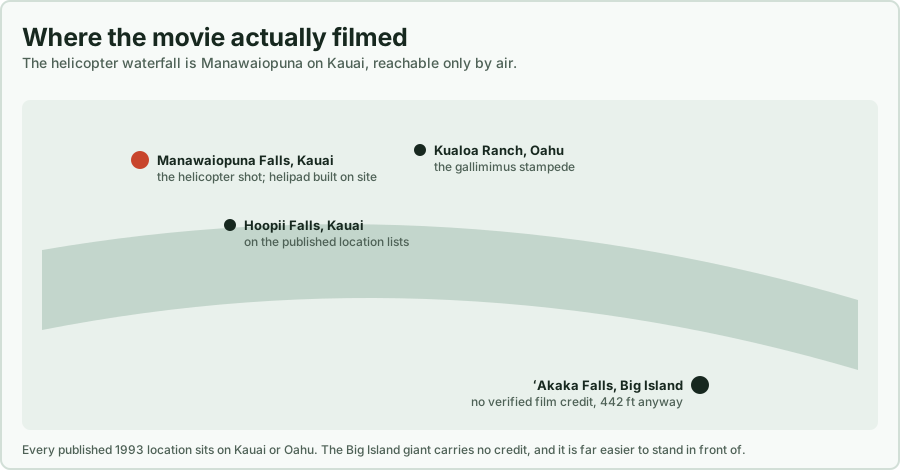
The shot everyone remembers, the helicopter dropping past a huge jungle waterfall on the way into the park, was filmed at Manawaiopuna Falls in Kauai's Hanapepe Valley. Film-location records show the production went as far as building its helipad there, and the falls have carried the nickname "Jurassic Falls" ever since. The full location list for the 1993 film reads like a Kauai road trip: the Na Pali Coast, Limahuli Garden, Hoopii Falls on Kapaa Stream, the Mount Waialeale area for the park gates, Allerton Garden, Olokele Valley. The famous gallimimus stampede came from Kualoa Ranch on Oahu.
What that list does not contain is a single Big Island location. Not ʻAkaka Falls, not Hilo, not the Hamakua Coast. I have looked, because I wanted a better answer for the man in the T-shirt.
Here is the sourced version of who actually appeared on screen.
| Waterfall | Island | Screen credit | Status of the claim |
|---|---|---|---|
| Manawaiopuna Falls | Kauai | Jurassic Park (1993), the helicopter arrival | Documented; the helipad was built on site |
| Hoopii Falls | Kauai | Jurassic Park (1993) | On the film's published location lists |
| Wailua Falls | Kauai | Fantasy Island opening credits | Confirmed on the state's official tourism page |
| ʻAkaka Falls | Big Island | None I can verify | Listed by the state film office as an available site, no named production |
That last row is the interesting one. The Hawaii Film Office keeps a register of open, accessible filming sites on the Big Island, and ʻAkaka Falls State Park is on it. So the park is film-ready and always has been. It just does not carry the credit people assume it does, and the Wikipedia article on the park mentions no film at all. You will find blog posts and social captions claiming otherwise. None of the ones I checked pointed to a primary source, so I am not repeating them.
Why the mix-up happens, and why it is understandable
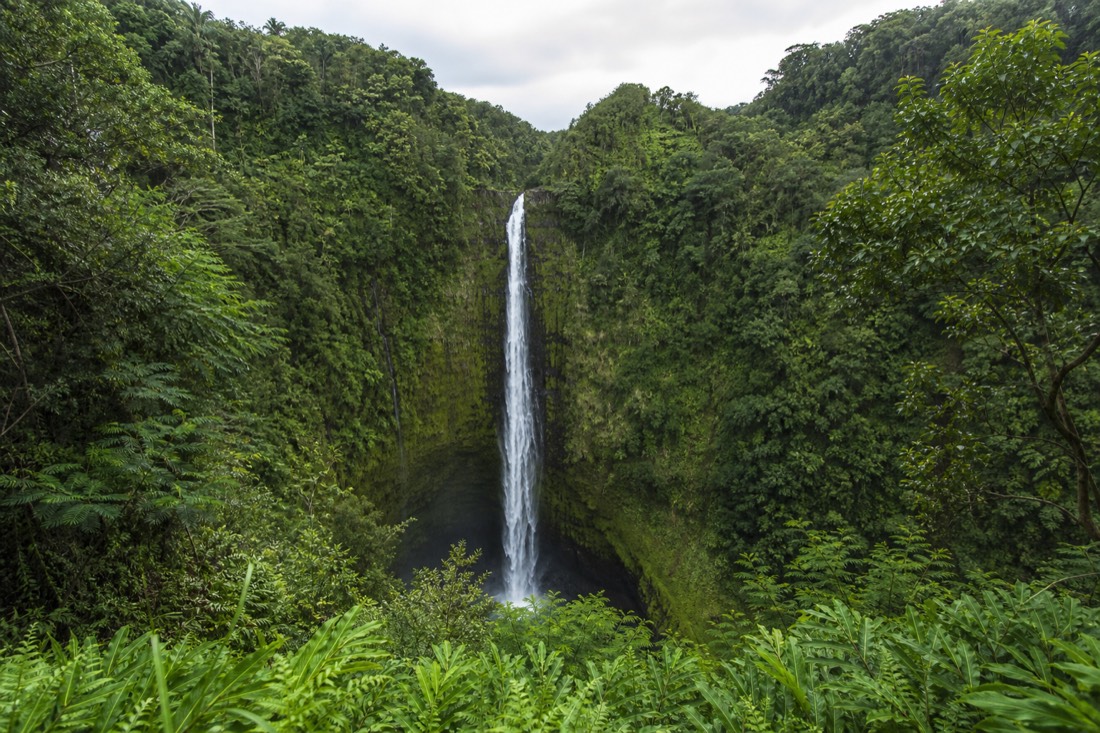
Stand at the lookout and you see a 442-foot column of white water dropping into a green stream-cut gorge with vines down the walls. That is, almost exactly, the image the movie planted in everyone's head in 1993. Your brain does the matching for you. It does not help that both falls are tall, both are surrounded by dense Hawaiian jungle, and both get photographed from a high angle that hides any road or railing.
There is a second reason the rumor survives, and it is more boring than a conspiracy. Stock-photo captions get lazy. A tall Hawaiian waterfall gets filed under "Jurassic," a travel account reposts it, and six years later a family arrives at Honomū certain they are about to see a movie set. I have stopped correcting people at the railing unless they ask, because the falls do the arguing themselves within about thirty seconds.
The differences only show up when you put the two side by side.
| Manawaiopuna Falls, Kauai | ʻAkaka Falls, Big Island | |
|---|---|---|
| How you reach it | Helicopter only; it sits on private land in Hanapepe Valley | Drive to the end of Highway 220 and walk a 0.4-mile paved loop |
| Cost to see it | A helicopter landing tour, booked with the one operator permitted to land | $5 per person plus $10 parking for non-residents, credit card only |
| Time required | Roughly half a day with transfers | Under an hour, gate open 8:30 to 5 daily |
| Crowds | Whoever fits in the aircraft | A steady flow of visitors at the fenced lookout |
| Film credit | Jurassic Park, 1993 | None verified |
I would argue the Big Island got the better deal. One waterfall is a movie prop you need an aircraft to visit. The other is open every day of the year for the price of a plate lunch, and it is roughly 40 feet taller than Manawaiopuna by the commonly cited figures, though I will only stand firmly behind the 442 feet the state publishes for ʻAkaka.
What the movie version promises vs what you actually get
Guests sometimes arrive braced for disappointment once I have done my fact-check, and then the falls fix it fast. The honest comparison looks like this.
| The movie-fed expectation | The reality at ʻAkaka |
|---|---|
| You descend on it dramatically from the air | You come down wet concrete steps under dripping canopy, which is its own kind of entrance |
| A remote, untouched valley | A state park with a fee machine, a fence, and a railing, and the gorge itself is closed and wild beyond it |
| One iconic waterfall | Two on the same loop: ʻAkaka free-falling 442 feet and Kahuna cascading through the trees nearby |
| Dinosaurs | Roosters in the Honomū parking lots, which at dawn are nearly as loud |
The mist, the scale, the sound bouncing off the gorge walls, none of that needs a franchise attached. If you want the falls at their most cinematic, come early; I wrote up what the first hour after opening is like because that empty-lookout version is the closest real life gets to an establishing shot. And if you are staying on the Kona side, the practical obstacle is the 90-minute crossing each way, which is exactly the problem the waterfall day that starts on the resort coast exists to take off your hands.
Can you get into the water like the film crews did?
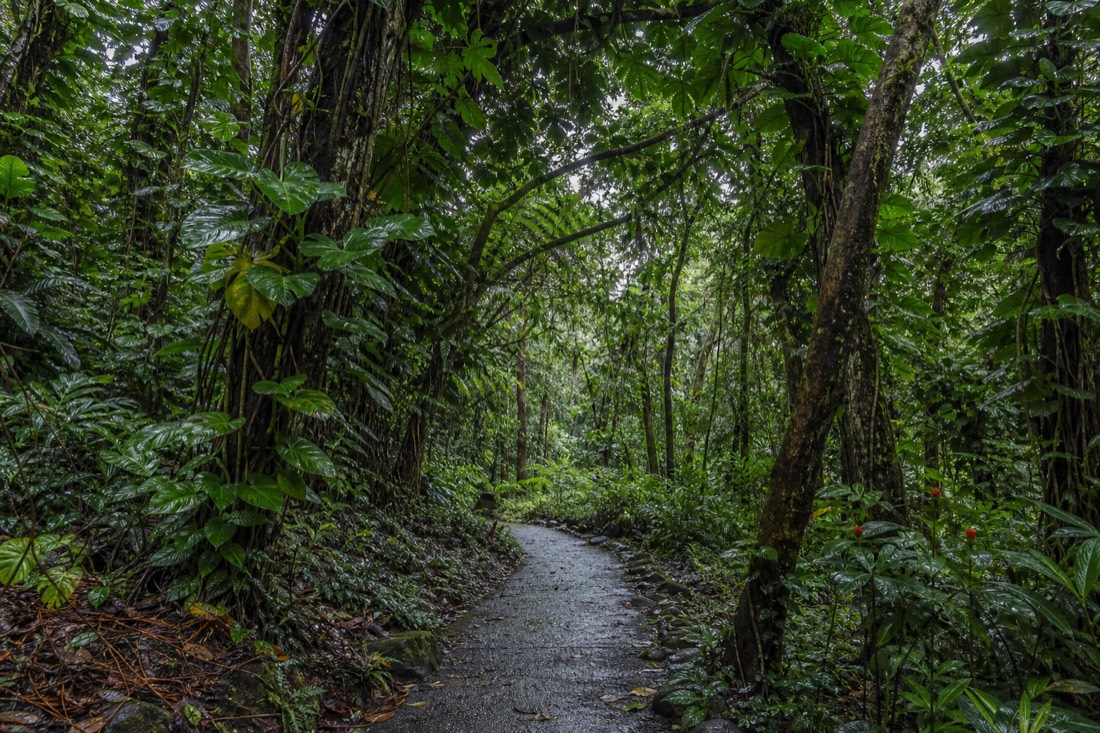
Not at ʻAkaka Falls. The loop is a fenced viewing trail above a stream-eroded gorge, and the state offers no water access at any point on it. The swimming-under-a-waterfall version of Hawaii is real, but it happens on other streams, usually with a guide and a permission arrangement you do not have on your own.
This is the second question I get at the railing, right behind the dinosaur one, and the answer disappoints people until they hear the alternative. The gorge below the falls is genuinely dangerous: flash-prone, steep, and closed for good reasons. I have watched visitors eye the fence and I always say the same thing, which is that the swim you are imagining exists about fifteen minutes away on a completely different piece of water. The full picture is in can you swim at ʻAkaka Falls.
What actually delivers the movie fantasy is a guided waterfall hike where the swimming is part of the itinerary and someone who knows the stream is reading the weather for you. That is a different outing from a lookout stop, it takes half a day, and it puts you in the water rather than above it. If the image in your head involves swimming, the guided hike-and-swim option is the honest answer to it.
How to make your own footage look like the movie
Framing is most of it. The reason film waterfalls look bigger than yours is that the camera never sits at eye level on a railing with a hundred feet of empty air between it and the water. You cannot fly here, but you can do three things that work: shoot in flat overcast light rather than midday sun, put a fern or a branch in the near foreground so the eye has a scale reference, and shoot after rain when the volume roughly doubles and the mist starts behaving like weather. Rain days are the underrated ones, and I made that case in what rain does to the falls.
The other lever is time on site. Ten minutes gets you a photo. Thirty gets you the light changing. If you are being driven, the length of the falls stop varies a lot between itineraries, and the Hilo-side days are the ones that stop longest. The full breakdown of angles, settings and where to stand is in the photography guide, and if you want the falls, Rainbow Falls and the volcano on one driven day, the Hilo-based route covers all three without you touching a steering wheel.
If the movie image is what you are chasing
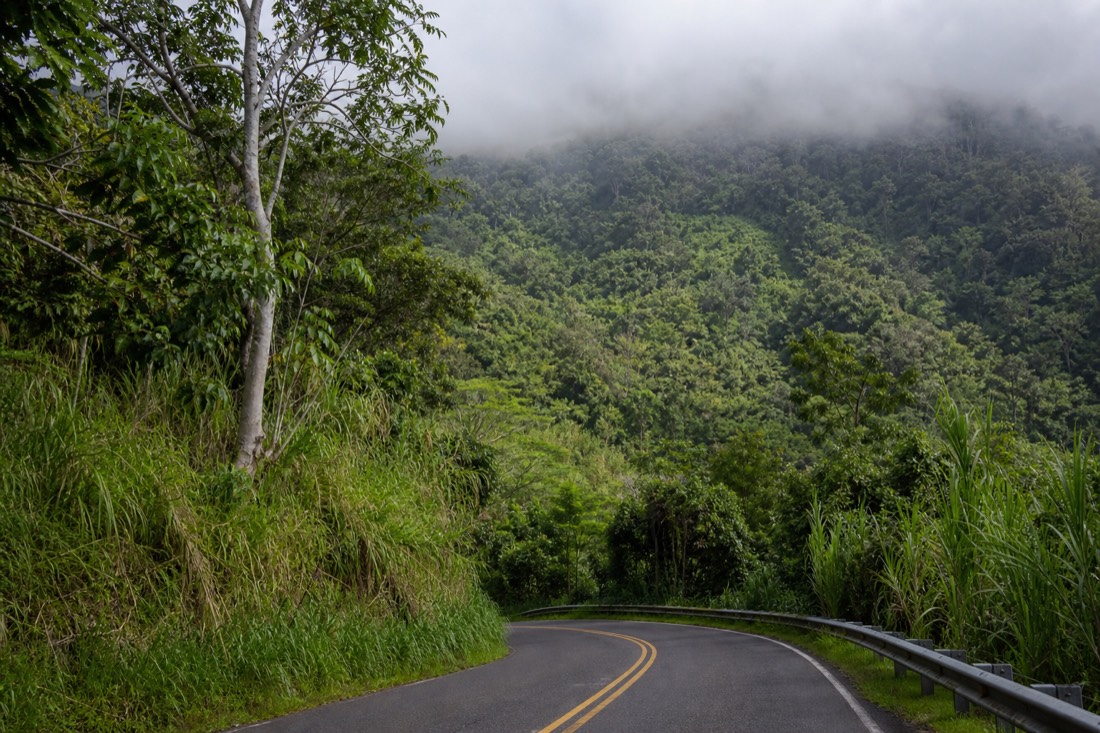
Then what you actually want is a waterfall day, not a film pilgrimage. The Big Island stacks them: ʻAkaka is the headliner, Rainbow Falls in Hilo is the easy second, and the coast between them is green gulch after green gulch. I compare the two big ones honestly in Rainbow Falls vs ʻAkaka Falls, and the drive itself gets a full love letter here.
For travellers with one free day and a rental car they would rather not use, the other version of this is the circle-island run, which puts the falls, the volcano and a black sand beach on the same ticket. It is a long day and it earns the length, so check which dates it still has room on before you plan the rest of the week around it.
So no, the helicopter never landed here, and the man in the dinosaur shirt was humming at the wrong island. He also stayed at the railing for twenty minutes and took more photos than anyone else in his family. The falls do not need the movie. The movie needed a waterfall like this.
Waterfall days worth the drive
Akaka Falls, Volcanoes & Rainbow Falls day
Full day
from $188per person, varies by date Check availability →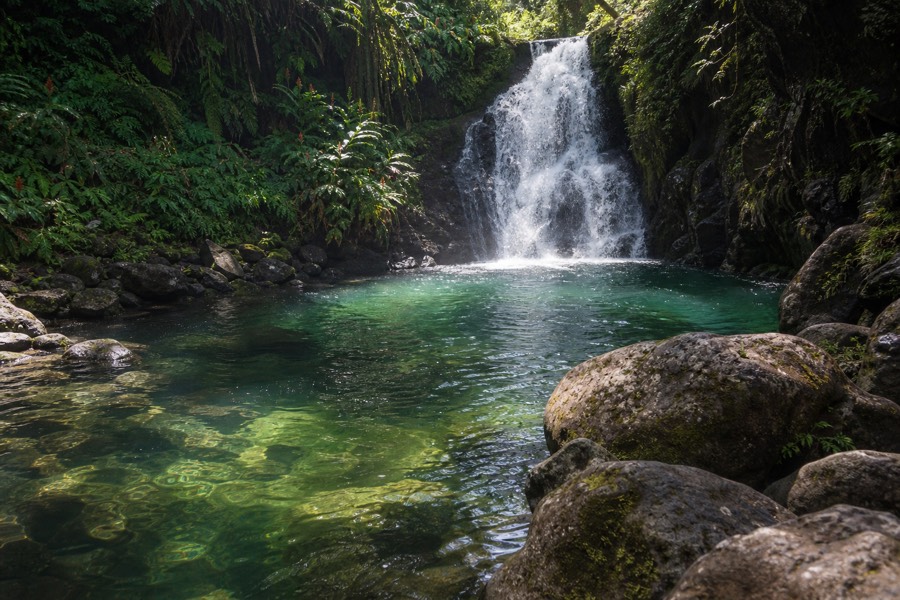
Waterfall hike & swim with a Native Hawaiian guide
Half day
from $150per person, varies by date Check availability →