Waterfall hike & swim with a Native Hawaiian guide
Half day
from $150per person, varies by date Check availability →The short version is no, and the long version explains why that fence is the best thing on the trail.
 Verified by Kekoa Kalani, Akaka Falls tour guide and island nature specialist
Short answer
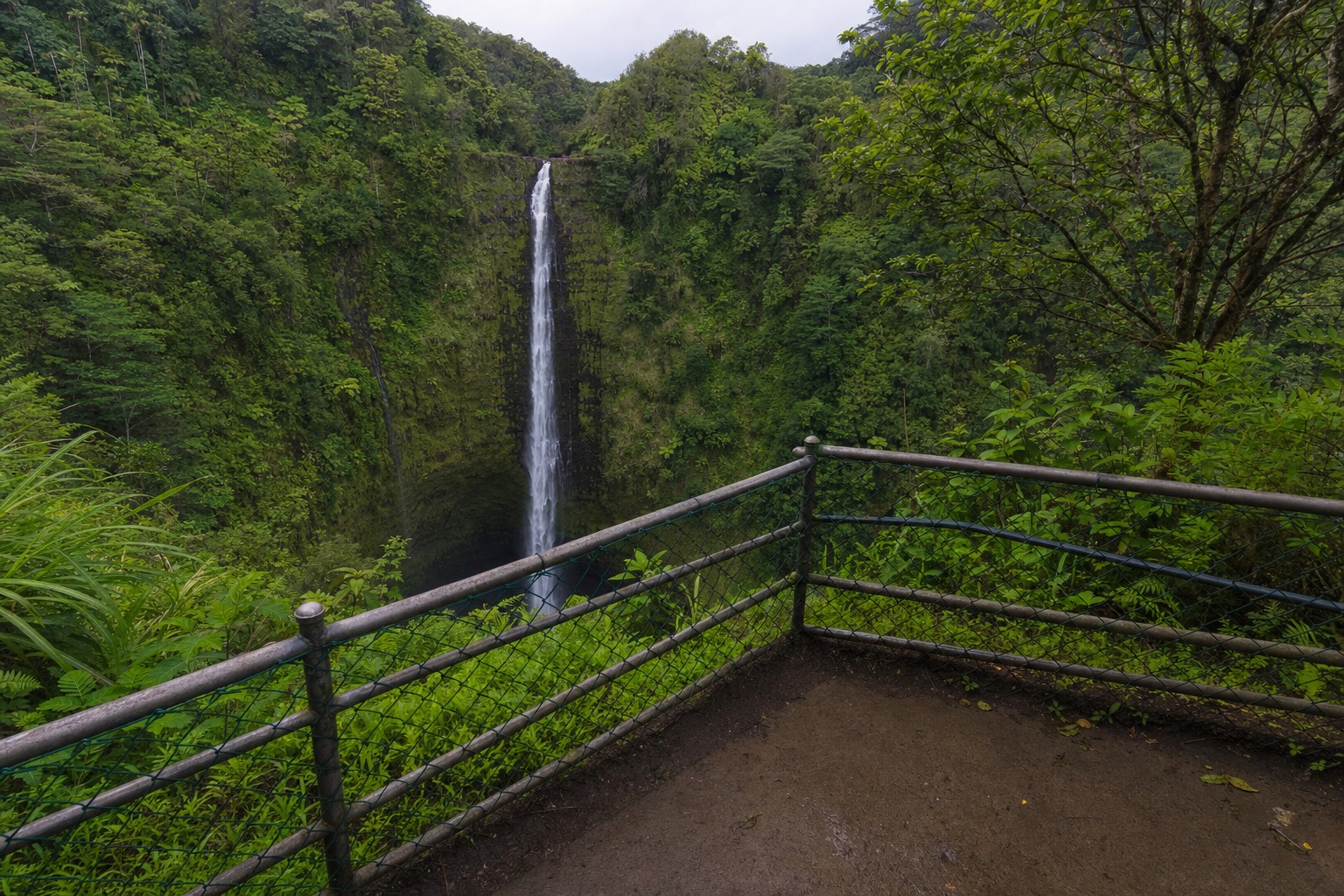
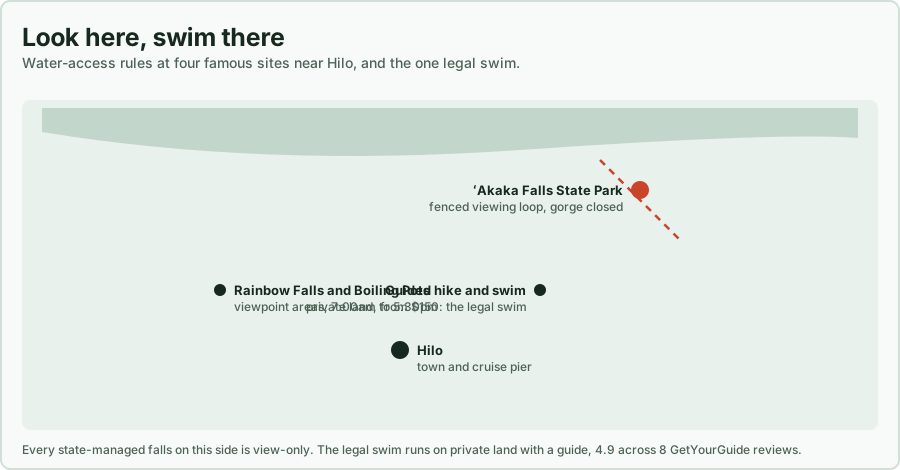
No. ʻAkaka Falls has no water access at all: the 0.4-mile loop is a fenced viewing trail and the stream-eroded gorge below the 442-foot drop is closed to entry. If a waterfall swim is the point of your day, book a guided hike and swim on legal land near Hilo instead.
Every week somebody arrives at the trailhead with a towel rolled under one arm. I understand the instinct. You have seen the photos, the white ribbon of water dropping past green cliff walls, and a swim under that seems like the obvious way to finish the walk. Then you reach the first overlook and see the truth of the place: you are standing on a fenced ledge, and the pool is more than four hundred feet below you at the bottom of a closed gorge. The towel goes back in the bag. Somebody's kid asks where the swimming part is. That conversation happens so often that I now have it before we leave the car park.
No. There is no swimming, no wading and no water access anywhere in the 65.4-acre park. The loop trail is a paved, fenced viewing path, the gorge under the falls is closed to entry, and the posted rules ask every visitor to stay on the trail from the first step to the last.
The official park description on the DLNR State Parks page frames the whole experience as viewing. The trail exists so you can look at two waterfalls, ʻAkaka Falls and the cascading Kahuna Falls, from overlooks built into the hillside. Nothing in the park design brings you to the water. There is no spur down to Kolekole Stream, no ladder, no informal path that the rangers quietly tolerate. The fence line runs the whole gorge side of the loop, and where the fence stops, the vegetation and the drop take over.
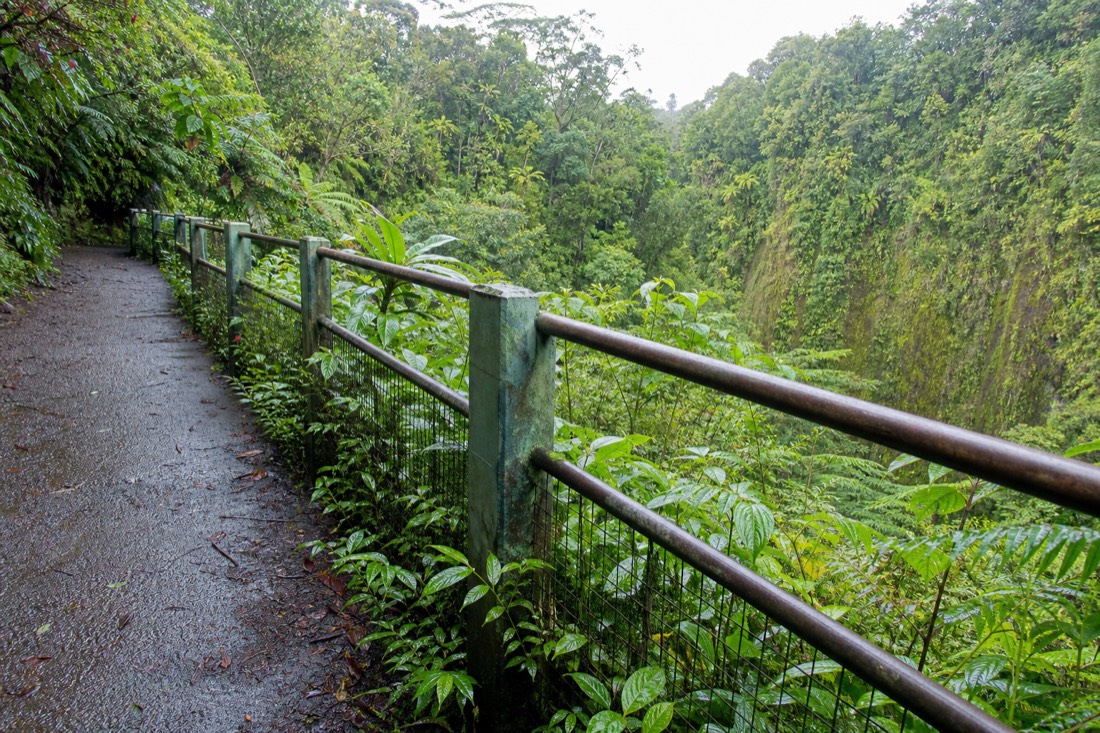
Stay-on-the-trail is not a soft suggestion here. The slope between the paving and the stream is close to vertical in places, soaked most of the year, and held together by shallow-rooted plants that pull out in your hand. I have been walking this loop for a decade and I have watched dozens of fit, confident people size up the greenery and decide it looks climbable. It is not. It is a wet cliff wearing a costume, and the costume is made of things that come loose.
The second question I get is about wading, as though wading occupies some legal grey zone that swimming does not. It does not, and the reason is simpler than the rulebook: there is nothing to wade into. From the trail you are roughly forty storeys above the water. The only stream you can hear is the one you cannot reach.
The third question is whether locals know a way in. The people I know who grew up in Honomū photograph the falls from the same railing you do, then drive to the ocean or to a guided spot when they want to get wet. There is no secret gate. If you want the full picture of what the walk itself is like, the trail guide covers the stairs, the surfaces and the two directions you can take the loop.
Here is how the water access actually breaks down across the places visitors ask me about in the same breath.
| Where | Can you get in the water? | What the place actually is |
|---|---|---|
| ʻAkaka Falls State Park | No | Fenced 0.4-mile paved viewing loop above a closed gorge |
| Kahuna Falls overlook, same loop | No | A second viewpoint on the north arm of the same trail |
| Rainbow Falls, Wailuku River State Park | No | Railed lookout above an 80-foot fall, open daily 7:00am to 5:30pm |
| Boiling Pots, Wailuku River State Park | No | Linked pools seen from a terrace well above the river |
| Kolekole Stream below ʻAkaka Falls | No | The drainage the falls lands in, closed and pathless |
| Guided hike and swim on permitted private land | Yes, with the guide | Small group, legal access, someone reading the water for you |
Read down that middle column and the pattern is obvious. Every famous, easy-to-reach waterfall on this side of the island is managed as something you look at.
Because of what the terrain is. The falls plunge 442 feet into a stream-eroded gorge with sheer wet walls, water that rises fast after rain up the mountain, and no safe route down or back out. The fence, the paving and the stay-on-trail rule all keep visitors on ground that holds.
Kolekole Stream drains one of the wettest hillsides in the state. When rain lands upslope, the stream answers quickly, and a pool that looked like glass can be brown whitewater before you have finished climbing back up a muddy bank. That is the quiet danger with Hawaii stream swimming generally: the hazard is usually upstream, out of sight, and it arrives on its own schedule.
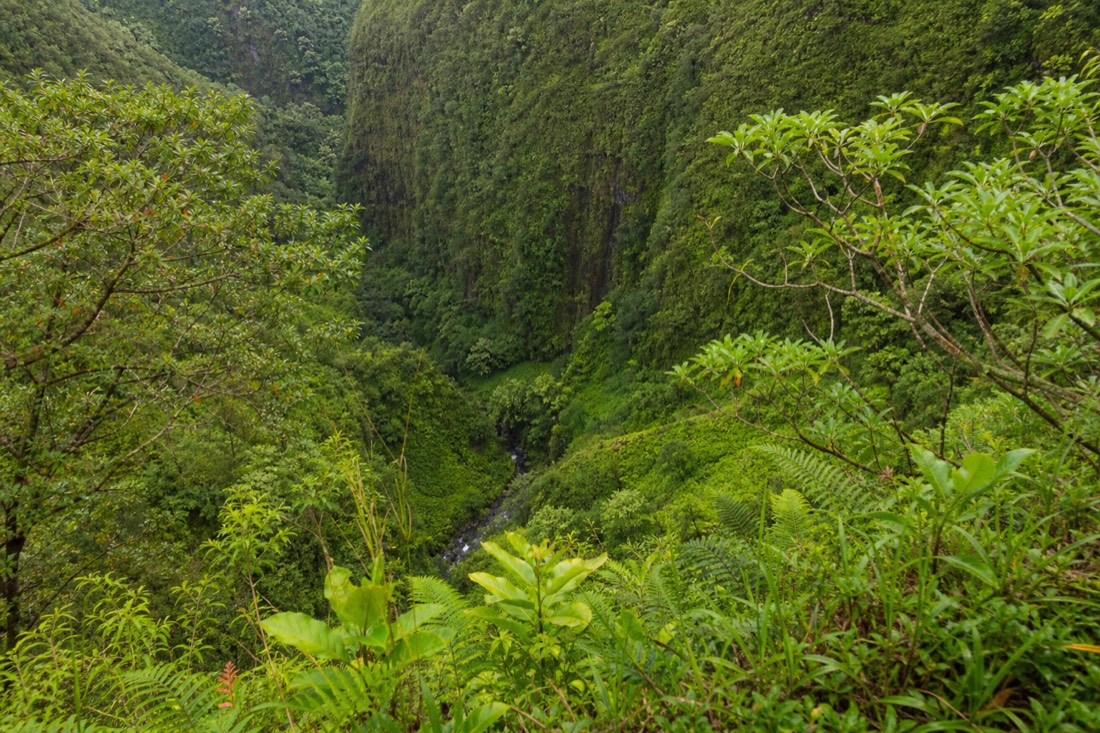
Then there is the plain physics. A 442-foot free fall puts an enormous amount of energy into one small plunge pool, and a narrow gorge funnels that energy instead of letting it spread out the way a wide river would. The water at the base is aerated, which means it is less buoyant than it looks. Anything floating in it sits lower. Expert canyoneers approach drainages of this shape with rope, helmets and a plan, not with swim trunks and optimism.
The rock itself is the third problem. Stream-eroded gorge means the walls were cut by moving water, which undercuts as it goes. You get overhangs, hollow sections and slabs that look like ledges until they are weighted. Add the constant spray, the year-round shade and the algae that likes both, and every surface down there is greased.
I break the closure down for guests like this, because seeing the reasons stacked up does more than a sign ever has.
| The factor | What it means if you were thinking about it |
|---|---|
| A 442-foot free fall | The plunge pool takes the full load of the drop, in a space too narrow to disperse it |
| A stream-eroded gorge | Undercut walls, hollow ledges, nothing to trust with your weight |
| Kolekole Stream above you | Flow is set by rain you cannot see from the trail |
| Hamakua rainfall near 84 inches a year | Water levels change on the hour, not on the season |
| Permanent shade and spray | Rock, root and soil stay slick even during a dry stretch |
| No route in and no route out | Any incident down there becomes a technical rescue, not a swim to shore |
So the closure is not paperwork caution. It reflects what the land is. My honest advice after a decade on this trail: enjoy the fence. It puts you at the single best angle the gorge offers, dry and alive, and it does that all day for the price of a sandwich.
There is a cultural layer under the safety one, and it matters to me as much as the railing does. ʻAkaka Falls carries its own stories and its own song in Hawaiian tradition, and treating the gorge as a backyard swimming hole misreads what this place is to the people who named it. The visitors I enjoy guiding most arrive the way you would arrive at someone's family land, because that is exactly what it is. If that side of the falls interests you, the legend and song guide tells the stories properly.
Usually Rainbow Falls or Boiling Pots in Hilo, or a swimmable waterfall they saw on social media that sits on private land. None of the state-managed waterfall parks on this coast offer swimming, and the official pages describe all of them as viewpoint areas rather than swimming areas.
The mix-up is easy to trace once you have seen it happen a hundred times. Photos tagged with a Hilo waterfall swim circulate constantly, the caption names no location, and the viewer fills the gap with the only local waterfall they can name. That is almost always ʻAkaka. So the swim photo attaches itself to the wrong place, travels for a year, and arrives at my trailhead in the form of a rolled towel.
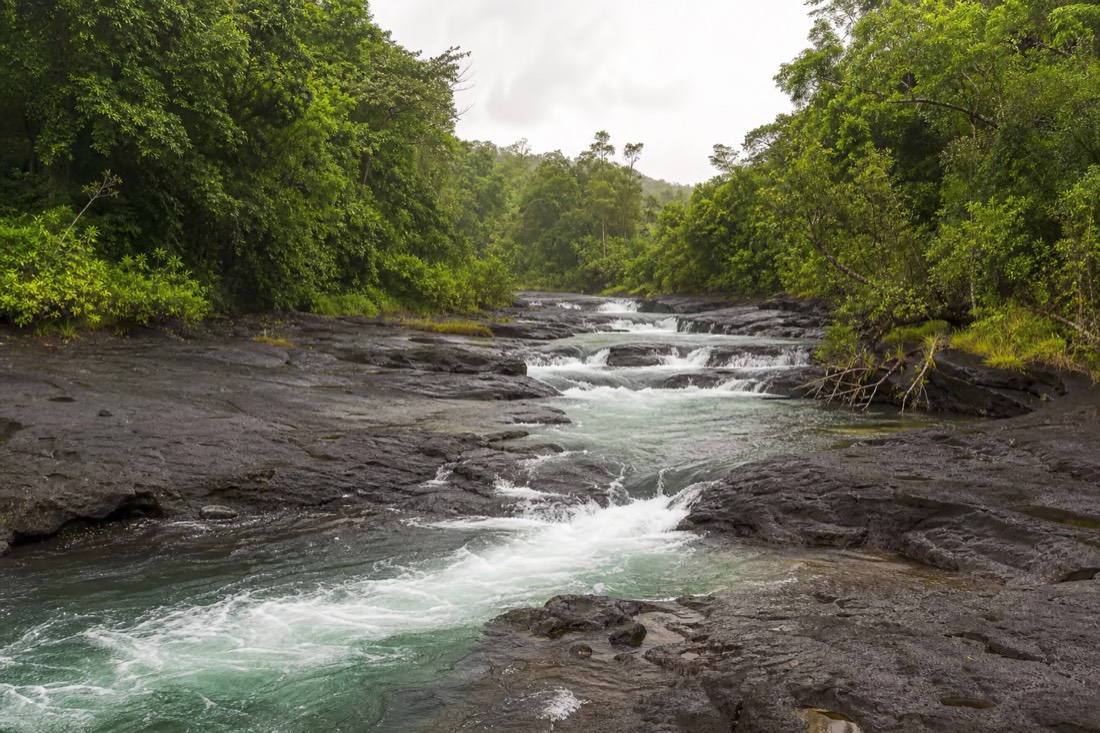
The Wailuku River State Park page is direct about what those two areas are. It calls them viewpoints of geologic and scenic interest, lists hours of 7:00am to 5:30pm daily, gives Rainbow Falls as an 80-foot drop, and describes Boiling Pots as a succession of big pools whose waters roll and bubble as if boiling. That last line is not marketing copy. It is a description of turbulence, written by the agency that manages the river, and turbulence in a basalt channel is the last thing you want to swim in.
The genuinely swimmable spots you see online are mostly on private Hamakua and Hilo-side land, reached with a landowner's permission that a licensed operator holds and that you, wandering in from a pullout, do not. Trespassing cases on this coast are real. So are the rescues, and so is the awkward reality that a rescue on private land pulls county resources away from somewhere they were needed.
Here is the short version of who is being confused with whom.
| The falls people mean | Where it sits | What you actually get | Water access |
|---|---|---|---|
| ʻAkaka Falls | End of Highway 220, 3.6 miles southwest of Honomū | A 442-foot free fall seen from a fenced loop | None |
| Kahuna Falls | Same loop, north arm | A cascading fall glimpsed through heavy growth | None |
| Rainbow Falls | Wailuku River State Park, minutes from downtown Hilo | An 80-foot fall over a lava shelf, best in morning light | None, lookout only |
| Boiling Pots | Upstream in the same park | Linked pools that roll and bubble in a basalt channel | None, viewed from above |
| The unnamed social-media pool | Usually private Hamakua or Puna land | Somebody's property, often behind a locked gate | Only through a permitted operator |
If you want the two famous Hilo-side parks compared properly, side by side, that is the whole job of the Rainbow Falls versus ʻAkaka Falls guide, and the wider map of what is reachable at all sits in waterfalls near Hilo.
Four rules, and none of them is complicated: stay on the trail, no mountain biking, no open fires, pack out what you pack in. Add the operating hours of 8:30am to 5:00pm, the card-only entry and parking fees, and you have the entire rulebook for this park.
I like this rulebook. It is short, it is unambiguous, and every line of it exists because something happened. Stay on the trail is the one that matters most on a gorge rim, and it is also the one people rationalise away, usually for a photograph. The paving marks the ground the state has assessed and maintains. Two steps off it, on a slope this wet, you are on unassessed ground with your own body weight as the only variable you control.
No mountain biking reads oddly until you picture the loop. It is narrow, it has stairs, it has blind corners with a railing on one side and a wall of vegetation on the other, and there are always small children stopped dead in the middle of it. No open fires is a rainforest rule that people from drier places underestimate; wet forest still burns, and it burns the canopy that makes this walk what it is. Pack out what you pack in is exactly what it says, and I would add that this includes fruit peel, which does not vanish, feeds rats, and rats are part of a health problem I come back to further down this page.
The fees have changed enough over the years that outdated numbers still circulate on travel forums, so here is the current shape of it, with the practical note attached to each line.
| What the park asks | What that looks like at the gate |
|---|---|
| Stay on the trail | The paving is the assessed ground; the fence marks where assessment stops |
| No mountain biking | Narrow paved loop with stairs, blind bends and stopped pedestrians |
| No open fires | Rainforest canopy, and it is the canopy that makes the walk |
| Pack out what you pack in | No rubbish service on the loop, food waste included |
| Open 8:30am to 5:00pm daily | Not a sunrise park; plan the morning around the opening time |
| Entry for non-residents | $5 per non-resident person, children 3 and under free |
| Parking for non-residents | $10 per non-commercial vehicle |
| Payment method | Credit card only, no cash accepted |
| Hawaii residents | Free entry and parking with a driver's licence or state ID |
| Paying in advance | Encouraged, because mobile reception at the park is limited |
That last line is the one that costs people time. Reception at the end of Highway 220 is patchy, and a card payment that will not go through while a queue builds behind you is a bad way to start a rainforest walk. Sort it before you leave your accommodation. The full arithmetic of a falls day, including what a rental car and the Honomū detour add, is broken down in how much ʻAkaka Falls costs.
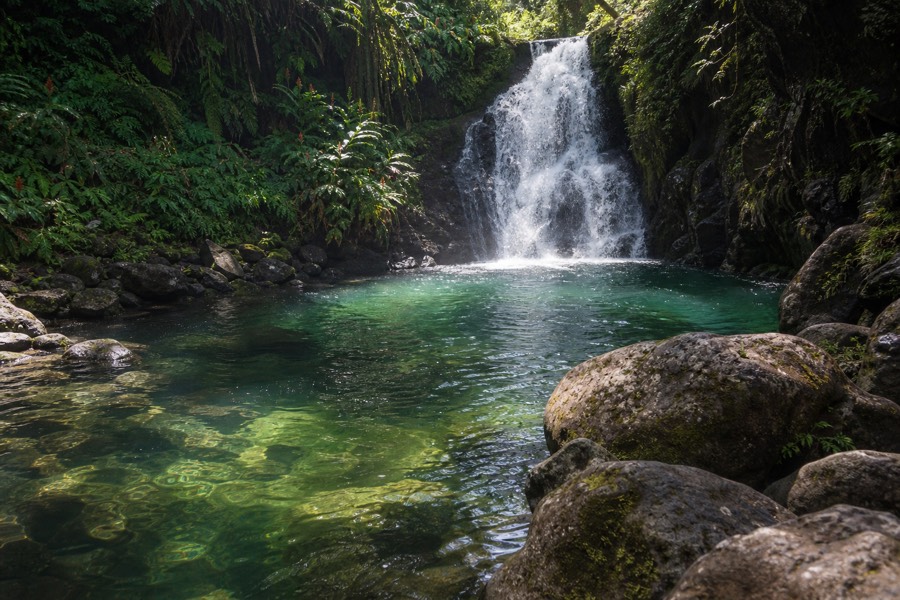
On a guided trip with permitted land access. A waterfall hike and swim led by a Native Hawaiian guide takes small groups onto private land where swimming is allowed, with someone who reads the stream that morning and decides whether it is a swim day or a look-only day.
This is the clean answer I give the guests who want water on their skin rather than just in their camera roll. A guide with permission solves every problem the state parks cannot solve. The land is legal to enter. The pool is known, and known in the sense of having been watched across hundreds of different rainfall days rather than found on a map. And the decision about whether today is safe belongs to somebody whose livelihood depends on getting that decision right, instead of to a visitor with one afternoon and a flight home tomorrow.
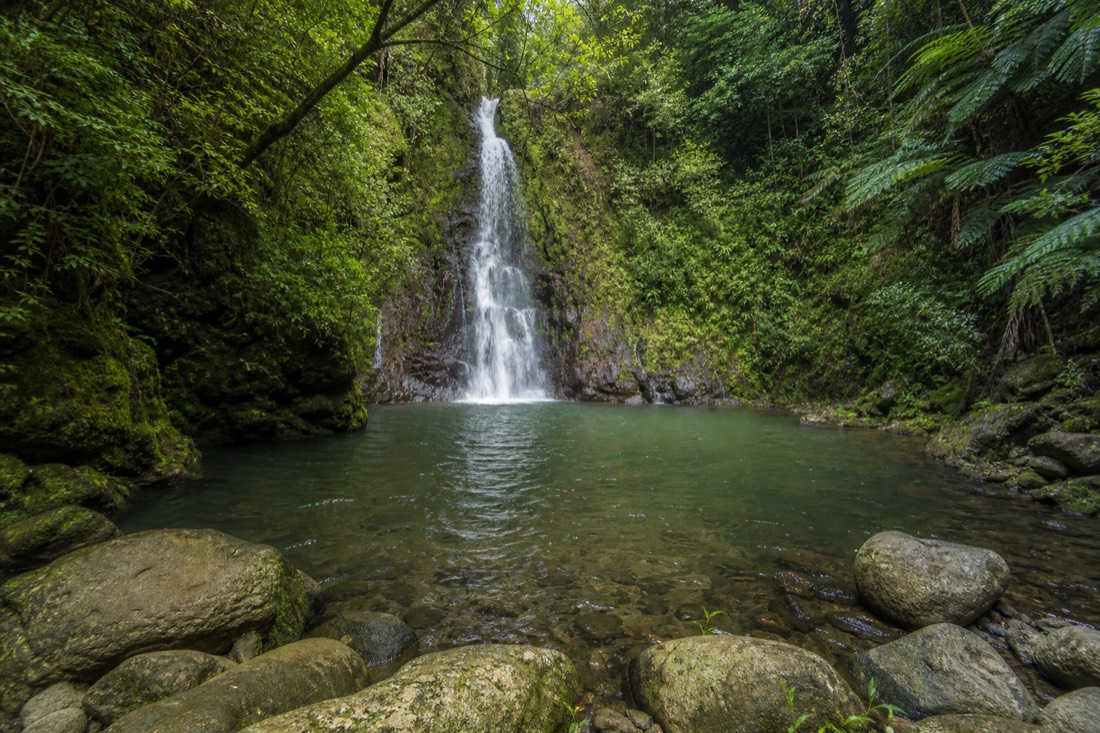
There is a second thing you buy with a guided day, and it is the part guests mention afterwards. A Native Hawaiian guide does not narrate a waterfall the way a brochure does. You get the name of the place, what grows there and why, which plants were used for what, and where the water goes after it leaves you. Swimming becomes the middle of a story rather than the whole point, which is a better afternoon than the one most people had planned.
The honest limitation is scheduling. These outings run in small groups on set days, and the group cap is what makes them worth doing, so the dates fill in a way that a state park never does. If a waterfall swim is a fixed item on your list rather than a maybe, pick the date first and build the rest of the week around it. You can see which dates still have space before you lock in the rest of your Hilo plans.
One more framing point, because guests sometimes hear "guided" and assume "watered down". The guide is not there to hold your hand across a stream. They are there because the stream changes, the access is somebody's property, and reading both correctly is a skill. On a good day you barely notice them working. On a bad day, when the water came up overnight, you notice immediately, and you are grateful the decision was not yours.
A meet-up near Hilo, a small group, a Native Hawaiian guide, real trail time through wet forest, a stream crossing or two, then swim time at a pool on permitted land. Plan on it taking a half day of your schedule, and check the current duration on the booking page when you choose a date.
The shape of these days is consistent even when the details differ. You meet somewhere on the Hilo side rather than at a waterfall car park, because the access point is not a place you would find on your own. There is a short brief covering the ground you will cover, what to do if the water is moving faster than it looks, and what the landowner's conditions are. Then you walk. The walking is the part that surprises people who pictured a car park and a pool.
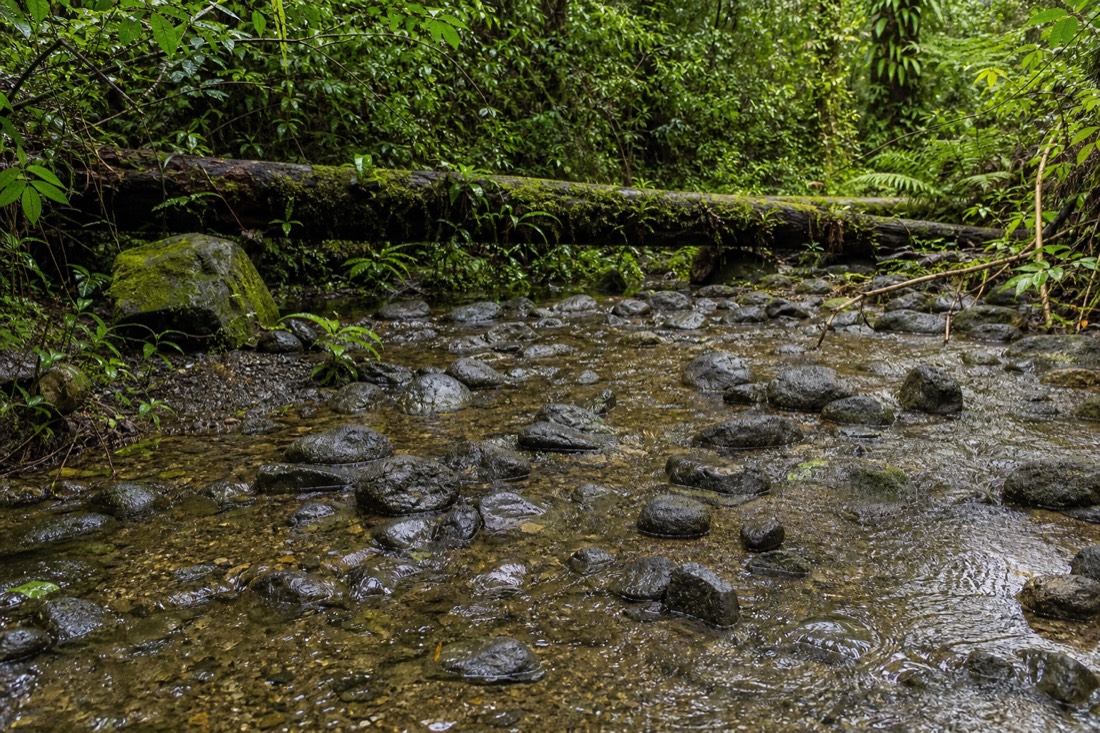
Trail time on this coast is not the same as trail time at home. The ground is wet, roots run across the path, and the humidity does more to you than the distance does. Nobody I have guided on the Hamakua side has ever complained about the length of a walk; they complain about the air. Go slower than feels natural, drink earlier than you think you need to, and the whole thing becomes pleasant instead of a slog.
Then the guide reads the pool. Colour first, because brown means upstream rain and upstream rain means no. Then flow, then the exit routes, then whether anything has moved since the last group. If it is a yes, you swim, and the swim usually lasts longer than people expect because there is no queue for the water and no schedule pushing you out. If it is a no, a decent operator turns the day into something else rather than pushing through, and that is precisely what you paid them for.
The cultural framing runs underneath all of it. Asking before entering water, taking nothing out, leaving the place able to absorb the next group: these are not decorative rituals added for visitors. They are how the land keeps working. Guests who arrive expecting a theme-park version of Hawaii tend to go quiet somewhere in the middle of the walk, in a good way. If a swim is genuinely the thing your trip needs, it is worth a look at what the day includes and what it costs rather than gambling on finding water for free.
Wear the swimsuit under your clothes, bring water shoes with real grip, a quick-dry towel, a dry bag, reef-safe sunscreen applied before you leave, insect repellent and more water than you think. Skip cotton, skip flip-flops, and leave anything you would mourn losing in the car.
Gear on this coast is a weather problem more than a comfort problem. Hamakua takes close to 84 inches of rain a year, which averages out to a shower most days and means your dry clothes are only dry if you packed them inside something waterproof. A supermarket dry bag costs less than a sandwich in Hilo and is the single best thing in a swim-day pack.
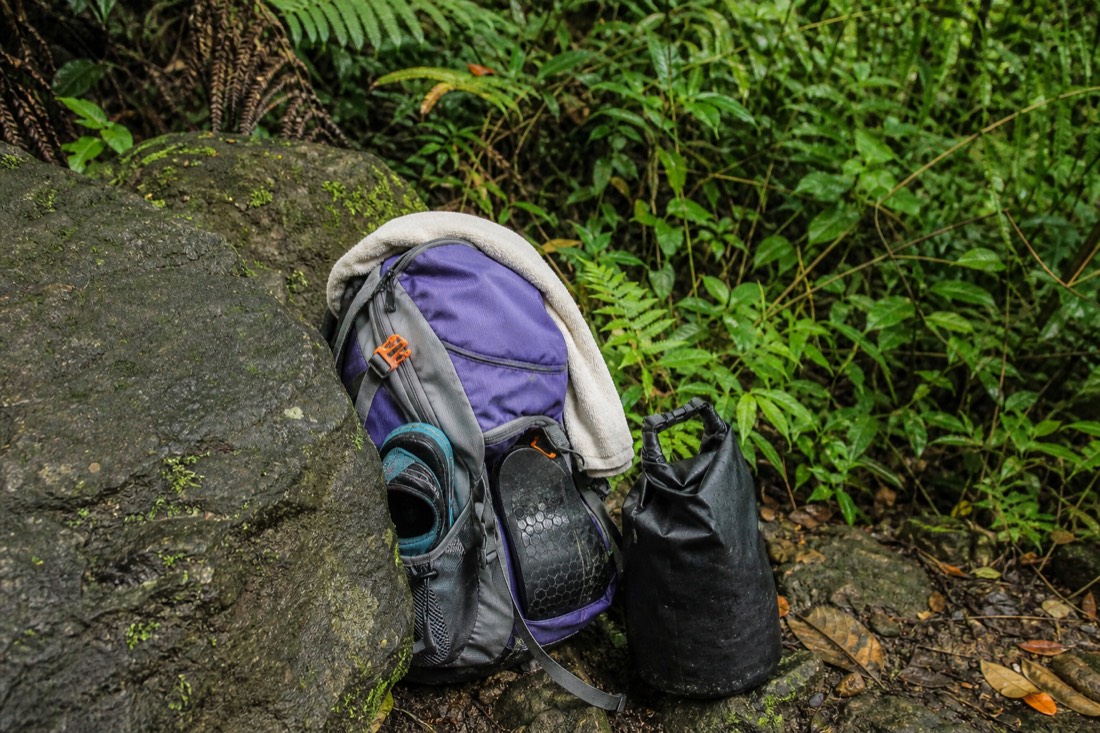
Footwear is where people get hurt. Stream rock grows a thin algae film that stays slick even during a dry week, and flip-flops on that surface are essentially skates. Closed water shoes or grippy sport sandals with a heel strap solve it. Trail runners you do not mind soaking work too, and I would rather you ruined a pair of shoes than a knee.
Cotton is the other quiet mistake. A cotton t-shirt in this humidity never dries, holds cold once you are out of the water, and weighs three times what it did at breakfast. Anything synthetic, or a light long-sleeve sun shirt, does the same job and stops working against you an hour in.
Here is the list I have handed to guests for years, with the reason attached to each line, because a reason is what makes somebody actually pack the thing.
| What to bring | Why it earns its place | What happens without it |
|---|---|---|
| Swimsuit worn under your clothes | Changing options on trail days range from thin to none | You either swim in what you walked in or you do not swim |
| Water shoes or strapped sandals | Stream rock is algae-slick even after dry weather | The slip happens on the way in, not in the water |
| Quick-dry towel | Hamakua showers arrive with no warning at all | A soaked cotton towel that stays soaked all day |
| Dry bag or heavy zip bag | Rain and spray reach everything in an open pack | Wet phone, wet spare shirt, wet snacks |
| Reef-safe sunscreen, applied early | Applying at the pool washes straight into the stream | Burn through cloud, plus product in the water |
| Insect repellent | Still shaded water is mosquito country | You spend the swim swatting instead of floating |
| Two litres of water per person | Humidity dehydrates you faster than heat does | The headache starts on the walk out |
| A snack with salt in it | Guided days run on trail time, not restaurant time | Everybody gets quiet and slow at the same moment |
| Dry clothes left in the car | The drive back is long and air conditioned | An hour of shivering in wet gear |
Two things to leave behind: jewellery, which the pool keeps, and any expectation of phone reception once you are in the forest. Tell whoever is waiting for you that you will be off-grid until the afternoon.
Treat the water as a system, not a pool. The hazard is upstream where you cannot see it, brown water means stay out, fresh water here carries leptospirosis, and you never enter a pool without knowing how you get out of it. Those four habits cover almost every incident on this coast.
Start with the upstream rule, because it is the one that catches visitors. Weather at the pool tells you nothing. A stream on the Hamakua or Hilo side is fed by rain landing thousands of feet above you, often behind a ridge, and that water arrives as a surge with debris in front of it. Blue sky overhead is not information. What the water is doing, and what colour it is, is the information.
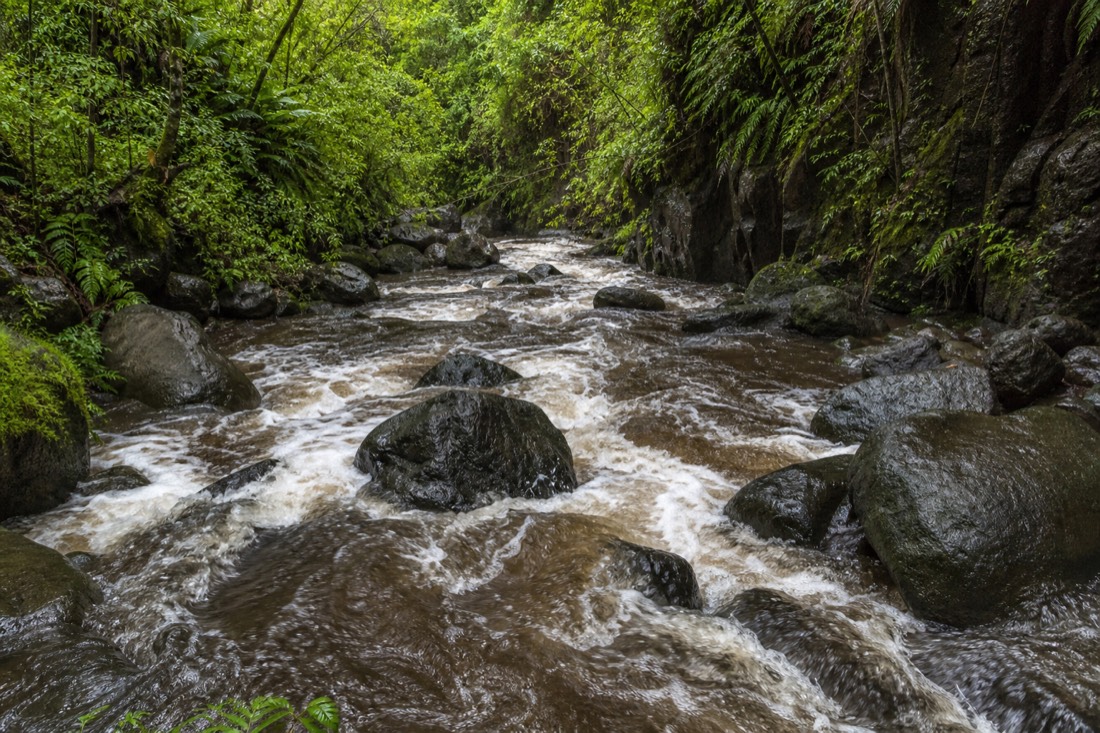
The state health department puts the brown-water case plainly. After a storm, runoff can carry sewage, harmful micro-organisms and chemicals, and the public health advice is to stay out of any beach or stream contaminated by storm water. Cesspools and septic systems overflow, animal waste washes into drains, and none of that is visible once it is diluted. Coastal water is usually flushed clean by the tide inside a couple of days. A stream just keeps delivering whatever fell upstream.
Then there is leptospirosis, which is not a rare tropical curiosity here. The health department's guidance is that you can catch it by swimming or wading in freshwater puddles, ponds or streams contaminated with animal urine, and that the bacteria enter through broken skin or through the soft tissue inside your mouth, nose and eyes. Onset runs anywhere from two days to four weeks, and the early symptoms read like flu, which is why it gets missed. The official prevention line is blunt: do not swim or wade in fresh water in Hawaii, especially with open cuts or sores, and understand that putting your head under raises the risk through your eyes, nose and mouth. Nationally, Hawaii sits second only to Puerto Rico for reported cases. A good operator manages this by choosing where and when, and by telling you to sit out if you turned up with a scraped shin.
The last two habits are physical. Never jump or dive into a pool you have not seen the bottom of, because rock moves in these drainages and last summer's depth is not this summer's depth. And before you get in, pick your exit. Look for the bank you could actually climb with wet hands, not the pretty one. If you cannot name your exit, the pool is a bathtub with no plug hole and you should stay on the rock.
Guides read a handful of signals before anybody gets wet, and none of them takes more than a glance once you know what you are looking at.
| What you can see from the bank | What it is telling you | What to do about it |
|---|---|---|
| Water the colour of weak tea or worse | Rain landed upstream, possibly hours ago | Stay out entirely, and do not wait it out at the pool |
| Leaves, twigs or foam moving past in a line | The flow is rising right now | Move away from the channel, not along it |
| A fresh debris line above the current water level | The stream was much higher very recently | Assume it can get there again today |
| Water you cannot see the bottom of | Depth and rock position are both unknown | No jumping, enter feet first from the shallow edge |
| A single steep bank as the only way out | You have no exit if the flow picks up | Do not get in until you can name a second exit |
| Rain visible on the ridge, sun where you stand | Local weather is irrelevant to this stream | Treat it as a rising-water day regardless of the sky |
If the family has decided the water plan is a maybe and the day still needs an anchor, the ziplines a few minutes from the park are the reliable substitute: same rainforest, same waterfall scenery, and nobody has to read a stream. Have a look at the zipline morning above KoleKole Falls before you write off the adventure half of the trip. Guests who were nervous about water almost always come off the last line grinning, and my first zipline notes cover what the nervous ones ask me beforehand.
Yes. They want completely different things from your schedule. ʻAkaka Falls is a fast, cheap, spectacular stop that fits in an hour. A waterfall swim needs its own half day, a booking and a weather window. Forcing one outing to be both is how people end up disappointed.
The viewing stop is flexible in a way that almost nothing else on the island is. You can decide at breakfast, drive out, walk the loop, and be back in Hilo before the shops fill. It works in drizzle, it works in full sun, and it works with a toddler in a carrier. How much time you need at ʻAkaka Falls breaks the timing down properly, but the headline is that most people are done in thirty to sixty minutes, including photographs.
A swim day is the opposite kind of animal. It is booked in advance, it has a start time, it involves trail time in both directions, and its quality depends on rain that fell yesterday. That is not a criticism. It is what makes it good. But those two shapes do not fit in one afternoon, and the groups who try spend the day watching the clock instead of the water.
My preferred pairing for guests with two Hilo-side days runs like this. Falls viewing on the first morning, while jet lag has you awake at five anyway and the light on the gorge is at its best. The guided swim on the second day, once your legs have adjusted to the humidity and you have a better read on the weather pattern. If you only have one day, the falls win, because they are guaranteed and the swim is not.
Laid out side by side, the two days barely resemble each other.
| Falls-viewing stop | Guided swimming day | |
|---|---|---|
| Time needed | 30 to 60 minutes | Half a day, plus the drive |
| What it costs | $5 per non-resident person plus $10 per vehicle, card only | Set by the operator, shown live on the booking page |
| Booking | None, though paying in advance saves a queue | Required, and dates go by group size |
| Weather dependence | Low, rain suits the falls | High, upstream rain can cancel the swim |
| Physical demand | A paved 0.4-mile loop with steps | Real trail time on wet uneven ground |
| Does it get you wet | Only if it rains, which it often does | Yes, that is the whole point |
| Best time of day | Early morning, before the tour vans | Whenever the guide says the water is right |
| Who it suits | Everyone, including cruise-day schedules | Confident walkers who came for water |
If the falls stop is really a box to tick on a bigger island day, it is worth thinking about the route instead of the stop. A Hilo-side day that strings the falls together with Rainbow Falls and the volcano covers the ground you would otherwise drive twice, and the perfect ʻAkaka Falls day shows how the pieces fit around the weather.
The ocean, ten minutes from downtown Hilo. Onekahakaha, Richardson and Carlsmith are shallow, sheltered county beach parks with sand-bottomed pools, tide pools and calm water, and they solve the "the kids want to swim" problem better than any waterfall on this coast.
I say this to families more than anything else on this page. The waterfall swim you imagined, deep pool, no crowd, jungle overhead, is a real thing here, but it suits confident swimmers on a booked day. A seven-year-old who has been in a car since Kona wants shallow warm water, somewhere to stand up, and a shady picnic table. That is the Hilo coast, not the Hamakua gorges.
Onekahakaha Beach Park, just east of the airport, is a small shallow sand-bottomed ocean pool and about the safest swimming on the Hilo shore, with tide pools and inlets around it that keep small children busy for hours. Two miles further along Kalanianaʻole Avenue, the shallow bay at Richardson is spring-fed, calm and current-free, and it is the most popular snorkelling spot on this side of the island. Carlsmith, which locals call Four Mile, is a run of large lagoons with honu turning up often enough that you should have the "look, do not touch" conversation in the car.
The spring water at Richardson makes the bay noticeably cooler than the ocean elsewhere, which children either love or hate on first contact. Give it ten minutes before you make a judgement. And the same brown-water rule applies at the coast: after heavy rain, runoff reaches these shores, and a couple of days of sunshine and tidal flushing does the cleaning.
Which brings me back to the fence at ʻAkaka Falls, and why I called it the best thing on the trail. On a family day, a fenced 0.4-mile loop is not a restriction, it is a relief. Nobody has to be watched near water. Nobody negotiates. You walk a stunning piece of rainforest for half an hour, everybody sees a 442-foot waterfall, and then you drive twenty minutes to a beach where the kids can actually be kids. ʻAkaka Falls with kids and seniors covers the loop's stairs and the shortcut route in detail, and things to do in Hilo fills in the rest of the afternoon.
If your window is short and you would rather have somebody else drive the wet Hamakua roads while you look out of the window, the half-day waterfall circuit out of Hilo is the low-effort version of the whole thing, and you can compare the half-day option against the cost of a rental car and a full morning of driving.
One last thing from the trail. The people who enjoy ʻAkaka Falls most are the ones who stopped negotiating with it. Let the park be the viewing masterpiece it is, give the swim its own morning with someone who holds the keys to legal water, and take the kids to the ocean in between. Three good memories, and not one argument with a fence.
Half day
from $150per person, varies by date Check availability →Half day
from $229.99per person, varies by date Check availability →About 2.5 hours
from $246per person, varies by date Check availability →