Akaka Falls, Volcanoes & Rainbow Falls day
Full day
from $188per person, varies by date Check availability →Before it was a state park, the falls had a name, a story and a song. All three are still here if you slow down.
 Verified by Kekoa Kalani, Akaka Falls tour guide and island nature specialist
Short answer
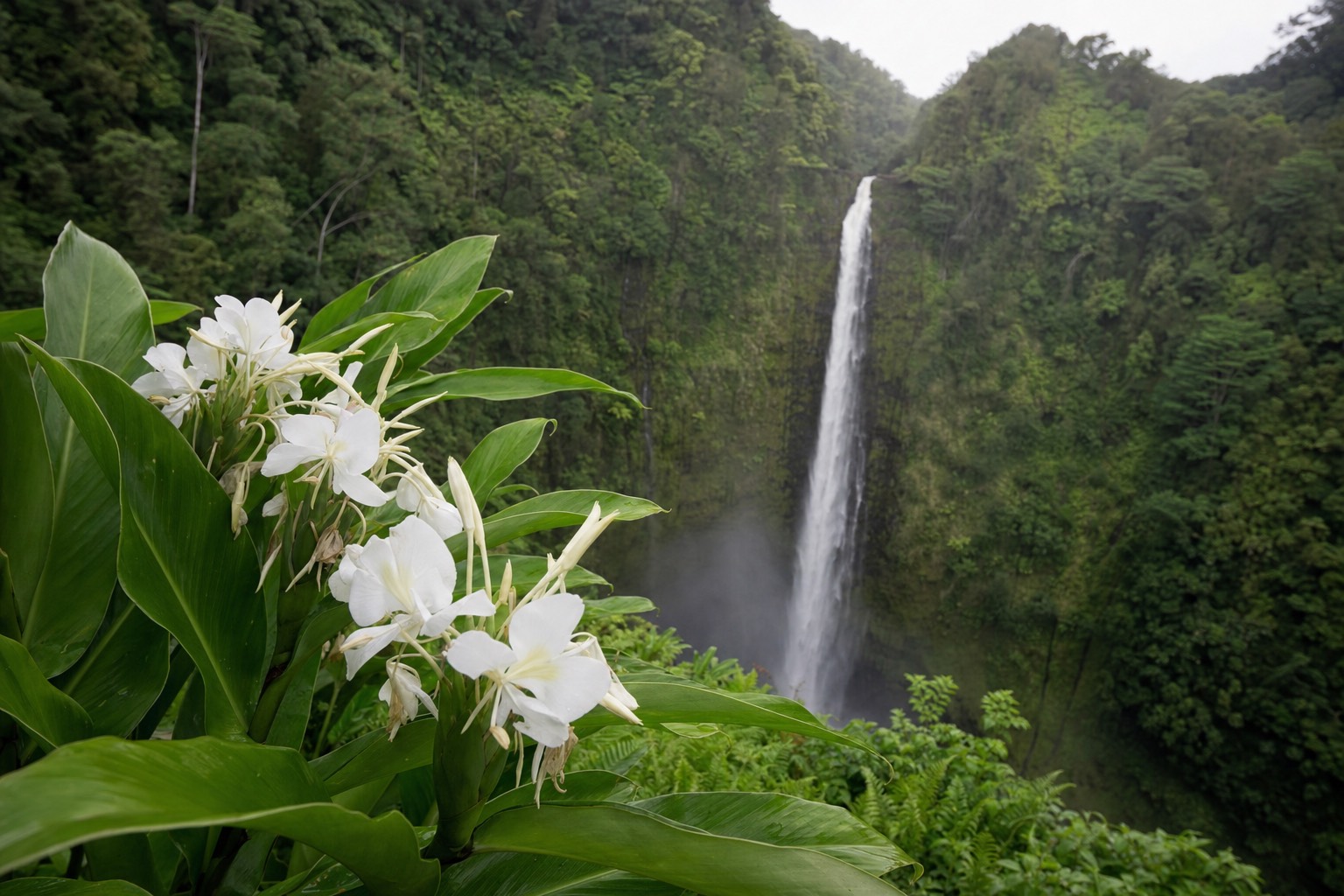
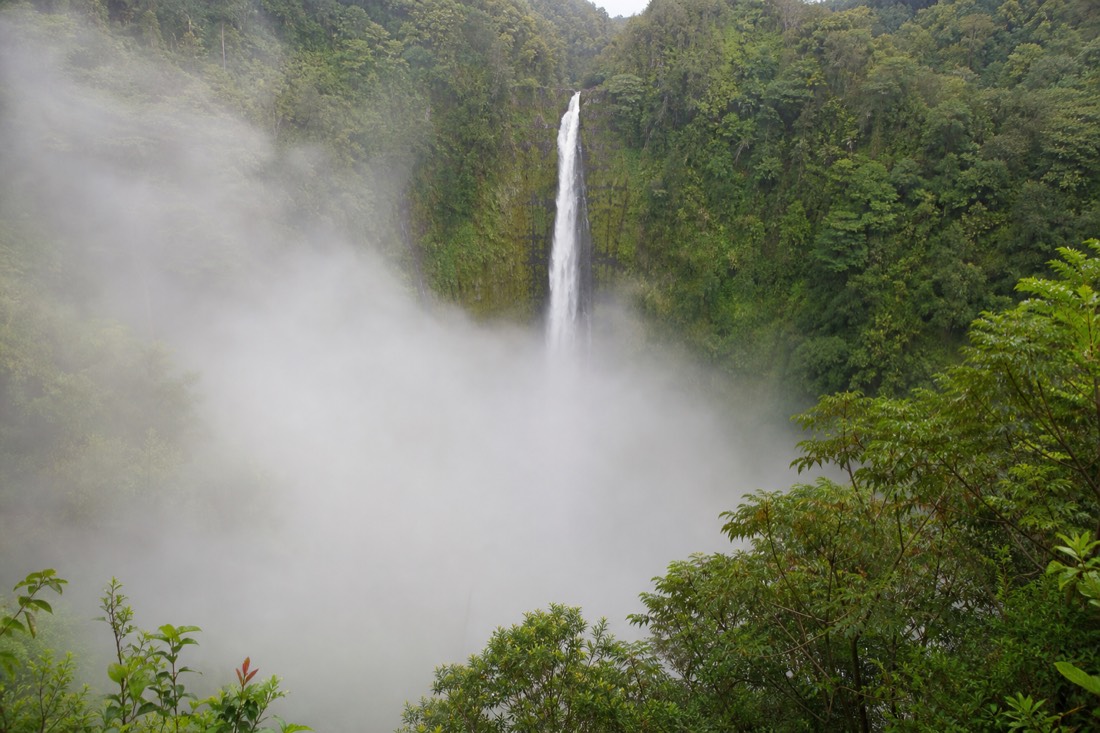
The mele 'ʻAkaka Falls (Ka Wailele ʻO ʻAkaka)' is credited to Hawaiian composer Helen Lindsey Parker (1886-1954) and praises the 442-foot waterfall, its misty uplands and ginger blossoms. The falls carry the name ʻAkaka, and recorded tradition says the mele honors a figure said to have leapt from its heights.
Some mornings on the loop trail, when the mist sits low in the gorge and the ginger is blooming, a guest will hum a few bars of a song their grandmother used to play and ask me if it is about this waterfall. It usually is. ʻAkaka Falls is one of the few places I guide where the soundtrack arrived decades before the visitors did, and knowing even a little of the song and the story changes how the falls land on you.
I want to be careful on this page, more careful than a travel site usually bothers to be. This is Hawaiian culture, not content. So everything here is drawn from named, checkable sources: the Hawaiian music archives, the University of Hawaiʻi's published song materials, the Hawaiian dictionaries collected at UH Hilo, and the recorded accounts attached to the park. Where the record is thin, I say so and stop, because the worst thing a guide can do with a moʻolelo is decorate it.
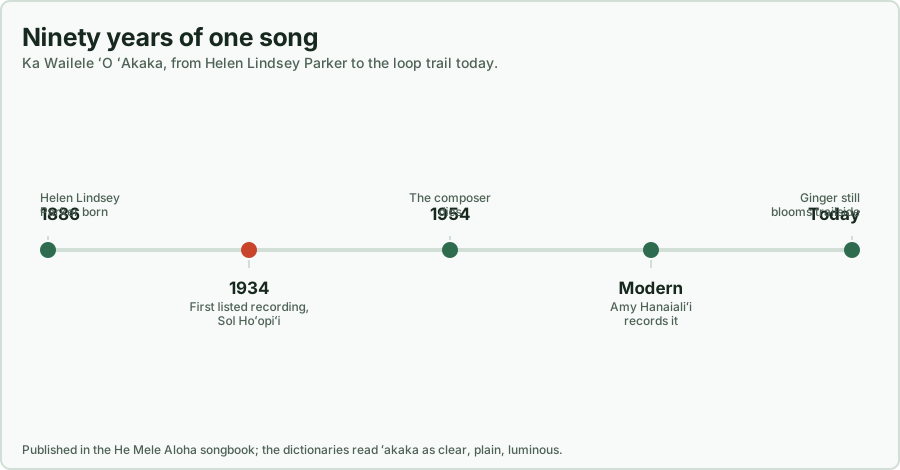
The mele "ʻAkaka Falls," also known as "Ka Wailele ʻO ʻAkaka," is credited to Helen Lindsey Parker (1886-1954), described in Hawaiian music liner notes as a great Hawaiian composer and the aunt of slack key master Sonny Chillingworth. Recording databases list its first release by Sol Hoʻopiʻi and His Novelty Quartette in 1934.
Helen Lindsey Parker does not have the fame her songs do, which is common for composers of her era and more common still for Hawaiian women of it. The Dancing Cat Records liner notes that document Hawaiʻi's slack key repertoire call her "the great Hawaiian composer (and Sonny Chillingworth's aunt) Helen Lindsey Parker (1886-1954)," and credit her with both the classic "ʻAkaka Falls" and the earlier "Mauna Loa." Chillingworth became one of the towering figures of kī hōʻalu, so the family line matters: this is a song from inside the tradition, not a visitor's impression of it.
The song became a standard fast. It appears in the songbook He Mele Aloha, the reference collection most Hawaiian musicians keep within reach, and the University of Hawaiʻi's song materials present the full Hawaiian text with a kumu's explanation of the verses and a modern recorded performance by Amy Hanaialiʻi. Nine decades after that first 1934 release, it is still being sung, still being taught, and still being played on the radio in this town.
| Song quick facts | Detail |
|---|---|
| Title | ʻAkaka Falls (Ka Wailele ʻO ʻAkaka) |
| Credited composer | Helen Lindsey Parker (1886-1954) |
| Family connection | Aunt of slack key master Sonny Chillingworth |
| First listed recording | Sol Hoʻopiʻi and His Novelty Quartette, 1934 |
| Published in | He Mele Aloha songbook |
| Subject | The 442-ft waterfall, its misty uplands, ginger blossoms |
| Modern performances | Include a recording by Amy Hanaialiʻi |
That "credited to" phrasing is deliberate and I keep it throughout this page. Hawaiian mele passed through hands and hālau long before anything was copyrighted, and the credit that survives is the one the archives print. I give you what the record shows, no more and no less.
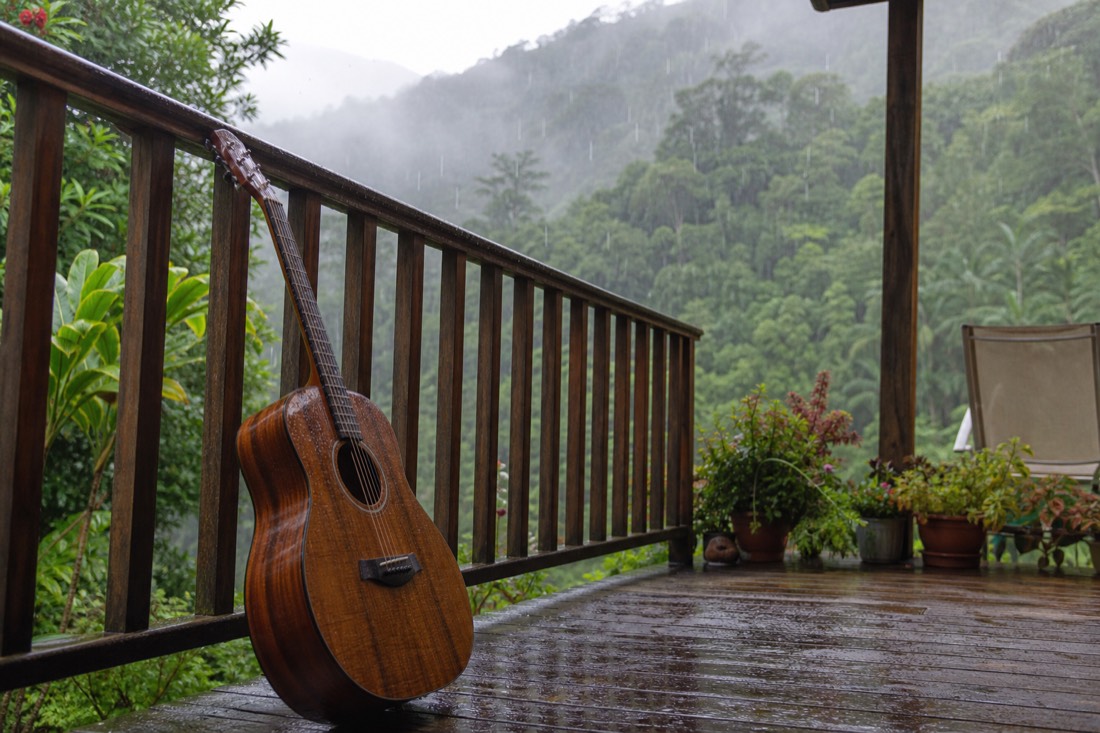
It is a love song to a place. The opening verse, in its published translation, describes seeing "the waterfall of ʻAkaka... leaping in spray from the cliffs." Later verses praise the fragrant, mist-held uplands and describe plucking ginger blossoms for a lei, before closing with the traditional haʻina verse that retells the theme.
The published Hawaiian text with English translation opens exactly where every visitor still stands: "Malihini kuʻu ʻike ʻana / I kahi wailele ʻo ʻAkaka," rendered as "The first time I saw / The waterfall of ʻAkaka," with the falls "leaping in spray from the cliffs" for the line "Lele hunehune maila i nā pali." Anyone who has watched the wind take the bottom half of the 442-foot drop knows how precise "leaping in spray" is. That is not generic scenery praise. It is observation, by somebody who had stood there in the right weather.
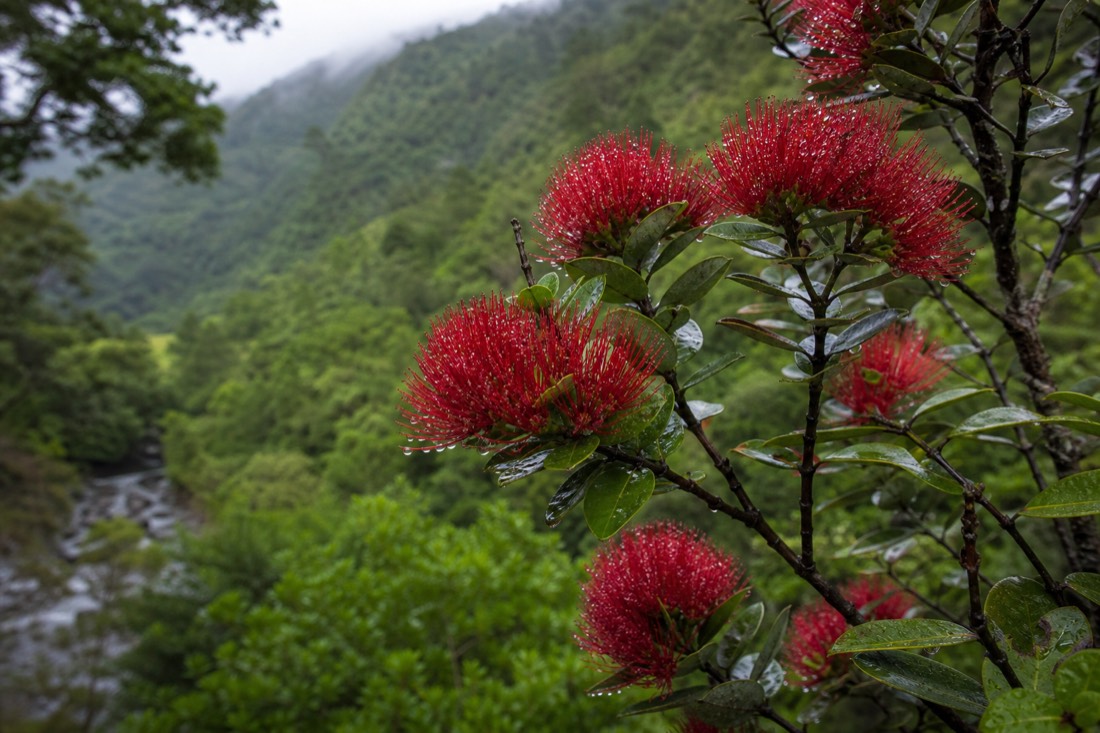
The middle verses move from the falls to what surrounds it. The uplands are "held fast by the mists," from "I ka paʻa mau ʻia e ka noe," and thick with fragrance. Then comes my favourite turn in the whole song, where the singer moves "to pluck / The blossoms of ginger / As a lei for the newcomer." The ʻawapuhi still grows along the loop trail today, and on humid mornings the smell reaches you before the falls do. When guests ask why the trail smells sweet, the song answered that question a century ago.
The final verse turns devotional, asking that the flowers of "my beloved land" be guarded in peace, and the mele closes with the haʻina line that traditionally signals the retelling of the theme. That structure is worth knowing even if you never learn a word of Hawaiian: a mele typically states its subject, elaborates, and then says "thus ends my song of." Recognising the haʻina at the end tells you that you have heard the whole thing rather than a fragment.
| Verse | What it describes | A line from the published translation |
|---|---|---|
| Opening | First sight of the waterfall | "The first time I saw / The waterfall of ʻAkaka" |
| Second | The fall itself, wind-blown | "Leaping in spray from the cliffs" |
| Middle | The uplands above the gorge | "Held fast by the mists" |
| Ginger verse | Making a lei for a newcomer | "The blossoms of ginger / As a lei for the newcomer" |
| Devotional | A wish for the land | The flowers of "my beloved land," guarded in peace |
| Haʻina | The closing retelling | The traditional verse that signals the end |
If you want to sit with the full text, the University of Hawaiʻi's page presents the complete lyrics alongside recorded performances and a kumu's explanation of what the verses carry. Listening to it once before you visit is ninety seconds of homework that recolours the entire trail.
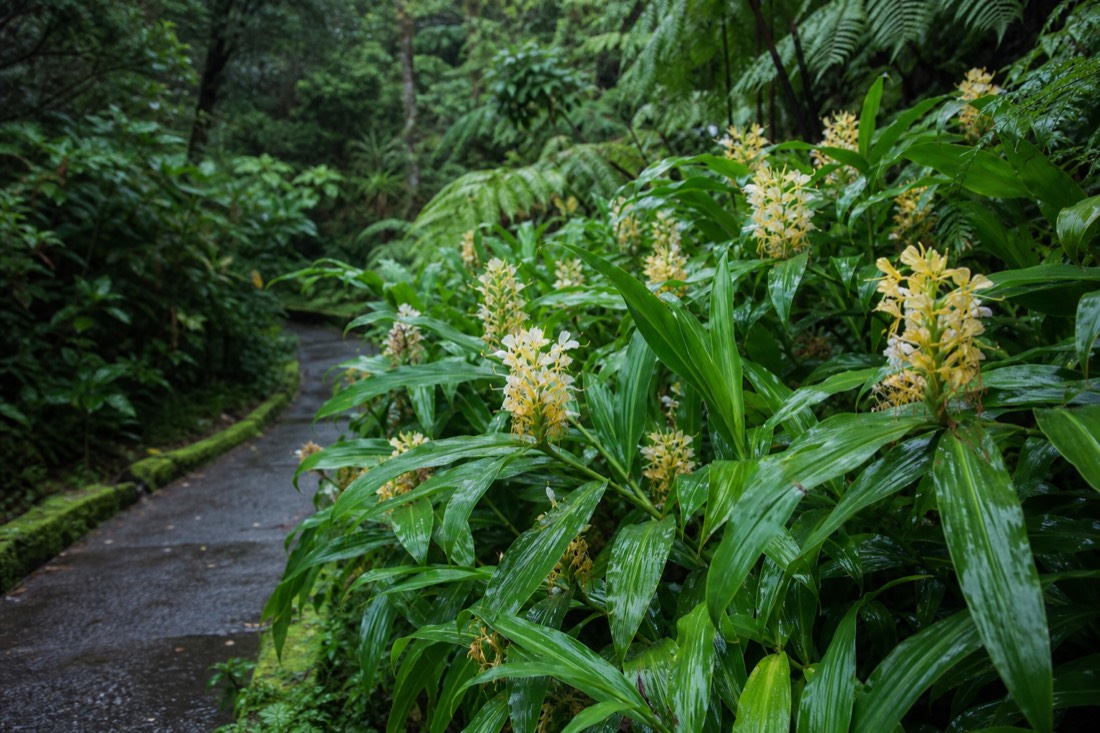
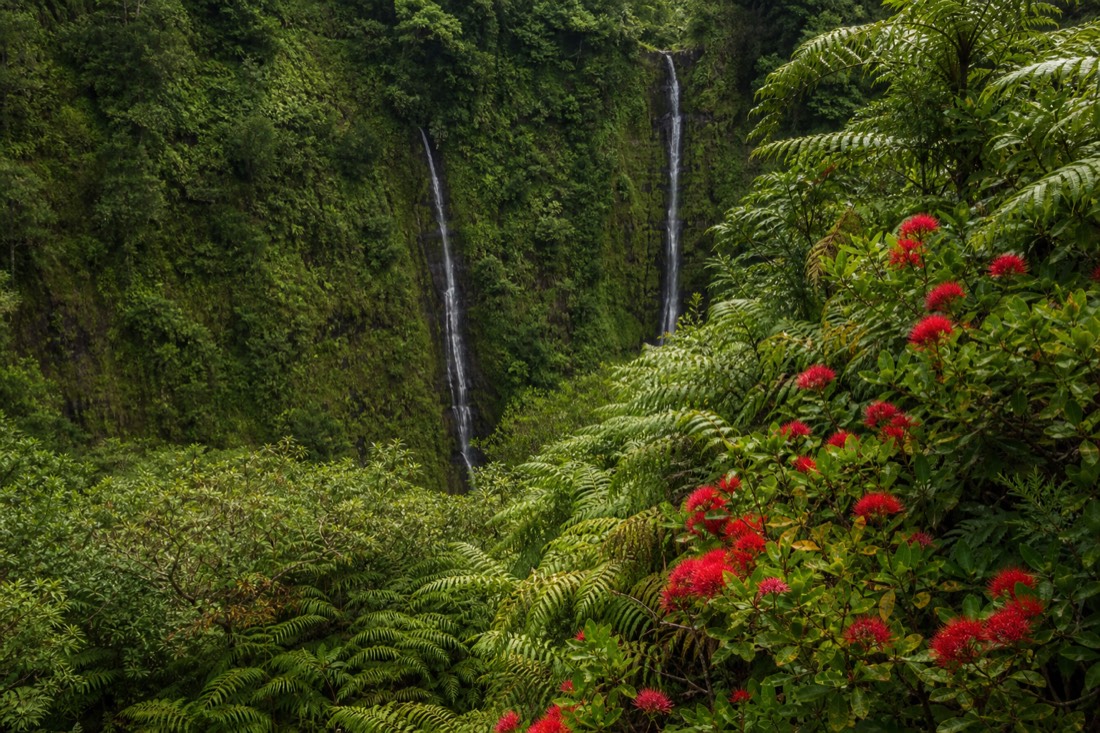
The recorded tradition attached to the song says the falls are named for ʻAkaka, a figure said to have leapt from its heights, with two smaller falls in a nearby ravine described as his grieving lovers, Lehua and Maile. Other documented accounts trace the name instead to a chief. Both sit in the record, and I hand on both.
I pass this story along exactly as the sources hold it. The University of Hawaiʻi's notes on the mele record that the waterfall is "named after ʻAkaka, who is said to have leapt from its heights," and that "his two lovers, Lehua and Maile, disguised as two smaller falls in a nearby ravine, cannot stop from their crying," citing He Mele Aloha. Grief written into water. Standing at the gorge rail with that account in mind, the falls stop being a photo stop and become something closer to a memorial, which is much nearer to how Hawaiian tradition treats storied places.
Two names in that account carry their own weight, and knowing them adds a layer. Lehua is the blossom of the ʻōhiʻa tree, the first thing to grow on new lava and the flower most bound up in Hawaiian stories of love and loss. Maile is the fragrant vine used for the open-ended lei given at the most significant occasions. Whoever shaped this telling did not pick two names at random. They picked the flower of the forest and the vine of ceremony, and set them weeping in a side ravine.
What I will not do is stitch every thread into one tidy legend. The accounts sit side by side, a leaping figure, a grieving pair, a chief's name, rain-calling stones, and Hawaiian moʻolelo is comfortable holding multiple tellings at once. So am I. If you hear a different version from a Hawaiian guide on the trail, theirs comes from a living transmission and this page comes from an archive. Listen to theirs.
The park's documented background records the name as belonging to a chief, ʻAkaka-o-ka-nīʻau-oiʻo-i-ka-wao, grandson of Kūlanikapele and Kīakalohia. That genealogical account sits alongside the leaping figure of the mele, and the sources do not reconcile them.
Hawaiian names carry genealogy the way European place names carry saints, which is to say the name is a claim about who belonged here. The recorded full name of the chief runs to a phrase rather than a word, and that is normal: Hawaiian names of rank often describe a quality, an event or a place. Recording a grandparent's names alongside it, as this account does with Kūlanikapele and Kīakalohia, is the standard way genealogy was preserved and transmitted.
I am not qualified to arbitrate between the two accounts and I will not pretend to be. What I can tell you is what a decade of asking has produced: people from this coast tend to know one version or the other depending on who taught them, and nobody I have met treats the disagreement as a problem to be solved. The falls have a name. The name has more than one story behind it. Both statements are true at once, which is the ordinary condition of oral tradition and only looks untidy from outside.
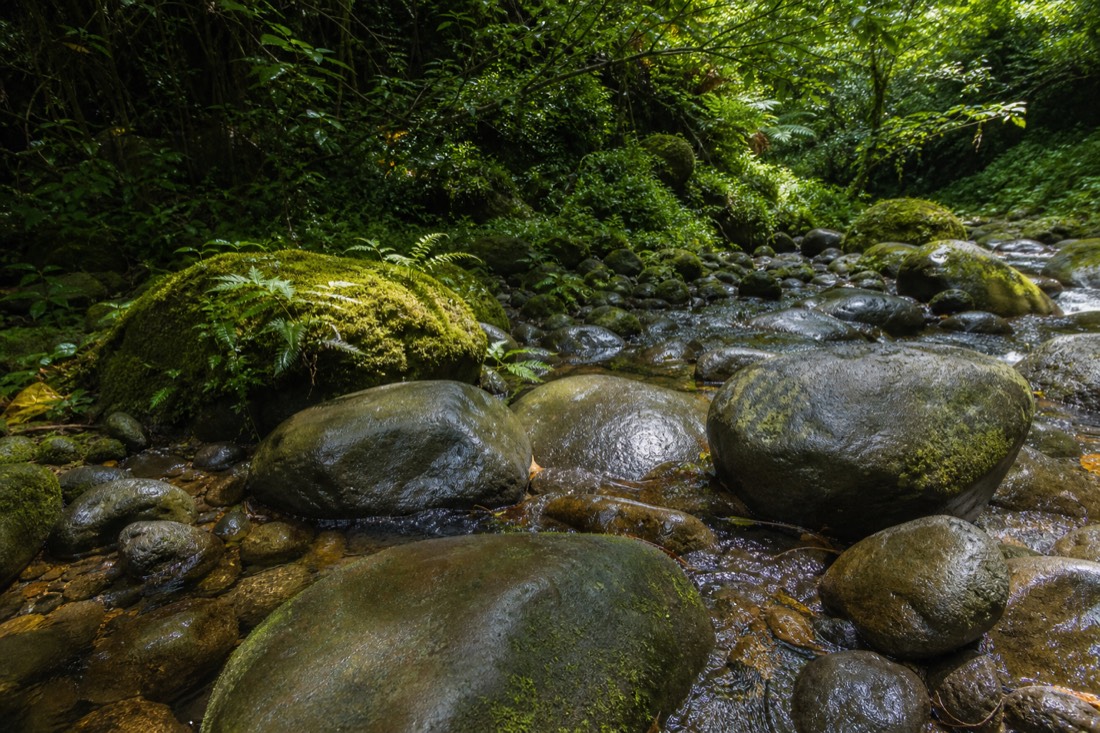
There is one more layer under all of this. The falls sit on Kolekole Stream, and the stream carries its own recorded stories independent of the waterfall. That is a good reminder that the park boundary is a modern invention. What visitors experience as one attraction was, in the record, a stretch of a named stream with sites along it, each with its own account attached.
Two named stones appear in the documented accounts of Kolekole Stream above the falls: Pōhaku o Kāloa, recorded roughly 70 feet upstream, and Pōhaku a Pele, which folklore says will darken the sky and call rain when struck with a branch of lehua ʻāpane. Neither is pointed out on the trail, and I do not pretend to have seen them.
I include this because it is in the record and because it tells you something the park signage does not. The rain-calling stone is the account people remember when I mention it, and the detail that makes it stick is the specificity of the instrument: not any branch, but lehua ʻāpane, the ʻōhiʻa with dark red blossoms. That kind of precision is characteristic of Hawaiian tradition, where the right plant, the right chant and the right time are not decorative.
Being straight about the limits: these are documented accounts of named places on a stream, not a walking route. The gorge below the viewpoint has no public access, the stream above the falls is not on the loop, and I have never had a stone identified to me on the trail by anyone. They live in the record, and the record is where I leave them. If a Hawaiian practitioner tells you otherwise on the ground, that is a different order of knowledge from mine.
| Place or name | What the record says | Where it sits |
|---|---|---|
| ʻAkaka | The falls, and the name in both the mele and the chiefly account | The 442-ft drop itself |
| Kahuna | The second falls visible from the loop | Across the gorge from the main trail |
| Kolekole Stream | The stream the falls sit on | Runs through the park and down to the coast |
| Pōhaku o Kāloa | A named stone recorded about 70 feet upstream of the falls | Upstream, not on the public trail |
| Pōhaku a Pele | Folklore: struck with a branch of lehua ʻāpane, it darkens the sky and calls rain | On the stream, in the record only |
| Lehua and Maile | In the mele's account, two smaller falls in a nearby ravine | Named as the grieving lovers |
The dictionaries collected at UH Hilo give several senses for the word akaka. The one usually attached to the falls, from Judd, Pukui and Stokes, is "clear, plain, luminous," with Andrews adding "clear, as water" and "bright, as the moon." Other words you meet on a visit all appear in the mele with published translations.
Names carry the oldest information on this island, and the Wehewehe Wikiwiki dictionary collection lets you read them yourself rather than taking a guide's word for it. Look the word up and the honest picture is richer than the tidy version travel writing usually gives. Judd, Pukui and Stokes render it "clear, plain, luminous." Andrews, writing in 1865, gives "clear, as water. Lucid; bright, as the moon." Parker's 1922 dictionary adds "luminous; transparent; clear as water." Look up at the full drop on a bright morning and that cluster of meanings explains itself.
The same lookup returns other senses entirely, including "a rent, split, chink," which is a reminder that Hawaiian is a language with layers and that a single English gloss is always a compression. I mention it because being told a place name means exactly one poetic thing is the sort of tidiness that should make you suspicious. The dictionaries are open, they are free, and they show their sources.
For Kahuna Falls next door, the same collection defines kahuna as "priest, sorcerer, master of an art" in the Place Names of Hawaiʻi entry, with the sense of expert practitioner in Judd, Pukui and Stokes. English borrowed that word and flattened it into something close to "witch doctor," which is a long way from the original. The Hawaiian sense is nearer to a person who has mastered a discipline, whether that discipline is healing, canoe building, navigation or prayer.
| Word | Meaning per source | Where you meet it |
|---|---|---|
| ʻAkaka | Clear, plain, luminous (Judd, Pukui and Stokes); clear as water, bright as the moon (Andrews) | The falls, the park, the song |
| Kahuna | Priest, master of an art (Place Names of Hawaiʻi); expert practitioner | The second falls on the loop |
| Wailele | Waterfall, in the mele's published translation | The song's subtitle, Ka Wailele ʻO ʻAkaka |
| Malihini | Newcomer, in the mele's published translation | The song's opening word, and you, welcomed |
| ʻAwapuhi | Ginger, in the mele's published translation | Blooming along the loop trail |
| Noe | Mist, per the translated line "held fast by the mists" | The gorge on most mornings |
| Pali | Cliffs, per the translated line "leaping in spray from the cliffs" | The gorge walls |
That table is deliberately short. Plenty of words appear on park signage and in place names along this coast that I could guess at, and guessing is exactly what this page refuses to do. Sourced translations only, with the dictionary named.
Because oral tradition, colonial-era record keeping and modern tourism each preserved different fragments. The song's credit is well documented. The story behind the name exists in more than one telling. Some published figures, including a height for Kahuna Falls, vary between sources and do not appear on the park's own page at all.
Being honest about uncertainty is more useful to you than sounding authoritative. Here is where the ground is firm and where it is not. Firm: the composer credit, the 1934 first recording, the published lyrics and translation, the dictionary definitions, the 442-foot height of ʻAkaka Falls from the state parks page. Softer: the moʻolelo, which survives in more than one form, and the genealogy, which is recorded but not cross-checkable by me.
Then there is the category of numbers that travel further than their evidence. A height for Kahuna Falls appears in several places online, and the figures do not agree with each other. The park's own page describes Kahuna as cascading and gives no height at all. So I print none, and I would treat any confident number you see for it as an estimate that hardened through repetition. The same caution applies to dramatic retellings of the legend that add detail no source carries.
| Claim | How solid | Source type |
|---|---|---|
| Helen Lindsey Parker credited as composer | Well documented | Music archives, liner notes, songbook |
| First recording in 1934 | Well documented | Recording databases |
| Published lyrics and English translation | Well documented | University song materials, published sheet |
| ʻAkaka Falls at 442 feet | Official | State parks page |
| The leaping figure and the two grieving falls | Recorded tradition, one telling | Songbook note via university materials |
| The chief's name and genealogy | Recorded, not independently checked by me | Park background documentation |
| A height for Kahuna Falls | Contested, none on the park page | Varies by source, so unused here |
From a Hawaiian composer's mele to a recorded standard, then out into hapa haole and exotica repertoires and back into contemporary Hawaiian music. The 1934 release was followed by versions from Hawaiian and mainland groups across the mid-century, and the song remains in active performance today.
The trajectory tells you something about twentieth-century Hawaiʻi. A song written from inside the tradition gets recorded, gets picked up by the touring Hawaiian bands of the 1930s and 1940s, and then gets absorbed into the exotica boom, where mainland listeners encountered it as atmosphere rather than as a specific waterfall on a specific coast. Recording databases list later versions from Hawaiian bandleaders and from exotica acts working out of Waikīkī and the mainland alike.
What is more interesting to me is the return leg. The song did not stay a period piece. It sits in He Mele Aloha, which means it is part of the working repertoire that gets played at gatherings rather than a museum item, and contemporary Hawaiian vocalists still record it. Ask a musician in Hilo and they will know it. That continuity is rare, and it is the reason a hummed few bars on the trail is such a common way for this conversation to start.
If you want to hear the shape of it before you come, start with the 1934 recording for the historical texture, then a contemporary Hawaiian vocal version for the language. The difference between them is the story of a century of Hawaiian music in about six minutes of listening.
Quietly, and mostly for people who arrive knowing what to look and listen for. The song plays in slack key rotations across the island, the names on the park map each carry meaning, and the ginger and mist the mele describes are still physically there on the loop. Give the visit an unhurried hour and it becomes legible.
There is no cultural centre at the park, no interpretive programme, no chanting at the rail. What there is instead is a paved loop through a rainforest gorge where the specific plants named in a ninety-year-old song are growing beside the path. That is a quieter kind of authenticity than a staged demonstration and, to my mind, a better one. The falls are not performing. You have to bring the context with you.
The practical version of that is small and concrete. Learn three words. Play the mele once the night before. Walk the loop slowly enough to smell the ʻawapuhi rather than photographing it. Notice which direction the mist is moving in the gorge and remember the line about the uplands held fast by it. Guests who do those four things describe the visit completely differently from guests who do the loop in eighteen minutes.
Timing helps too. The mist the song describes is a morning phenomenon here far more than an afternoon one, which is one of several reasons the best time to visit guide pushes an early start, and the trail guide explains how long the loop takes even at a crawl. If your day allows only a short window, the time needed guide sets out what fits.
| Where culture surfaces | What to notice |
|---|---|
| The names | ʻAkaka, Kahuna, Kolekole Stream: each a word with recorded meaning, not a label |
| The plants | ʻAwapuhi blooming trailside, the lei flower of the mele; lehua on the ʻōhiʻa |
| The mist | The noe of the song, usually thickest at the gorge in early morning |
| The music | Parker's mele in Hawaiian music rotations; listen before you go |
| The manner | Stay on the trail, keep the noise down, treat a storied place as one |
Stay on the paved trail, keep your voice down at the viewpoints, take nothing from the forest, leave nothing behind, and do not climb any barrier for a photograph. If you want to give the visit weight, learn what the name means before you arrive rather than reading a sign on the way out.
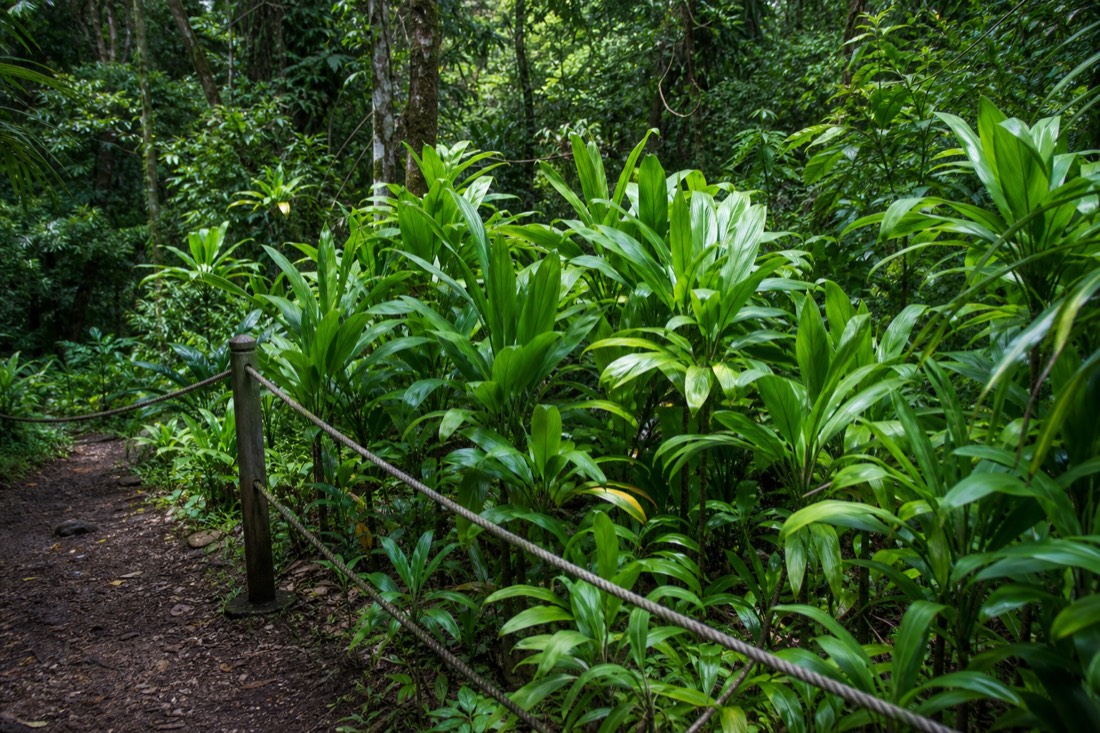
Respect at a storied place is mostly ordinary courtesy applied with a little more attention. The trail is fenced for safety and the gorge below has no access, so there is no version of "just a few steps off the path" that is either safe or acceptable here. Take rubbish out with you, including anything organic. Do not pick the ginger, however tempting the song makes it sound; the mele describes a practice with its own context, not an invitation to strip a public trail.
The part people find harder is volume. Waterfall viewpoints attract shouting, and a gorge amplifies everything. If the account of a leaping figure and two weeping falls has any hold on you at all, the appropriate register at the rail is closer to quiet than to a group photo countdown. I have watched a noisy group and a quiet one visit the same viewpoint ten minutes apart and get entirely different experiences out of it.
For visitors who want to go further than courtesy, the honest route is to spend money and time with Hawaiian-led operators rather than reading about culture from a distance. A guided waterfall hike and swim led by a Native Hawaiian guide is the closest thing on this coast to learning the place from someone whose family knowledge is the source rather than the citation, and the difference between that and a page like this one is considerable.
Three things, none of which take long: listen to the mele once, learn what ʻakaka, wailele and noe mean, and plan enough time at the park to walk the loop slowly. An hour at the falls is the difference between seeing a waterfall and visiting a place with a name.
Time is the variable that decides this, more than knowledge. The loop is 0.4 miles and you can do it in twenty minutes if you push. Nothing on this page survives that pace. The mist, the ginger, the two cascades in the side ravine, the sound arriving before the view: all of it needs you to stand still somewhere for longer than a photograph takes. That is why, when guests tell me they care about the cultural side of the visit, my first advice is about scheduling rather than reading.
If you are driving yourself, that is easy to arrange: get to the gate near opening at 8:30am and give yourself an hour without a next appointment. If you are on someone else's schedule, the number to check is how long the itinerary allocates at the park, because it varies a lot. The Hilo-side day that pairs the falls with Rainbow Falls and the volcano is the one I point culture-minded guests toward when they want the day handled, and for those staying across the island the waterfall day that starts on the Kona coast removes the two-hour drive that otherwise eats the unhurried hour you came for.
The rest is reading you can do on the plane. The things to do in Hilo guide covers where the music and the museums are in town, the waterfalls guide puts ʻAkaka among its neighbours, and a morning at the falls is simply what the visit feels like from the inside when you do it properly.
The falls will outlast every page written about them, this one included. The song has already outlasted its composer by seventy years, which is a longer run than most things get. Learn three Hawaiian words, play the mele once, and you will walk out of the gorge having visited a place rather than a picture. That is the whole difference, and it costs nothing.
Full day
from $188per person, varies by date Check availability →7 to 8 hours
from $179per person, varies by date Check availability →Half day
from $150per person, varies by date Check availability →