Big Island in a Day circle tour
About 11 hours
from $276per person, varies by date Check availability →There is no wrong month on this coast. There are wrong hours, and a guide's calendar for dodging them.
 Verified by Kekoa Kalani, Akaka Falls tour guide and island nature specialist
Short answer
Any month works. ʻAkaka Falls is fed by one of the wettest coasts in Hawaii, so the 442-foot drop flows year-round. The real levers are time of day and recent rain: mornings are clearer, quieter and better lit, and the falls swell impressively after showers. Gates run daily 8:30am to 5:00pm.
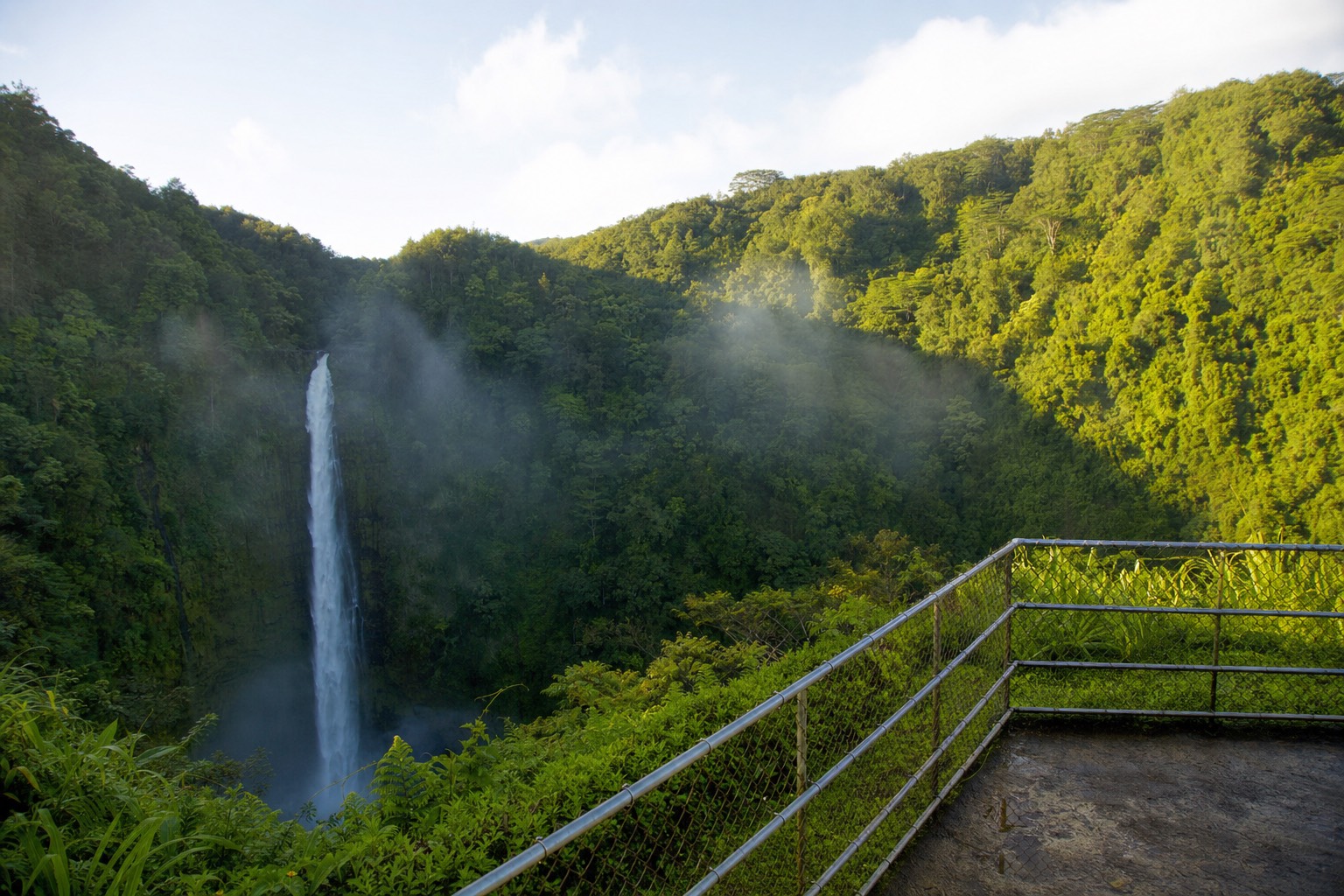
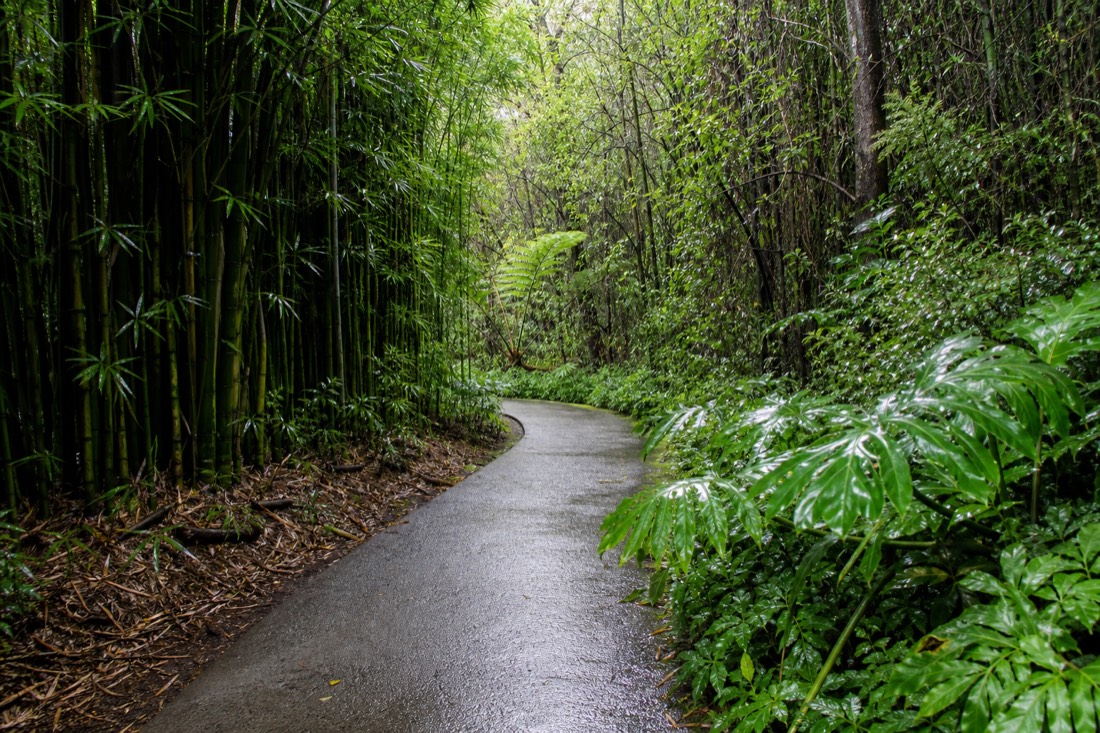
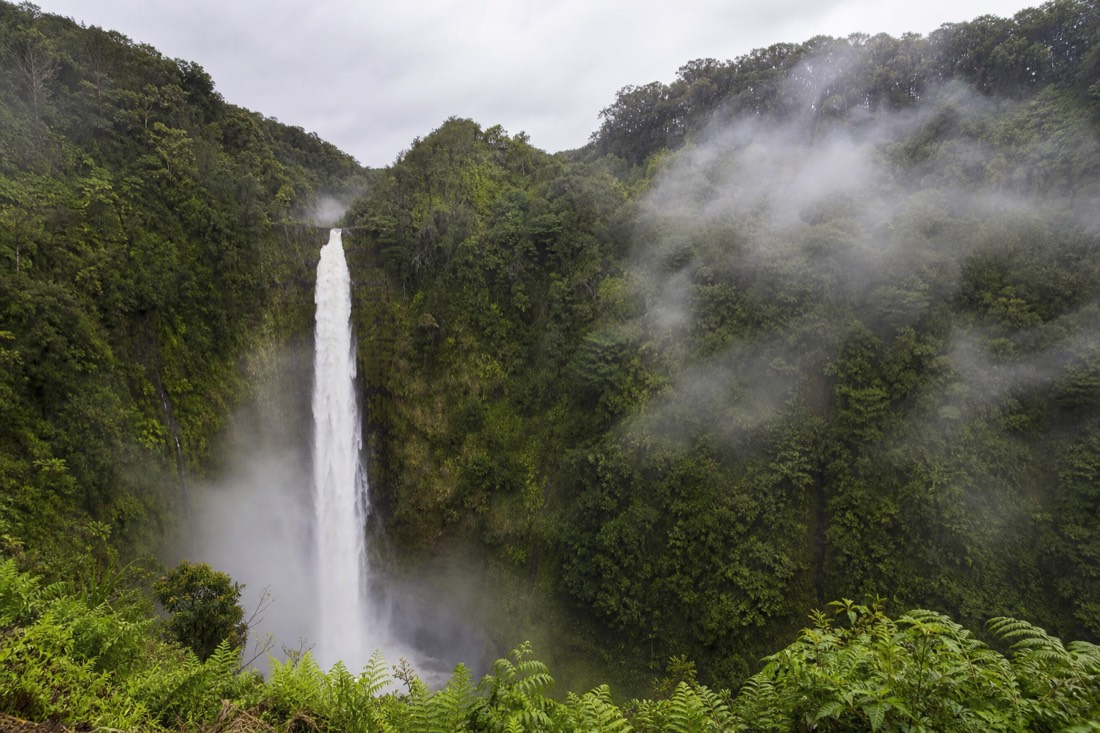
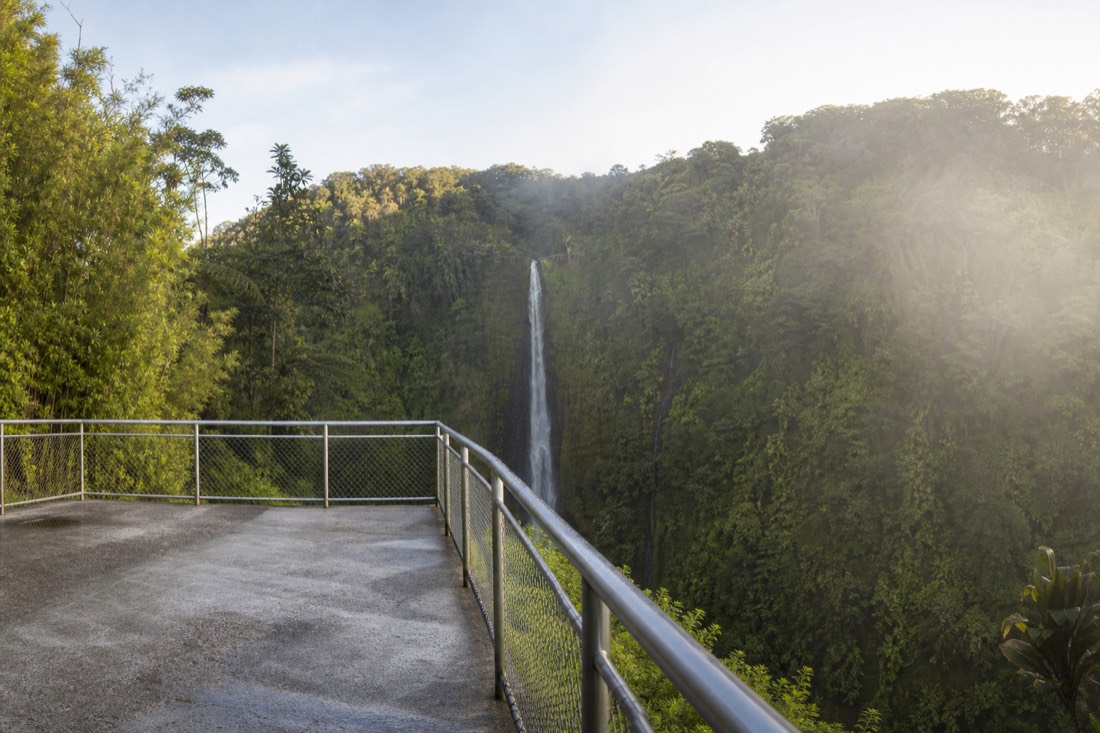
The first thing you hear is not the waterfall. Walking up from the lot you get the gulch instead: water dripping off ʻōhiʻa leaves, a lot of birds, something moving under the ferns. Then the paved path bends and the canopy opens and 442 feet of white water is simply there, hanging in a green bowl that swallows the sound of everyone standing next to you. Guests ask me for the magic month, and I disappoint them gently every time. I have stood at that overlook in February drizzle and August glare and most moods in between, for about a decade now, and the falls have never once been off. That is the honest headline about timing this place. The waterfall does not have a season. Your photographs, your parking spot and your patience do.
No. The falls run at full height in every month because the Hamakua Coast that feeds Kolekole Stream is one of the wettest strips of land in Hawaii, drawing nearly 84 inches of rain a year. What shifts between January and July is crowd size and shower frequency, not whether the waterfall is worth the drive.
Plenty of famous waterfalls are seasonal creatures. They roar in spring melt and shrink to a wet stain by late summer, and you have to time a trip around them or accept a disappointment. ʻAkaka Falls does not work that way. The official Hamakua Coast page puts regional rainfall at nearly 84 inches a year, and that constant soaking is the whole story. The rainforest along the loop is the same fact in plant form: nothing that green grows on a dry schedule.
So the month question is mostly the wrong question, and I say that as someone who fields it in the van three or four times a week. What changes through the year is texture, not existence. Winter brings heavier shower systems, so more thundering flow days and more chance of walking the loop in rain. Summer leans drier and steadier, warmer on the stairs. Two different good visits.
If you pressed me for a personal favourite I would say the shoulders, May and September. The falls run exactly as hard as they do in February, the shower rhythm relaxes a little, and the overlook feels like a place rather than a queue. That is a preference about elbow room, not about the waterfall. Nobody who came in July has ever told me the falls looked small.
Here is the sorting I actually do in my head when someone asks about timing, laid out plainly. The left column is what visitors worry about, and the right column is what really moves the needle.
| What visitors ask about | Does the month decide it? | What actually decides it |
|---|---|---|
| Whether the falls are running | No | Nothing, they run every month |
| How big the falls look | Barely | Rain in the last day or two |
| How busy the overlook feels | Somewhat | Day of week, ships in port, school holidays |
| How good your photos come out | A little | The hour you walk through the gate |
| Whether you get rained on | Somewhat | Luck, plus how early you go |
| Whether you find easy parking | Somewhat | Arrival time, and almost nothing else |
Read that table and you can see where the real control sits. Four of those six rows are decided by the clock on the day you visit, not by the page of the calendar you booked. That is why this guide spends far more time on hours than on months, and why the one thing I push hardest is being at the gate early. Everything else on my list of things I wish visitors knew follows from that single decision.
Trade winds push moist ocean air west into the windward slope of Mauna Kea. The air has nowhere to go but up, it cools as it climbs, and it drops its water on the Hamakua Coast most days of the year. Kolekole Stream drains a slice of that catchment, so the falls are fed by geography rather than by a season.
This is the part guests find genuinely interesting, because it explains the whole island in one breath. You can leave Kona, where the resort coast bakes under a hard blue sky, and reach Honomū in ninety minutes to find low grey cloud and dripping trees. Same island, same hour, two climates. The mountain is the reason: air riding the trades hits that slope and has to lift, and lifting air rains.
Kolekole Stream sits inside that machine. It gathers off a wide, steep, forested catchment that is being watered somewhere along its length almost continuously, then delivers that water to the lip of a gorge cut into old lava. The stream never waits for a wet season, because here the wet season is a rolling condition rather than a calendar block. That is why the 442-foot drop looks permanent instead of seasonal.
The second half of the geography matters for the walk itself. The 65.4-acre park is basically a slot of rainforest hung on the side of a gulch, so the 0.4-mile paved loop is always a little damp underfoot, in July as much as January. Moss on the handrails. Condensation on the lens. Air that smells like soil and warm leaves. Some of my guests arrive expecting a beach climate and find themselves in something closer to a greenhouse, which is exactly why I talk about grip and footwear in the loop trail guide rather than treating it as a stroll.
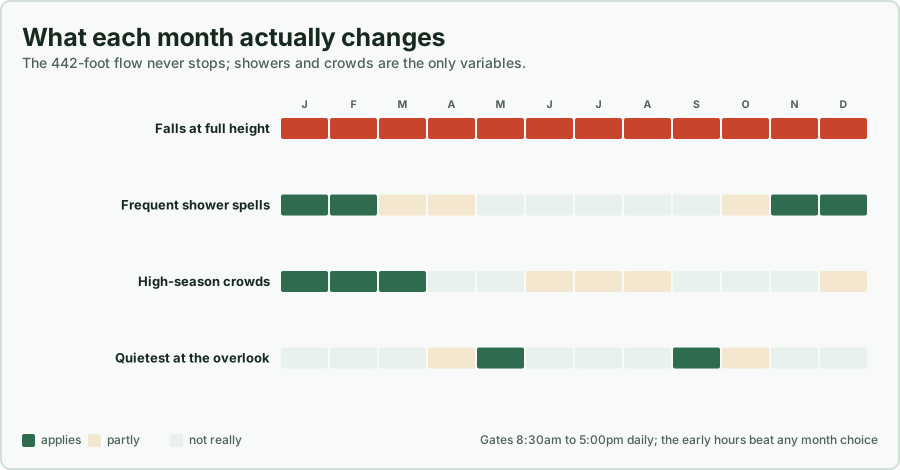
Every month gives you a full waterfall. Winter runs wetter and busier, summer runs warmer and busier in a different way, and May and September are the quiet middle. Use the grid below to set expectations for showers and crowds, then plan the hour of your visit far more carefully than the month.
I built this table out of field notes rather than a forecast, and I want to be honest about what it is. It is what I tell friends who ask me what a given month tends to feel like at the overlook. The Hamakua Coast is perfectly capable of serving you four seasons before lunch, and it does so regularly, so treat every row as a tendency and not a promise.
| Month | Falls flow | Rain on the loop | Crowds at the overlook |
|---|---|---|---|
| January | Full, often swollen | Frequent showers | High season |
| February | Full, often swollen | Frequent showers | High season |
| March | Full | Regular showers | High, spring break waves |
| April | Full | Showers ease | Moderate |
| May | Full | Passing showers | Quietest stretch |
| June | Full | Lighter, briefer showers | Summer families arrive |
| July | Full | Lighter, briefer showers | Busy middays |
| August | Full | Lighter, briefer showers | Busy middays |
| September | Full | Passing showers | Quiet again |
| October | Full | Showers build | Quiet to moderate |
| November | Full, swelling | Wetter spells return | Moderate, holiday spike late |
| December | Full, often swollen | Frequent showers | High season late month |
Three rows deserve a sentence of their own. March is the one people underestimate, because spring break sends a real wave through the parking lot while the weather is still doing its winter thing. October is my quiet favourite after September, the coast greening up again as the wetter spells return with the summer traffic long gone. Late December flips into high season almost overnight.
Notice what the flow column never says: low, thin, reduced, disappointing. If your only free week is the second week of August, take it. The one honest caveat is what a month does to your other stops, because winter light dies earlier in the afternoon and squeezes a big driving day. If the falls are one piece of a wider plan, that plan is more season-sensitive than the waterfall is, and the wider run of falls near Hilo is where that shows up first.
Morning, and the earlier the better inside the daily 8:30am to 5:00pm gates. The first two hours give you clearer air before the afternoon cloud builds, softer light down into the gorge, cooler stair climbs and a parking lot that still has honest spaces in it. Everything about the visit gets harder after about eleven.
The gate hours are published on the official DLNR park page, and they do not flex for sunrise or sunset. Inside that window the pattern is consistent enough that I plan around it without checking anything. Hamakua weather builds through the day. Cloud thickens over the slope, the humidity climbs, and by early afternoon the gorge often sits under a lid. Walk in at 8:35 and you may share the main overlook with three other people. Arrive at one o'clock in July and you will wait your turn at the railing.
Here is how I rank the day, slot by slot, with the honest trade-off in each one.
| Time slot | Light and views | Crowds | My verdict |
|---|---|---|---|
| 8:30am to 10:00am | Clear air, soft light reaching the falls | Lightest of the day | The window I aim for |
| 10:00am to 1:00pm | Still good, warming fast, cloud building | Building steadily | Fine with patience |
| 1:00pm to 3:30pm | Lid over the gorge, humid stairs | Peak, tour and port waves | The slot I avoid |
| 3:30pm to 5:00pm | Softening again, mist possible | Thinning out | A good plan B, watch the clock |
The late slot deserves a fair word, because not every itinerary can hand the falls its morning. Between half past three and closing the day's waves have rolled through, the light goes soft a second time, and on lucky evenings mist pools in the gorge and gives the falls a moodier face than any postcard shows. The catch is the clock. Gates close at 5:00pm and they mean it, so treat 3:30 as your real deadline.
Two practical notes for the early plan. Pay your entry and parking before you drive out, because reception at the park is poor and the kiosks take credit cards only, which is the single most common way I see a smooth morning go sideways. The fee structure itself is simple and I break it down in what a visit actually costs. Second, if unhurried time at the railing matters more to you than covering ground, look at a Hilo-side day built around the falls rather than one that treats them as a quick stop: you can see which dates still have space before you lock the rest of your week.
Rain makes the falls bigger and the walk wetter, and that trade usually favours you. Flow swells within hours of heavy rain up the mountain, mist billows off the plunge pool, and the crowd thins fast. The costs are slick steps, grey flat light and spray on your lens, all of which are manageable.
I actively steer repeat visitors toward a rainy morning. A rain-fed ʻAkaka Falls is a different animal from the postcard version: heavier water, a louder gorge, mist climbing the cliff walls like smoke off a fire. The loop stays entirely walkable because it is paved end to end. You need soles with tread and one hand free for the rail, and that is the whole equipment list.
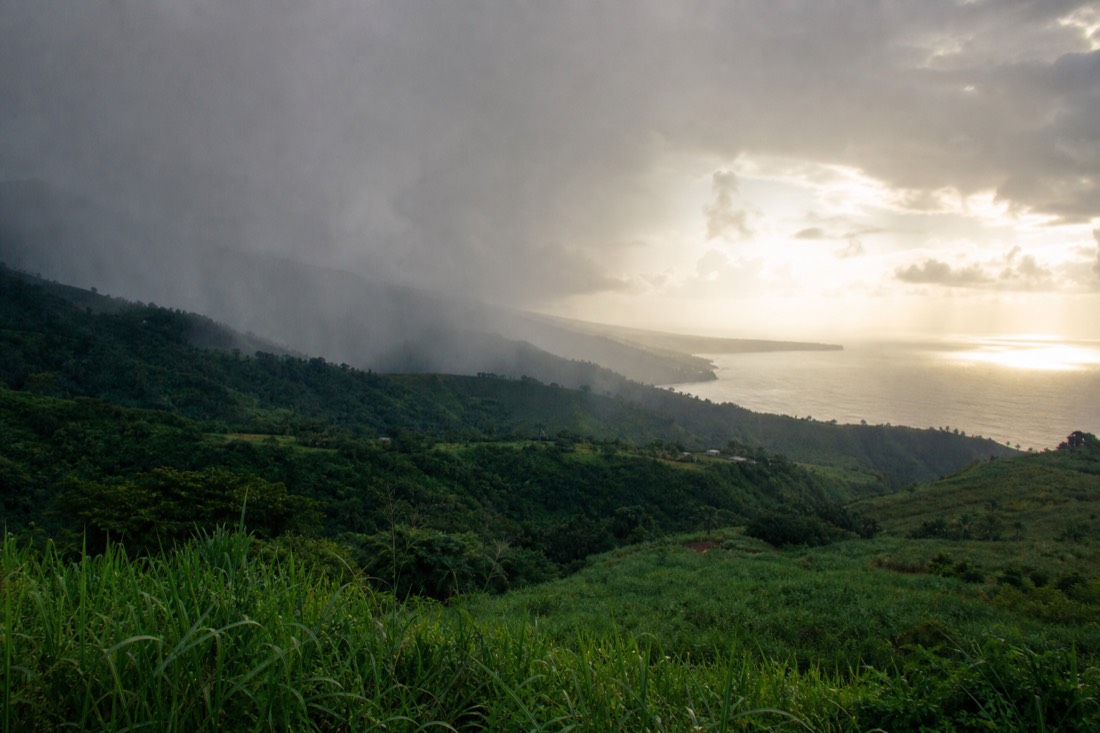
Reading the sky here takes about a day of practice. Hamakua showers announce themselves: the air stills, the birds go quiet, and a grey curtain slides down the coast from the northeast. When guests see that curtain from the parking lot they want to sit in the car and wait it out. I tell them to start walking. Most showers cross the gulch in the time it takes to reach the first overlook, and the canopy shrugs off the light ones entirely. Waiting for perfect sky is the one strategy that reliably wastes a morning.
This is the balance sheet, and it is less lopsided than most people assume before they try it.
| After rain | What gets better | What gets harder |
|---|---|---|
| Falls volume | Fuller, louder, visibly heavier | Spray reaches the overlook on big days |
| Photography | Mist drama, saturated greens | Flat grey sky, water on the lens |
| Trail | Rainforest at its absolute best | Slick steps, slower pace |
| Crowds | Thin out within minutes | Everyone left is under an umbrella |
| Air | Cool, clean, easy on the climb | Heavy humidity once it stops |
The one scenario I plan around rather than through is a full system parked on the coast for days. Showers pass in twenty minutes here. Systems sit. If the radar shows the latter I still go early and treat the visit as a sound experience as much as a visual one, because a gorge full of moving water at close range is worth the walk under any lid of cloud. One of those days is written up in rain at the falls.
The parking lot fills in waves rather than a steady climb. It is genuinely quiet at opening, fills through mid-morning, peaks roughly between eleven and three when the day-tour and port traffic converges, then drains steadily after four. Arriving inside the first ninety minutes changes the visit more than any other choice you make.
The lot at the top of Highway 220 is small, and that is the mechanism behind everything. There is no overflow to speak of, so once it is full the road above the gate becomes a slow circulating queue of cars waiting for someone to leave. On a busy midday I have watched people spend twenty minutes on that loop before they even reach the pay station, which turns a forty-minute stop into an hour of frustration.
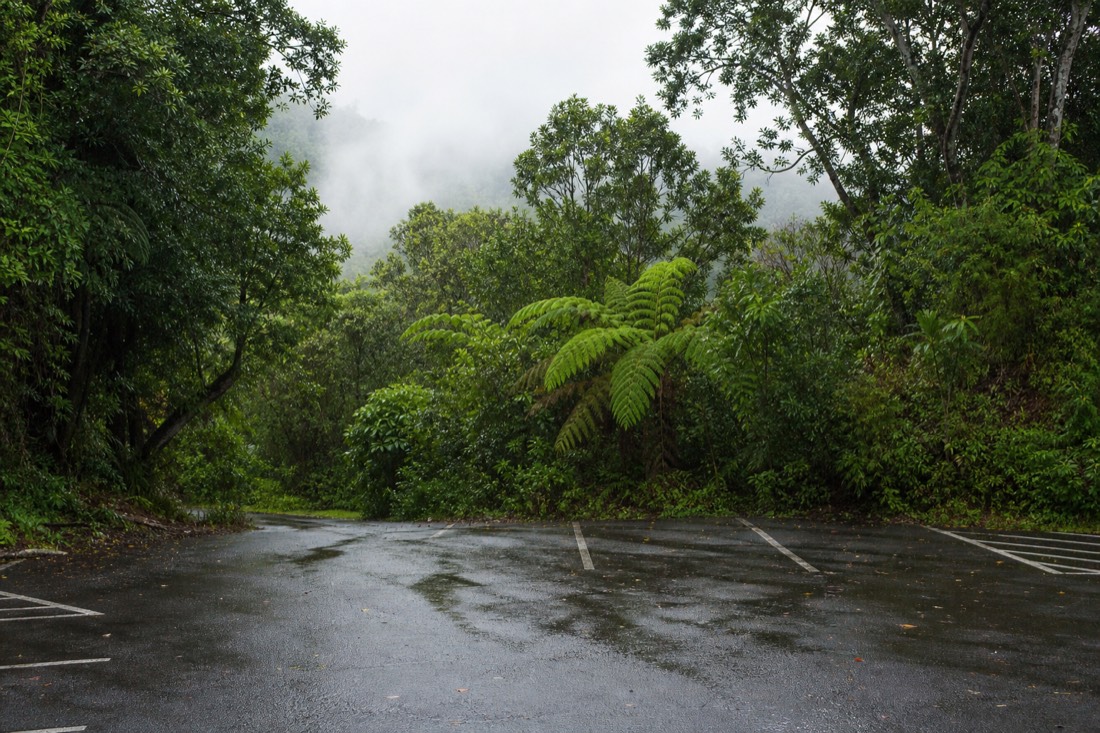
The crowd behaves differently inside the park, too. Early arrivals spread out because most of them walk the full loop, so even a half-full lot can feel empty at the main overlook. Midday arrivals compress, because many take the shortcut straight to the falls view and stack onto one platform at once. That is why noon feels four times busier than the car count suggests.
If you are working out how long to allow, the honest answer depends on which wave you land in. An early walker doing the whole loop with photo stops is comfortable in forty to fifty minutes. A midday arrival should add the parking queue and the railing wait on top of that, which is the arithmetic I lay out in how much time you actually need. The falls take the same amount of time in both cases. The people do not.
After about four the lot loosens noticeably, and the last hour before closing has a different character: fewer cars, longer shadows, birds picking up again.
Weekdays run quieter than weekends year-round, because the falls are a favourite easy outing for island families as well as visitors. On top of that sit two visitor waves, mid-December through March and June through August, plus short sharp spikes around local school breaks. None of it should change your travel dates.
The weekly pattern is the one most planning guides miss. This park is not only a visitor attraction. It is where Hilo families take the grandparents and the kids on a Sunday, with a cooler and folding chairs, and that traffic peaks late morning at the weekend. A Tuesday in the same month feels like a different park. If you have flexibility in which day you drive the coast, spend it here rather than on the month.
Layer the yearly waves on top and you get the pattern below. I have kept it to the rhythms I can actually see from the lot rather than anything I would have to invent.
| Rhythm | When it shows up | What the overlook feels like |
|---|---|---|
| Weekday lull | Tuesday to Thursday, any month | Room at the rail, easy parking |
| Weekend local wave | Saturday and Sunday, late morning | Families, coolers, cheerful noise |
| Winter visitor season | Mid-December into March | Steady midday pressure most days |
| Spring break spikes | Scattered through March | Short, intense, then gone |
| Summer family season | June into August | Busy middays, warm stairs |
| Shoulder quiet | May, September, early October | The park at its most peaceful |
Local school breaks are worth one note, because visitors never see them coming. Hawaii schools do not run on the mainland calendar, so a random-looking Thursday in October can fill with island families. There is no way to plan around that from abroad and no need to, because the early gate beats it anyway.
The yearly waves matter more for lodging and rental cars than for the waterfall. Mid-December through March and June through August are when the whole island runs tight, and that pressure reaches the falls indirectly, through full day tours and busy roads, rather than through anything happening at the overlook. Plan your dates around what you can book. Plan your hour around the lot.
Hilo is a working cruise port, so on ship days a large block of visitors moves through the same corridor at roughly the same time. The surge lands at the falls in the late morning and holds through early afternoon. An 8:30am arrival sidesteps the whole thing, because ships dock and disembark on a slower clock.
The mechanism is simple once you have watched it a few dozen times. Passengers come ashore, board coaches or rental cars, and the Hamakua run is one of the most popular short excursions from the pier. So the traffic is not spread evenly across the day. It is a block, and it lands on the midday slot that was already the busiest part of the park's own rhythm.
I do not know any ship's schedule in advance and would not print one if I did, because they shift constantly. What I know is the shape. If a ship is in, the middle of the day at the overlook is busier than the same hour otherwise, and the parking queue is where you feel it first.
For passengers themselves the calculation runs the other way, and it is a real constraint rather than a preference. All-aboard time is not negotiable, the drive from the pier is around eleven miles each way, and the park loop plus the queue eats more of a port day than people expect. That is the case I make in the cruise port to the falls guide, and the day I walked through end to end in one cruise day in Hilo. If you are working a short window and you would rather not gamble on the rental counter and the parking lot, a half-day waterfall circuit from Hilo is the low-stress version, and you can compare departure times against your port day before you commit.
One more thing if you are self-driving on a ship day. The surge is real on Highway 19 and through Honomū as well as at the park. Leaving Hilo before nine and heading back down the hill before eleven puts you in front of it in both directions.
The gorge is deep and steep, so the sun reaches the water late and leaves early. Morning wins in every month, but the exact hour drifts: winter light arrives lower and softer around mid-morning, summer light gets hard fast, and any overcast or rainy day gives you the most even light of all.
Think of the falls as sitting at the bottom of a green shaft. That geometry does more to your photographs than the season does. Early on, light bounces and diffuses off the gulch walls, which flatters the water and the greens. As the sun climbs, contrast between lit rim and shadowed gorge widens until the scene is genuinely hard to expose.
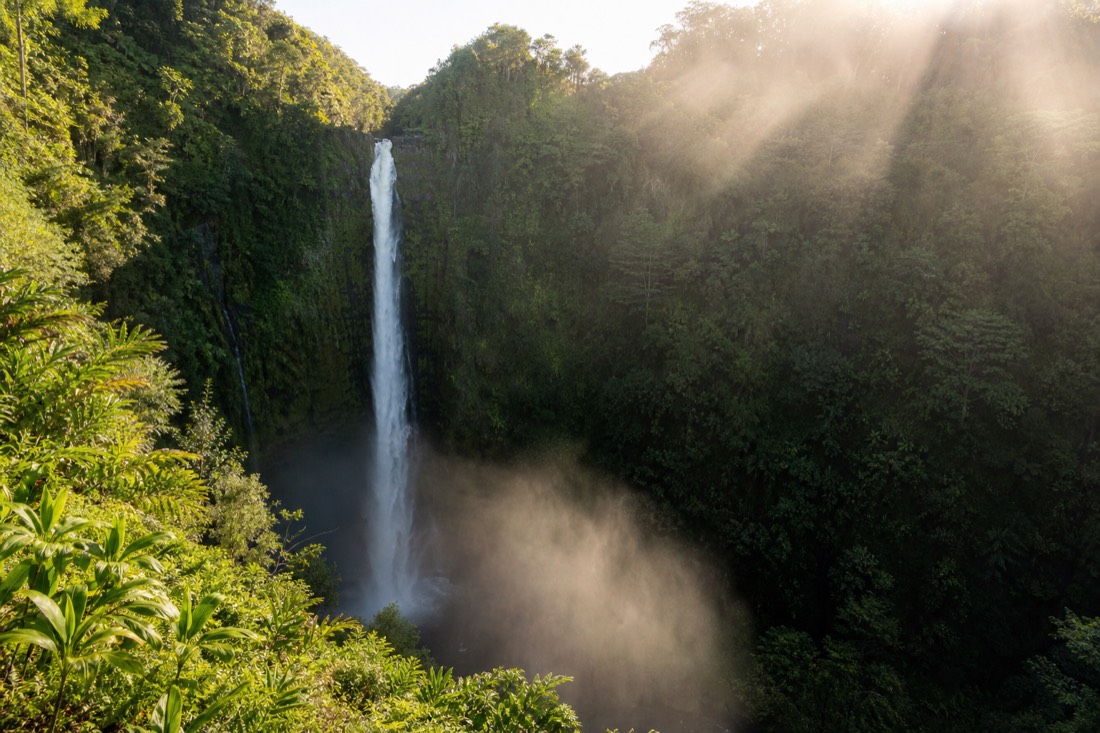
Here is how the year shifts that window, in the terms I would actually use standing next to someone with a camera.
| Time of year | Sun angle into the gorge | The hour I aim for | What you get |
|---|---|---|---|
| Winter months | Low, slow to reach the water | 9:00am to 10:30am | Even light, deep greens, frequent mist |
| Spring | Climbing, gorge lights earlier | 8:30am to 10:00am | Clean water detail, gentle contrast |
| Summer | High and hard by late morning | 8:30am to 9:30am | Bright falls early, harsh bowl after |
| Autumn | Dropping back, gentle again | 9:00am to 11:00am | Warm side light, calmer air |
| Any wet day | Flat and diffuse, no shadows | Whenever it is raining | Saturated colour, moody gorge, no blown sky |
That last row surprises people. A grey day is not a failed photo day at ʻAkaka. It is the easiest lighting the place ever offers, because the sky stops competing with the water and the greens go rich instead of washed out. The cost is a wet front element and a lot of lens wiping, which is a fair trade. The full technical version of all this, including what to do about the railing and the shooting angles that work from the platform, lives in the photography guide.
The other variable is mist. On heavy-flow mornings the plunge pool throws up a column of spray that catches side light beautifully and fogs everything you own. Shoot early, and give yourself time to wait out a gap rather than settle for one rushed frame. That argues for a day built around the falls instead of a stop squeezed between two other places.
Yes, and it is the part almost nobody plans for. The falls perform in any weather. The road to them is a different matter: Highway 19 along the coast throws spray and sudden heavy cells, the gulch bridges puddle, and Highway 220 up to the park is narrow and steep with blind bends. Slow down and the whole problem disappears.
The park sits at the end of ʻAkaka Falls Road, Highway 220, about 3.6 miles southwest of Honomū and roughly eleven miles from Hilo. On paper that is nothing. In heavy rain it is a genuinely different drive, because the coast road crosses gulch after gulch, and the low points of those crossings collect standing water fast. Add low cloud sitting on the highway and visibility can drop to a few car lengths for a minute at a time.
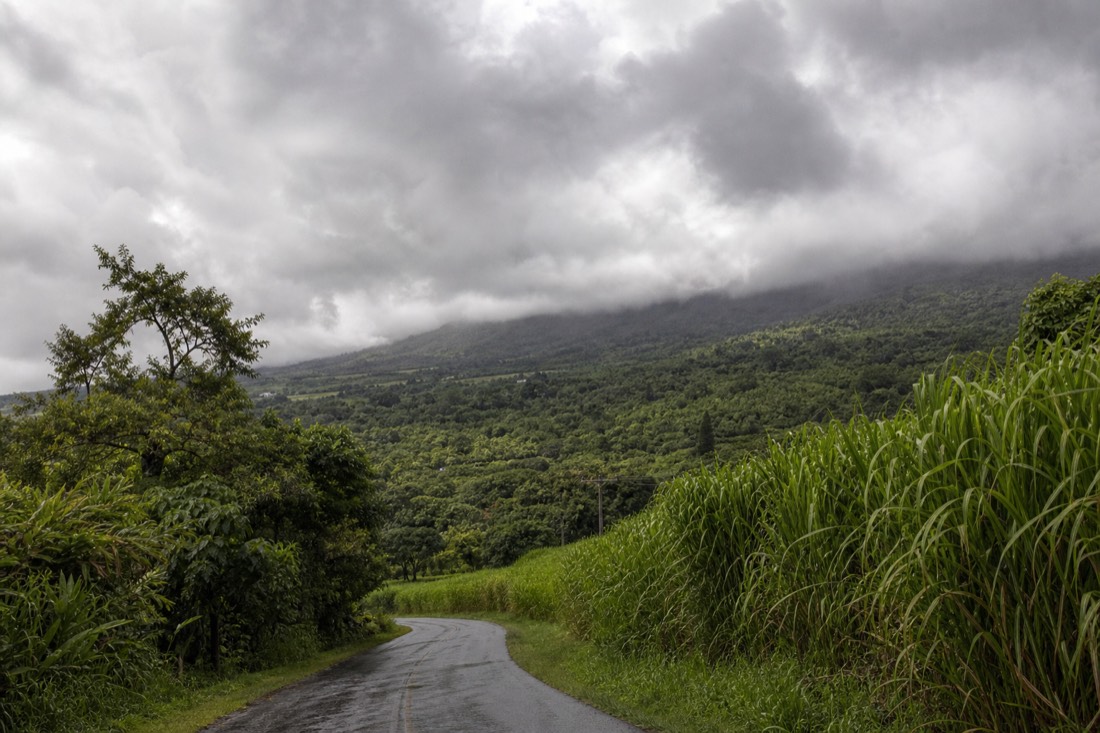
None of that is dangerous at sensible speeds. It is only dangerous at the speed people drive when they are late for something, which is one more argument for going early with time in hand. Here is the stretch-by-stretch version I give guests before we set off in wet weather.
| Stretch of road | What wet weather does | How I handle it |
|---|---|---|
| Highway 19 along the coast | Spray, sudden heavy cells, low cloud | Headlights on, wipers up, drop the speed |
| Gulch bridges and curves | Standing water at the low points | No overtaking, brake before the bend |
| Honomū main street | Narrow, wet, cars parked both sides | Crawl through and expect people crossing |
| Highway 220 up to the park | Steep, narrow, blind bends, cane country | Hold your lane and let local traffic past |
| The park lot and gate | Slick pavement, puddled kerbs | Park nose-out, mind the first step down |
There is a second-order effect people miss. Wet weather slows your other stops too, so a day that looked comfortable on paper starts eating its own margins and the falls become the stop you rush. If Rainbow Falls is on the same run, it sits inside Wailuku River State Park with hours of 7:00am to 5:30pm, a wider window than ʻAkaka gets, which makes it the more forgiving of the two to leave for later. That is the whole subject of Rainbow Falls versus ʻAkaka Falls, and the road itself gets its own write-up in the Hamakua Coast drive.
If you are coming from the resort side, the wet-weather version of that drive is the one that changes minds. Ninety minutes each way on unfamiliar road, in rain, bracketing a forty-minute stop, is a long day at the wheel. Handing it over is a legitimate answer rather than a luxury, and you can see current dates and pricing for the waterfall-first day that starts on that coast.
Stop fighting for the perfect solo hour and let the route decide. From Hilo the falls are close enough to take the 8:30am gate easily. From Kona they sit about ninety minutes out, so they belong inside a planned loop with the volcano and the coast, sequenced so each stop lands at an hour that works.
Self-drivers based in Hilo have the easiest job on the island. Leave town around eight, roll up Highway 220 through Honomū as the shops are opening, and you are on the loop while the coast is still rinsed and quiet. Pay the entry and parking the night before and the whole stop runs on rails. That is the shape of the morning I sketch out, breakfast included, in the perfect ʻAkaka Falls day.
From the Kona side the arithmetic changes completely. Ninety minutes out, ninety back, and almost nobody drives that for a single forty-minute stop. The falls become one bead on a string that also holds Volcanoes National Park, a black sand beach and a stretch of the Hamakua Coast, and once you have four stops the order matters more than any single arrival time. Get it wrong and you reach the falls at one in the afternoon with a full lot and a lid of cloud. The realistic version of that drive is in Kona to ʻAkaka Falls.
That is exactly the problem a planned island day is built to solve, and it is the honest reason I recommend one to people staying on the resort coast rather than to people staying in Hilo. Somebody else has already worked out what order the stops go in, the park admission is handled, and you are not doing three hours of unfamiliar driving on either end of it. If that is your side of the island, check price and availability for your travel date and see whether the sequencing suits you.
So skip the month agonising. Book the trip for whenever your life allows it, then spend your planning energy on the hour instead. Be at the gate when it opens, take the rain as a gift if it comes, drive the coast slower than you think you need to, and the falls will handle their end. They have not missed a day in all the years I have been walking up to them.
About 11 hours
from $276per person, varies by date Check availability →Half day
from $229.99per person, varies by date Check availability →