Akaka Falls, Volcanoes & Hilo day (full hour at the falls)
7 to 8 hours
from $179per person, varies by date Check availability →The loop takes under an hour. The perfect day is decided by what you wrap around it.
 Verified by Kekoa Kalani, Akaka Falls tour guide and island nature specialist
Short answer
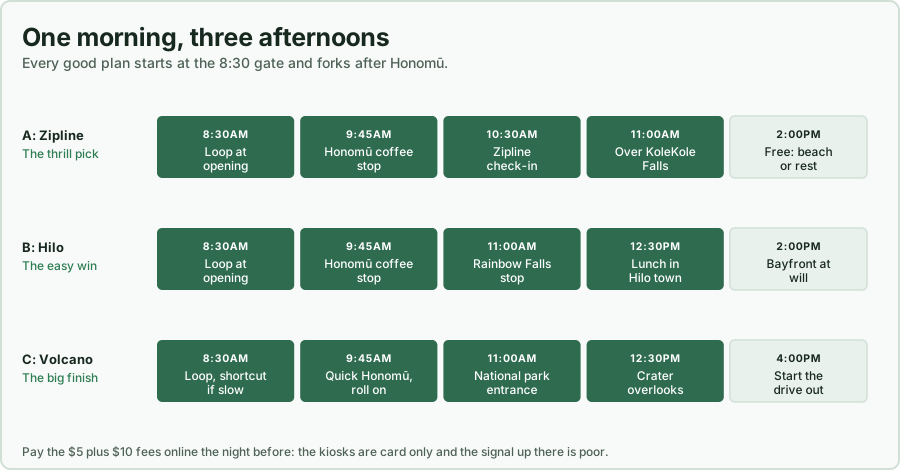
Start at the 8:30am park opening, walk the loop while the light is soft, then spend twenty minutes in Honomū town. From there pick one of three afternoons: the zipline over KoleKole Falls, Rainbow Falls plus Hilo, or Hawaiʻi Volcanoes National Park. The real bookable day trips follow the same logic.
The gate rolls back at 8:30 and for the next hour the loop mostly belongs to whoever bothered to show up. Cold air still sitting in the gulch. Ginger and gingerless jungle both dripping from the overnight rain. That flat roar coming up through the trees long before you see any water. I have walked this trail at opening more mornings than I have kept track of since 2015, and the first lap of the day is still the version of ʻAkaka Falls I want every visitor to get: wet railing, no queue, light that has not yet gone hard and white.
By about 9:45 you are back at your car with the whole day still in your hands. That is when I get the question. It arrives in the parking lot, usually from someone shaking rain off a hat, and it is always the same one: what now?
That question is the entire architecture of a good falls day. The loop is 0.4 miles and it does not take long. Honomū town, 3.6 miles back down the hill, absorbs a comfortable twenty minutes without anyone hurrying. Everything after that is a choice between three very different afternoons, and here is the useful part: the operators who run this coast for a living have all quietly voted on the same three.
Be at the gate for the 8:30am opening. The gorge holds even light, the railing is empty, and the entire afternoon comes back to you free. Pay the $5 per person entry and $10 vehicle parking online the night before, because the fees are credit card only and reception at the park is poor.
The park runs 8:30am to 5:00pm daily, and the gap between the 8:30 trail and the 11:30 trail is not subtle. At opening the sun has not cleared the gulch wall yet, so the gorge is lit by sky rather than by a direct beam. The falls read as one clean column of white against green. Two hours later that same drop is a blown-out stripe next to a wall of black shadow, and no amount of phone processing fixes it. Photographers already know this, and the photography guide breaks the light down hour by hour, but even people who never take the phone out of a pocket feel the difference. Sound carries better in the cool air. The bamboo is still moving from the night wind.
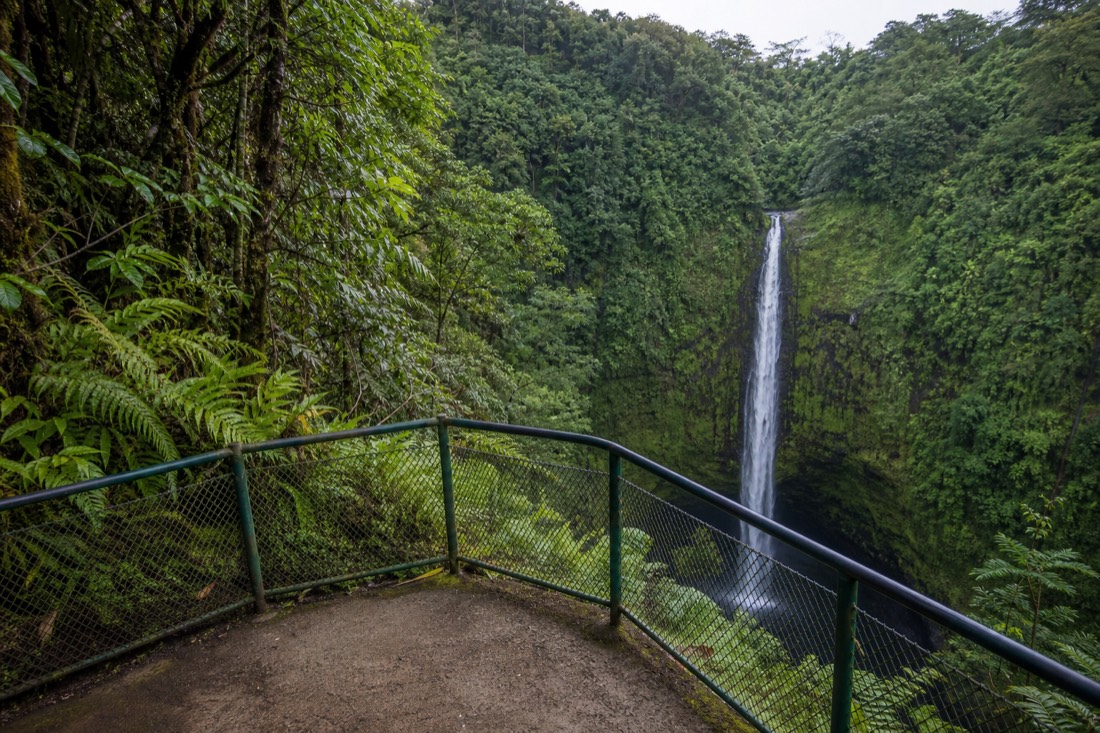
Crowding follows a curve I can set my watch by. First arrivals trickle in at opening. By around ten the lot starts stacking, by eleven the vans have landed, and from then until mid-afternoon the main lookout has a rotation going: three people step off the rail, three step on. Nobody ruins your visit at that hour. It simply stops being a forest and starts being a viewpoint. When to come, by season as well as by hour, is the whole subject of the best time to visit guide.
Handle the money the night before. Fees are credit card only: non-residents pay $5 per person for entry plus $10 per non-commercial vehicle to park, Hawaii residents go free with a driver's licence or state ID, and children 3 and under are free. The state asks visitors to pay before they arrive because cell reception at the park is genuinely poor, and I have watched more than one family stand in the lot waving a phone at the sky. Pay at gostateparks.hawaii.gov while you still have bars in your hotel room. The full cost picture, including what the fee does and does not cover, sits in the cost guide.
Then there is the arithmetic that this entire article rests on. Leave your accommodation at eight, finish the loop by half past nine, take coffee in Honomū, and you are choosing your afternoon before ten. Start at eleven instead and you are choosing your afternoon at one, which quietly deletes the volcano and squeezes the zipline. The early gate is not about beating crowds for the sake of it. It is about buying back four hours.
Go right at the first junction so cascading Kahuna Falls comes first and the 442-foot free fall lands last. The full paved loop is 0.4 miles with several stair sections and officially requires some physical exertion. Give it 45 to 60 unhurried minutes. The left path is the shortcut if steps are a problem.
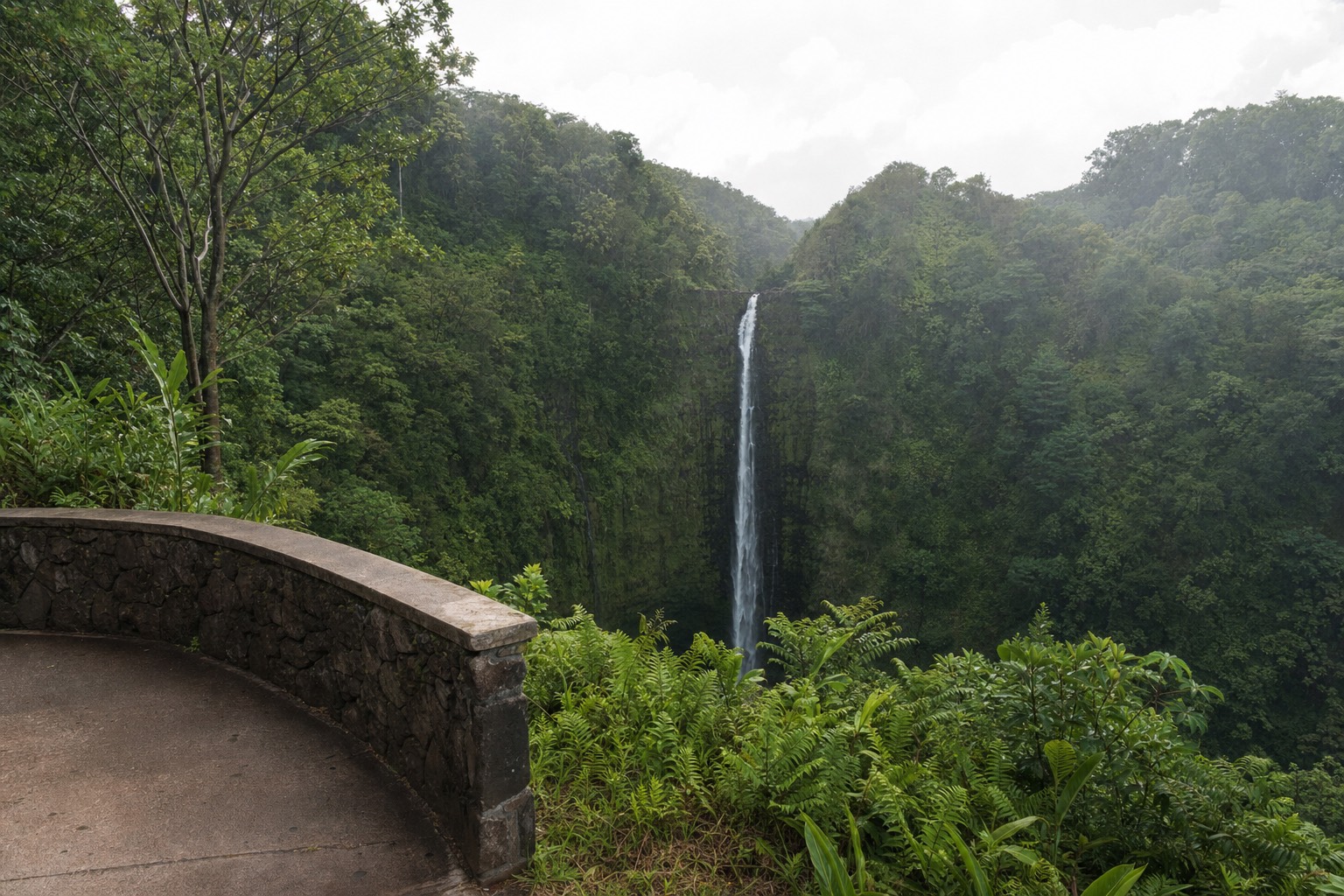
The junction is right there at the top, a few steps past the pay station, and which way you turn decides how the morning feels. Turn right and the trail drops through bamboo and banyan into the cool part of the gulch, delivers Kahuna Falls as a long cascade sliding down a green wall, then works you around and up to the main lookout, where ʻAkaka Falls plunges 442 feet into a stream-eroded gorge. That order builds. Turn left instead and you get the headline immediately, then walk the rest as an afterthought, which is the wrong shape for a first visit but exactly the right shortcut if stairs are the problem in your group.
Take the shortcut seriously as an option, because the trail is honest about itself. It is paved the whole way, but the paving does not make it flat: there are multiple flights of steps, the state describes the loop as requiring some physical exertion, and it is not wheelchair accessible. Wet stone plus fallen leaves means the handrails earn their keep. I have never once regretted telling someone in flip-flops to slow down, and the kids and seniors guide goes through the practical version of that conversation, bench by bench.
Pace it like this. Five minutes down through the bamboo, stopping when the light does something. Ten at the Kahuna viewpoint, which most people rush and should not, because a cascade of that height with no official published number attached to it is rarer than the famous one. Twenty minutes working around the loop, hands on rails, a few pauses where the gulch opens. Then as long as you want at the main lookout, which for most people is somewhere between eight minutes and half an hour depending on whether the mist is drifting. Trail detail, surface, steps and the whole route in order live in the hike guide.
One thing to settle before you arrive, because it disappoints people every week: the loop is a fenced viewing trail into a closed gorge, and there is no swimming anywhere in this park. No pool at the bottom, no legal way down, no exception on a hot day. If water contact is the point of your trip, the swimming guide covers where that actually happens on this island. Come here to look, and the looking is enormous.
Yes, and roughly twenty minutes is exactly right. Honomū is the old plantation town at the bottom of ʻAkaka Falls Road, 3.6 miles from the park gate, a short row of wooden storefronts with coffee, food and small shops. It sits directly on your way out, so it costs no detour at all.
Honomū is not a place anyone crosses the island for, and that is precisely why it works. It is a working remnant of the sugar era sitting at the junction where every single person leaving the falls has to pass, which means stopping requires zero navigation and no decision. You park on the street. You walk a row of raised wooden storefronts with tin roofs and hand-painted trim. You buy a coffee, or something warm and sweet, or nothing, and you stand outside on the boards while the road drips.
I treat this stop as the hinge of the day rather than an attraction. Structurally it does three jobs. It gets everyone out of the car and moving after a walk that involved stairs, so nobody stiffens up. It lets the group eat something, which prevents the low-blood-sugar arguments that ruin afternoons. And it gives you a natural twenty-minute window in which to make the actual decision this guide is about, while the falls are still fresh enough that people know how they feel about the day.
Skipping Honomū saves you twenty minutes and costs you the only unhurried small-town moment most visitors get on the Hamakua Coast. That coast has a habit of being driven through at fifty rather than looked at, and it deserves better; the Hamakua Coast guide covers what else is worth pulling over for on the same stretch of road, Waipiʻo Lookout included.
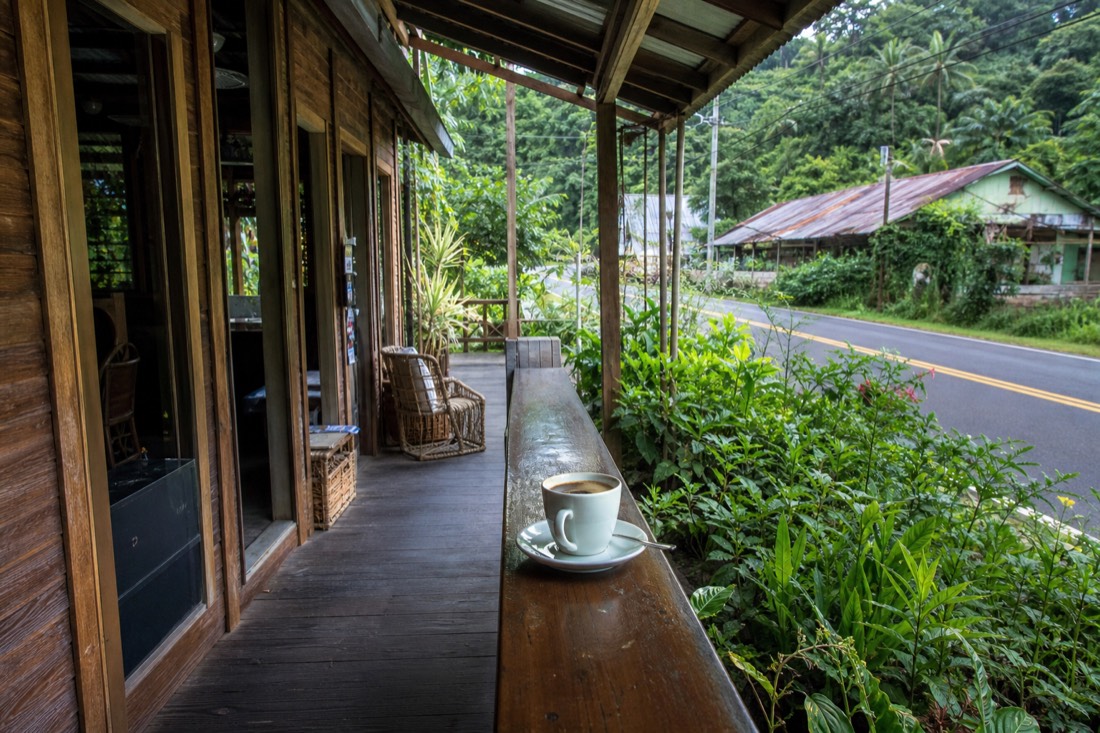
Not everyone wants to make the afternoon call over a coffee, and plenty of people would rather not make it at all. If you would prefer the whole day decided, driven and admitted for you, with the falls, the volcano and Hilo strung together by somebody who does it every week, the Hilo-based operator day mirrors this guide almost stop for stop.
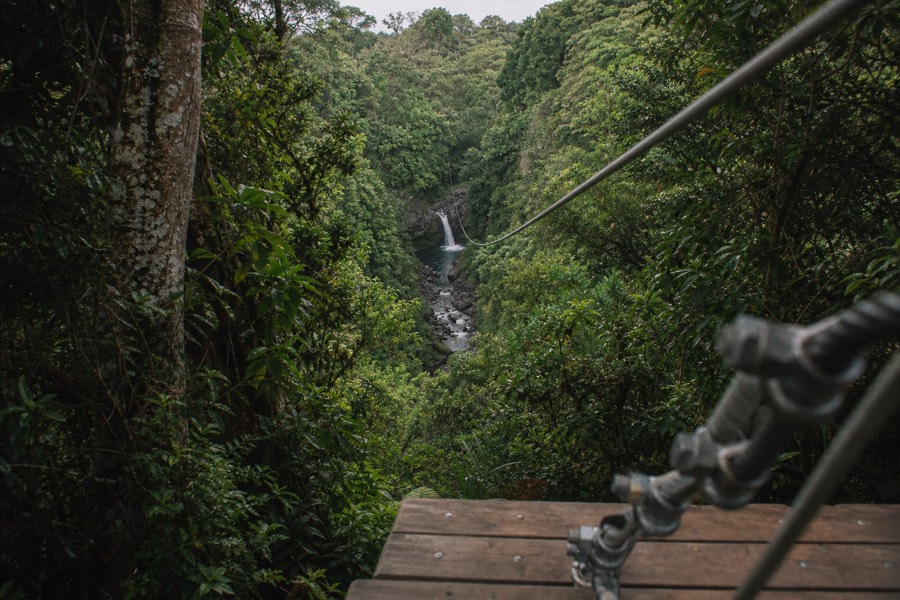
Plan A is the adrenaline branch. A zipline course minutes from the park flies you across gulches and over 250-foot KoleKole Falls in roughly two and a half hours. It suits fit groups, teens and anyone who wants a second waterfall from an angle no trail on this coast can give you.
Let me be straight about the geography first, because it gets misread constantly. The zipline does not cross ʻAkaka Falls. ʻAkaka is inside a state park with a fenced viewing loop and nothing flies over it. The zipline course is nearby, over the same wet green Hamakua country, and the waterfall you cross is KoleKole Falls at 250 feet per the operator's own listing. That is still a genuine waterfall crossing at genuine height, and it is the only way most visitors ever look down at falling water on this island rather than across at it. The full picture of what the course involves is on the zipline page.
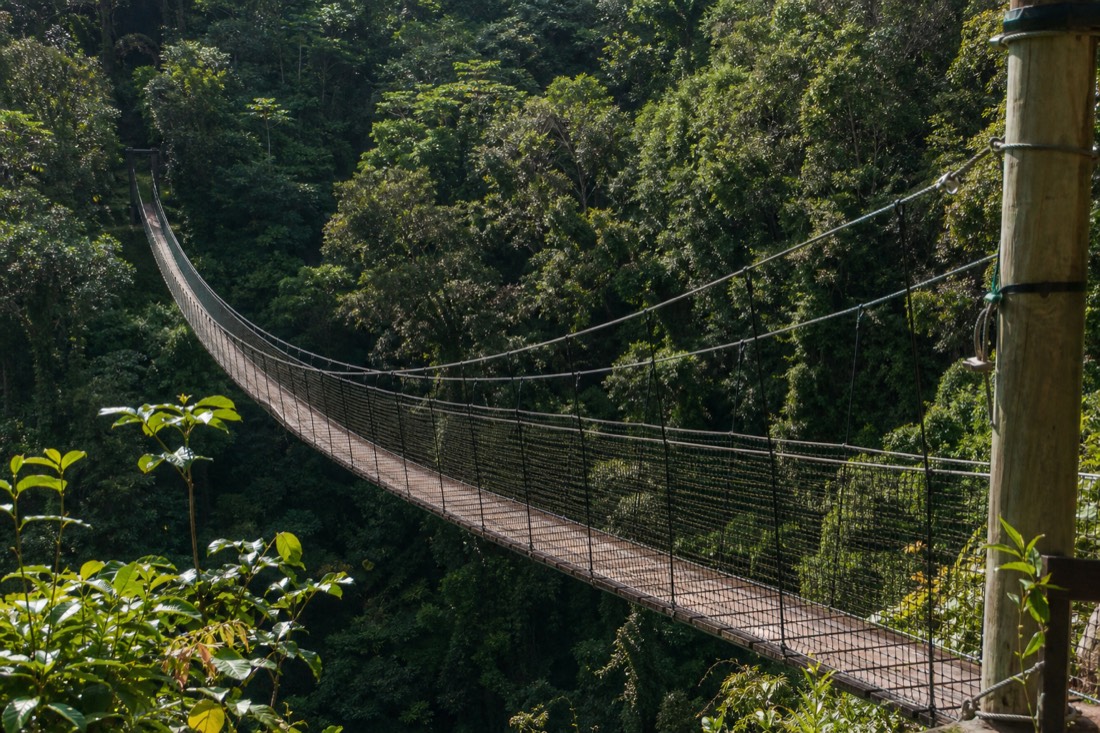
Energy-wise this is the most demanding of the three afternoons and the one people underestimate. You have already done a loop with stairs. Now add a harness, a briefing, a walk between platforms, some suspension bridge crossings and about two and a half hours of adrenaline in humid air. Teenagers finish it wanting lunch and a beach. Adults over about fifty finish it happy and quiet. Either way, do not schedule anything ambitious after it. The rest of the day should be food, water and somewhere to sit.
Who it suits: groups where at least one person has been saying the word zipline since the flight over, families with kids old enough to meet the operator's published age and weight limits, and couples who want one story rather than four sights. Who it does not suit: anyone nervous about heights who is being talked into it, and anyone with a shoulder or back problem, because the harness and the braking take more from your upper body than the marketing photos suggest.
Book it before you fly. Courses run fixed departure slots with a hard cap on riders, the late-morning and early-afternoon slots are the ones that pair with an opening-hour falls visit, and those are the first to go in summer and over the winter holidays. Turning up hopeful on the day works in April and almost never works in July.
Here is how the whole Plan A day actually falls out, with the drive times built in rather than wished away.
| Time | Plan A: the zipline afternoon |
|---|---|
| 8:00am | Leave Hilo or the coast, drive up Highway 220 |
| 8:30am | Gate opens, walk the full loop right-hand first |
| 9:30am | Main lookout, last photos, back to the car |
| 9:45am | Honomū: coffee, food, stretch out the legs |
| 10:15am | Short drive to the zipline check-in |
| 10:45am | Waiver, harness fitting, ground school briefing |
| 11:15am | Course starts: gulch crossings and KoleKole Falls |
| 1:45pm | Off the course, gear returned, everyone loud |
| 2:15pm | Late lunch in Honomū or back down in Hilo |
| 4:00pm | Beach, hotel, or a slow drive back to your side |
| Evening | Dinner near your base, early night, no regrets |
Plan B is the gentle branch. Drop back toward Hilo, take the old coastal scenic drive at Onomea, see Rainbow Falls on the Wailuku River, then hand the rest of the day to Hilo town: lunch, the bayfront, a museum if it rains. Lowest walking load, widest appeal, hardest to get wrong.
I recommend this one more often than the other two, and not because it is the safe answer. It is the version of the day where nobody is negotiating with their knees. After the loop's stairs, the afternoon asks for a short paved walk at Rainbow Falls and then whatever you feel like, which is exactly the right shape for a group spanning three generations or a trip where somebody is already sunburnt and tired.
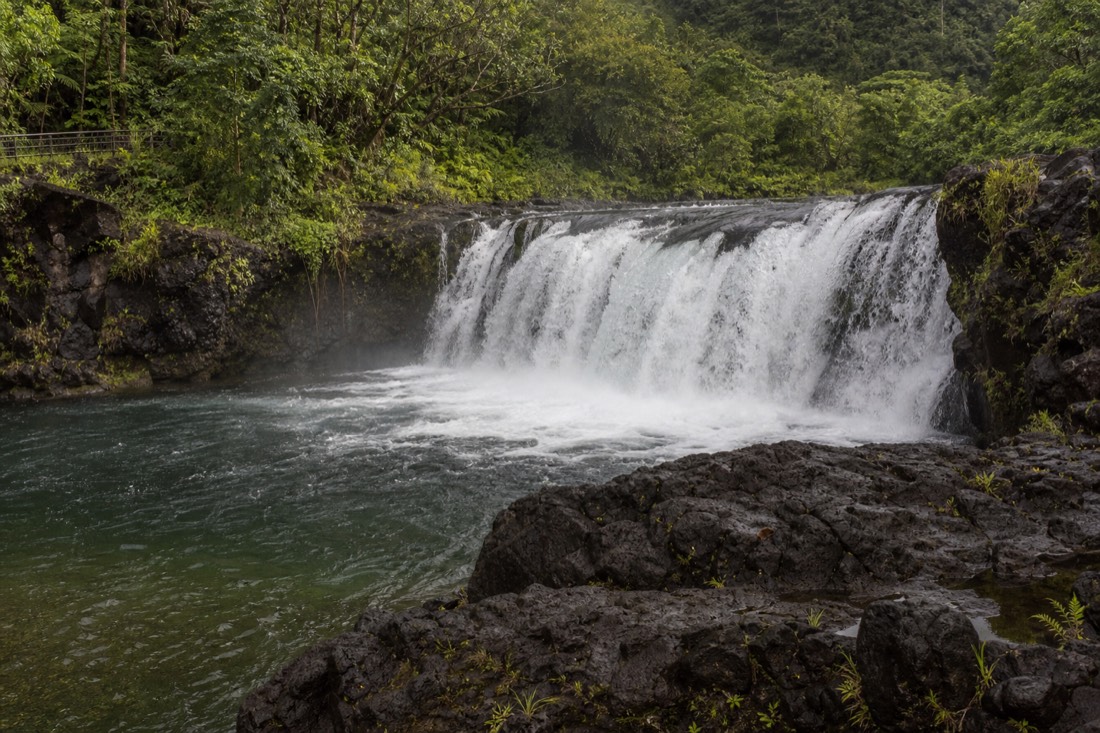
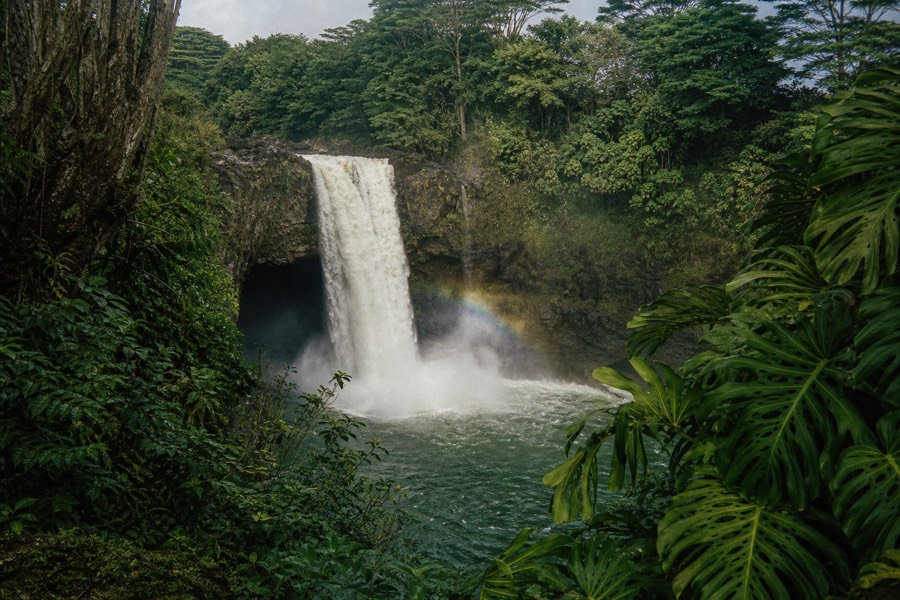
Take the old coast road between Honomū and Hilo rather than staying on the highway. It drops off the main route, runs down through jungle and across one-lane bridges near Onomea, and puts you at walking pace under a canopy that closes overhead. It adds time. It is the reason to do it. Then Rainbow Falls, which is the opposite kind of waterfall from ʻAkaka in almost every way: broad rather than tall, right in town rather than up a gulch, and viewable from a paved area a minute from the car. The rainbow in the spray is a morning-to-midday act in my experience, so an early falls start helps here too. The side-by-side comparison explains why seeing both in one day works better than it sounds.
Hilo absorbs whatever is left. It is a real working town rather than a resort strip, so the pleasures are ordinary and good: lunch somewhere unglamorous, a walk along the bayfront under the banyans, the farmers market if the day lines up, a bookshop, a bakery. When the weather turns, and on this coast it turns, the town is the fallback that never fails. The things to do in Hilo guide has the full list, indoor options included.
The hour-by-hour version runs looser than Plan A, which is the point. Nothing here has a departure time you can miss.
| Time | Plan B: waterfalls and town |
|---|---|
| 8:00am | Drive up to the park gate |
| 8:30am | Full loop at opening, Kahuna first |
| 9:30am | Back at the car, unhurried |
| 9:45am | Honomū: coffee and a wander |
| 10:15am | Old coast road south, one-lane bridges at Onomea |
| 11:00am | Rainbow Falls viewpoint on the Wailuku River |
| 11:45am | Lunch in Hilo town |
| 1:00pm | Bayfront walk, banyans, shops or a museum |
| 3:00pm | Optional: a second small waterfall or the market |
| 4:30pm | Easy drive back, or stay for dinner in town |
| Evening | Dinner on the bayfront, the calmest of the three |
If you would rather not drive the coast road yourself, the same Hilo operator runs a second version of its day that adds Rainbow Falls and the Onomea scenic drive to the falls and the volcano, which is essentially Plan B and Plan C stitched into one ticket.
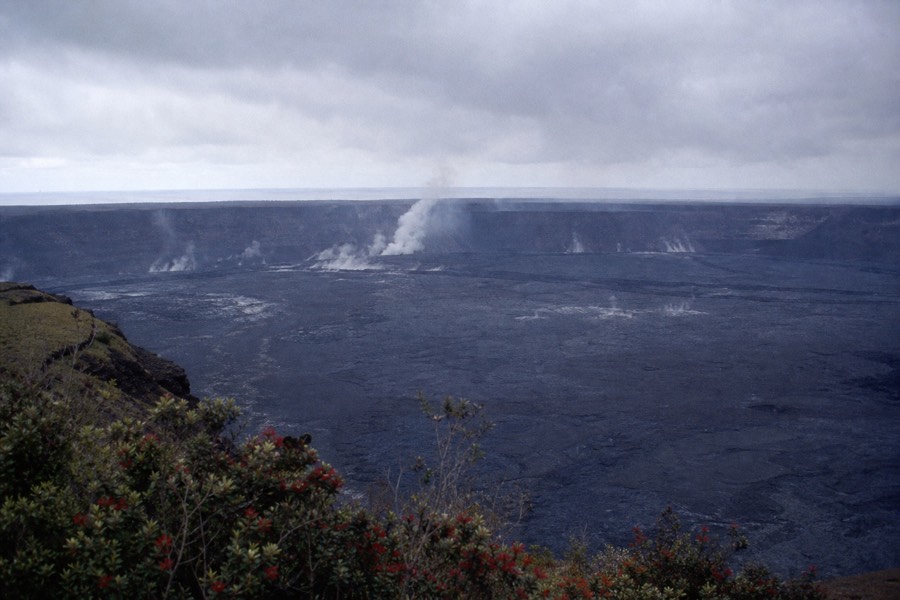
Plan C is the big-geology branch. From Hilo it is 30 miles southwest on Highway 11 to Hawaiʻi Volcanoes National Park, about a 45 minute drive, and once you are up there you want four hours minimum. Kīlauea, crater rims, steam vents. Longest day of the three by a distance.
The climb out of Hilo does something to people. You leave a wet green town at sea level, run up through pasture and ohia, and arrive somewhere that smells faintly of sulphur and is noticeably cooler and windier than the coast you left ninety minutes earlier. Bring a layer. I have handed my own jacket to more visitors at the crater rim than I can count, all of them dressed for the beach they were on that morning.
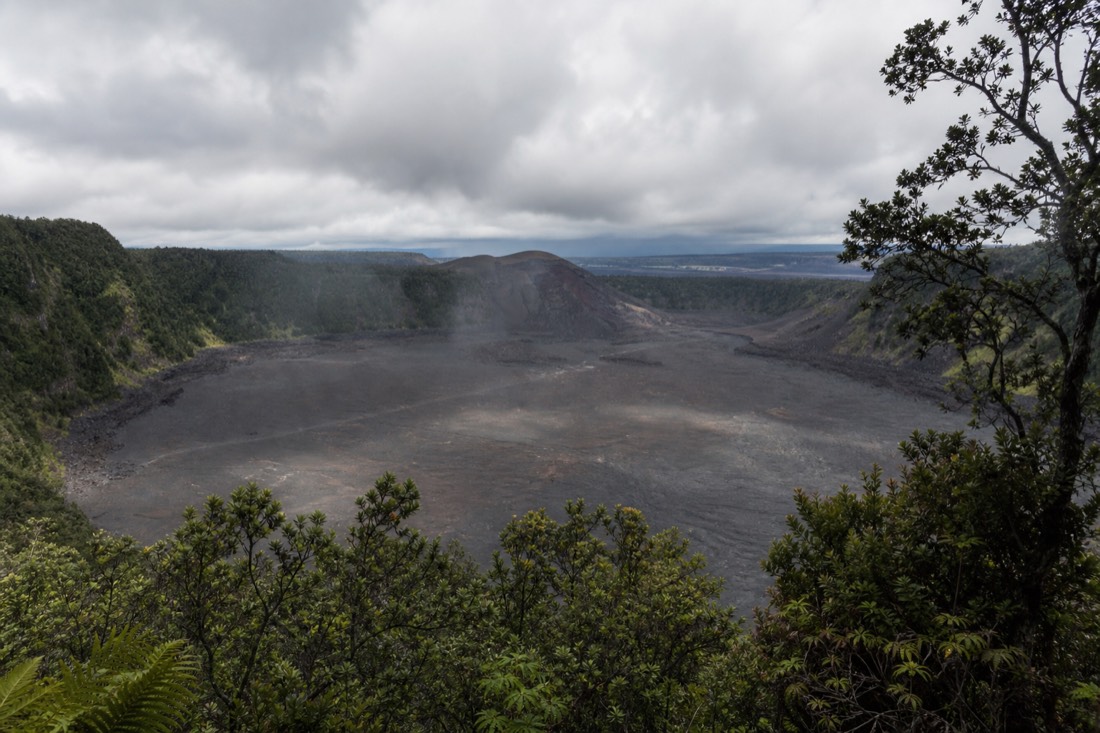
Time is the honest problem with Plan C. The national park publishes 30 miles and 45 minutes from Hilo, which sounds like nothing until you add the drive from the falls to Hilo first, the stop at the entrance, and the fact that the park is big enough to eat an entire day on its own. Entry there is separate from your state park fees, and rates, opening conditions and whether anything is erupting all live on the NPS site, which you should check the morning you go rather than the week before. Eruption viewing changes fast and nobody on the internet knows more about it than the park rangers do.
From Kona the arithmetic gets harsh. The NPS lists 95 miles and 2 to 2.5 hours from Kailua-Kona on Highway 11, or 125 miles and 2.5 to 3 hours going around through Waimea and Hilo. Add the falls in the morning and you have a day that starts before six and finishes after dark. It can be done, people do it, and the ones who enjoy it are the ones who let somebody else drive. The same logic applies at a gentler scale from Hilo, so if you would rather spend the climb looking out of the window than watching for the turn, you can see which dates still have seats on the day that runs this exact route.
What to actually do up there with the afternoon you have: the crater overlooks first, because they are what you came for and the weather can close in later; then a short walk, of which there are several that take under an hour; then the steam vents and the sulphur banks, which are quick and strange and children like them; then the drive out along the rim road for as long as your legs and the light hold. Do not try to add a beach afterwards. The drive back down to the coast in the dark is longer than anyone expects, and it is the single most common way this day turns sour.
| Time | Plan C: the volcano day |
|---|---|
| 8:00am | Early start, drive to the park gate |
| 8:30am | Loop at opening, left-path shortcut if the group is slow |
| 9:15am | Back at the car, keep it tight today |
| 9:30am | Quick Honomū stop, coffee to go |
| 10:00am | South through Hilo, then up Highway 11 |
| 11:15am | Arrive at the national park, entrance and orientation |
| 12:00pm | Crater overlooks while the weather is clear |
| 1:30pm | Lunch, then a short rim walk |
| 3:00pm | Steam vents, sulphur banks, the rim road |
| 4:30pm | Start the drive out before you are tired |
| Evening | Dinner in Hilo or Volcano village, longest day of the three |
Choose on energy and company, not on which sounds most impressive. Thrill-first groups take the zipline. Mixed ages, mixed mobility and anyone already tired take Rainbow Falls and Hilo. First-time visitors with stamina and a rental car take the volcano, because a 442-foot waterfall and Kīlauea in one day is the island in miniature.
The mistake I watch people make is choosing the afternoon that will sound best when they describe the trip later, rather than the one that fits the humans in the car. A family with a nine-year-old and a grandmother with a replaced hip does not want a two-and-a-half-hour harness afternoon, no matter how good the photos are. Two thirty-year-olds on a five-day trip do not want a museum. The falls are the constant; the afternoon is where you fit the day to the people.
Days on the island matter as much as energy. If you have a week, spread it: falls and Hilo today, the volcano as its own full day later, because the volcano genuinely deserves one. If you have three days, combine, and accept the long evening. If you have one day and you are staying on the Kona side, understand what you are signing up for before you book anything, because the falls sit roughly 90 minutes from Kona and the volcano sits further still.
That Kona problem has a clean solution. If you are based on the resort coast and do not want to drive the Hamakua Coast twice in one trip, a waterfall-first day out of Kona covers the falls, the coast and the drive without anybody in your party losing four hours to the steering wheel; you can compare departure days from the resort coast and see how it lines up with the rest of your week.
This table is the version of the decision I run through out loud with guests at the trailhead, compressed.
| If your group is | Best plan | Why it fits | Watch out for |
|---|---|---|---|
| Thrill-first, fit, short on days | A: zipline | Two waterfalls in one morning, one big story | Slots sell out; check age and weight limits |
| Multi-generation, mixed mobility | B: waterfalls and town | Least walking, most places to sit and eat | The loop's stairs are still the hardest part of the day |
| First Big Island visit, want the icon | C: volcano | Waterfall and Kīlauea in a single day | Longest drive, coldest afternoon, check conditions |
| Cruise passengers on a clock | A or B, compressed | Both fit port hours with real margin | All-aboard time governs every other decision |
| Photographers | B or C | Soft falls light, then town or crater dusk | Rain gear for the lens either way |
| Kids under about ten | B | Short walks, food nearby, no harness | Attention runs out faster than the itinerary |
| Based on the Kona side | A or B | Keeps the day to one coast | Ninety minutes each way before anything starts |
Every plan here has a professional twin. The Hilo-based falls-and-volcano day runs Plan C with the longest stop at the falls of anything on this coast. The same operator's other listing folds Rainbow Falls and the Onomea drive in, which is Plan B and C together. Kona-side days cover the circle-island version.
I did not build these plans by studying itineraries. I built them from a decade of watching what works on this coast, then noticed that the operators running day trips here had converged on the same three answers. That agreement is worth something. When independent people solving the same logistics problem land on the same shape, the shape is usually right.
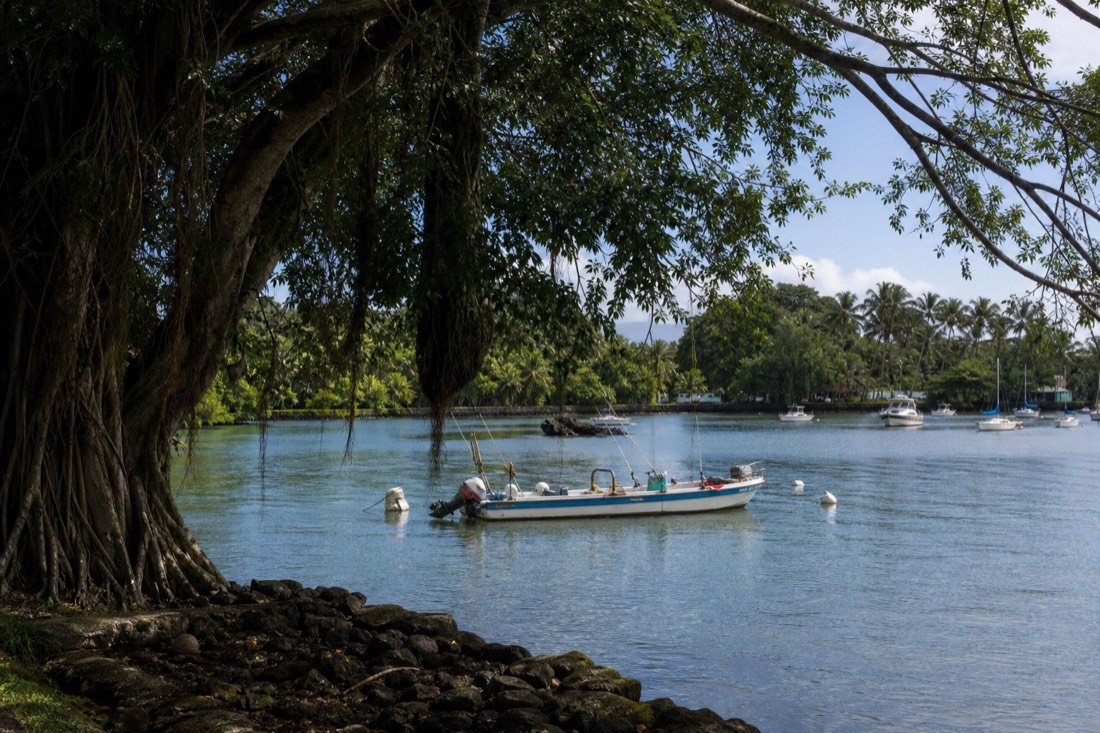
From the Hilo side, Aloha Aina Tours runs a falls, volcano and Hilo day of roughly seven to eight hours in a small group capped at fourteen, with Hilo-area pickup and admissions handled. What makes it unusual is the falls stop: a full hour, which is longer than any other day trip on this coast gives you, and enough to walk the loop properly rather than jog it. The same operator's other listing takes the same bones and adds Rainbow Falls and the Onomea scenic drive, which is the closest thing to this whole article sold as one ticket.
From Kona the shape changes because the driving does. Wasabi Tours Hawaii runs a waterfall-first day of about ten hours from the Kona and Kohala coast with roughly forty minutes at the falls, admission included, plus the Waipiʻo Lookout and Kulaniapia. The circle-island option is the other end of the spectrum: about eleven hours, a small group, roughly thirty-five minutes at the falls, and the volcano, Punaluʻu and Rainbow Falls stacked around it. That is the day for people with one shot at the island who would rather see six things briefly than two things properly. Neither approach is wrong, they answer different questions, and you can see exactly what the full circle day covers before deciding which trade you want.
Shape and inclusions are what to compare here, not anything else. Time at the falls in particular tells you more about a day than the itinerary headline does.
| Your plan | The day that mirrors it | What it includes | Time at the falls |
|---|---|---|---|
| C: falls and volcano, from Hilo | Aloha Aina full day, small group capped at 14 | Hilo pickup, admissions, volcano, Hilo town | A full hour, the longest on this coast |
| B and C combined, from Hilo | The same operator's other listing | Falls, Rainbow Falls, Onomea scenic drive, volcano | A long stop, unhurried loop |
| A: falls and zipline | Zipline course minutes from the park | Gear, briefing, gulch crossings, KoleKole Falls | You visit the park on your own before it |
| B, short window from Hilo | Half-day waterfall circuit | Hilo-area waterfalls in one compact loop | A brief stop, enough for the main lookout |
| B or C, from Kona | Wasabi Tours waterfall day, about 10 hours | Falls admission, Waipiʻo Lookout, Kulaniapia | About forty minutes |
| Everything at once, from Kona | Circle-island day, about 11 hours | Volcano, Punaluʻu, Rainbow Falls, the falls | About thirty-five minutes |
| A, off a cruise ship | Zipline with cruise terminal pickup | Transfers timed to port hours, gear, briefing | Not included, park visit is separate |
Self-drivers lose nothing except the narration and the included admissions, and the park itself runs $15 for a couple with a car. What a guided day actually buys you is the driving, which on Plan C is the part that hurts.
Cut the afternoon, never the morning. The falls-only version takes about ninety minutes door to door from Hilo. A three-hour version adds Honomū and Rainbow Falls. A half day adds the coast drive and lunch. What you lose with each cut is depth, not sights, and the loop is the last thing to go.
Short windows happen for real reasons: a cruise call, a flight out at four, a rental car booked for half a day, a group that only agrees on so many hours. The good news is that this day compresses gracefully, because the piece with the fixed value at the front is short anyway.
The falls-only version is about eleven miles up from Hilo, the loop, and back. Ninety minutes if nothing goes wrong, two hours if you stop for coffee. It is the version I recommend to anyone off a ship with a tight all-aboard, and the cruise port guide works through the timing properly, including how much buffer you actually need rather than how much you feel like you need. Cruise mornings also pair well with a compact half-day waterfall circuit run out of town; if the clock is what worries you, check the half-day departure times against your ship's schedule before you plan anything longer.
The cut that costs the most is the one people make most: skipping the loop's far side and taking the left shortcut to the main viewpoint. It saves maybe twenty minutes and it removes Kahuna Falls, the bamboo, and the entire sense of walking into a gulch rather than looking at a photograph. Take that shortcut for mobility reasons. Do not take it for time reasons unless you genuinely have none.
And there is one cut that is really a substitution. Every week somebody arrives having pictured themselves standing under a waterfall, and this park cannot give them that: it is a fenced viewing loop above a closed gorge, and there is no swimming anywhere in it. That is not a disappointment you have to accept, it is a different trip. A guided waterfall hike and swim with a Native Hawaiian guide is the honest answer for anyone whose real goal was getting wet, and it pairs perfectly with a morning at the falls where you look rather than touch.
| The version | What it covers | Time it takes | What the cut costs you |
|---|---|---|---|
| Falls only | Loop at opening, straight back | About 90 minutes from Hilo | The whole day around it, plus Honomū |
| Three-hour version | Loop, Honomū, Rainbow Falls | About 3 hours | The coast drive and any real lunch |
| Half day | Loop, Honomū, coast road, Hilo lunch | About 5 hours | The volcano and the zipline both |
| Loop shortcut only | Left path to the main lookout | 25 to 30 minutes | Kahuna Falls, the bamboo, the sense of place |
| Afternoon only | Falls after 2pm, nothing else | About 2 hours | Soft light and the empty railing, permanently |
Rain improves the falls and complicates everything else. Volume goes up, the gorge fills with mist, and the crowds thin. Keep the loop exactly as planned, swap the zipline decision to the operator's call, move Rainbow Falls earlier, and let Hilo's indoor options absorb the afternoon. Do not cancel the morning.
This coast is wet by design. That is why the waterfall exists, and any visitor treating rain as a ruined day has misunderstood where they are. I have had some of my best mornings on that loop in steady rain: the ginger smells stronger, the whole gulch steams, the falls run heavy and brown-white instead of thin, and there is nobody at the railing because everybody else stayed in bed. Bring a rain shell rather than an umbrella, because the trail is narrow in places and umbrellas and handrails do not cooperate.
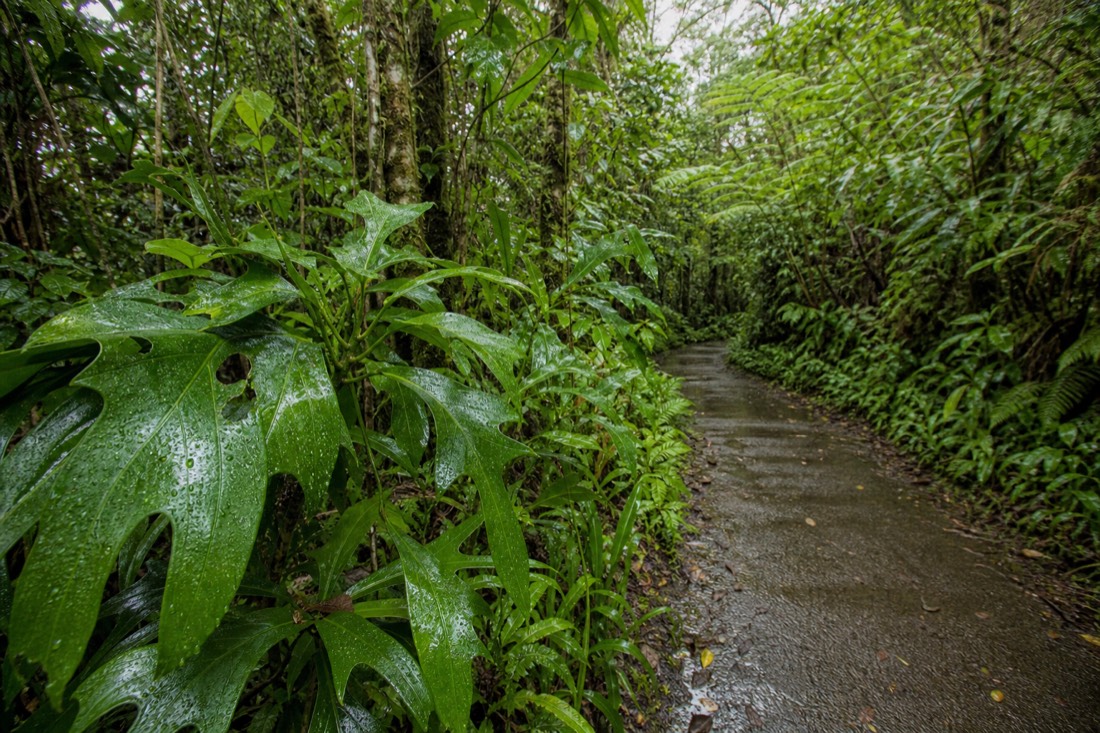
What genuinely changes is traction and photography. Wet pavement plus wet leaves plus steps means slow down and use the rails, particularly with children or anyone unsteady. Cameras and phone lenses fog and bead, so carry a cloth and expect to wipe between every shot. Mist drifting up out of the gorge can also swallow the falls entirely for a few minutes at a time, which is worth knowing before you panic: wait five minutes and it usually clears. More of what a wet morning up there actually feels like is in rain at the falls.
The afternoon is where you flex. Ziplines run in rain, that is normal here, but weather calls belong to the operator and lightning stops everything, so check in and be ready to move to Plan B. The volcano in heavy weather is a genuine coin flip: the summit is colder and windier than the coast, visibility can be nil, and a crater you cannot see is a long drive for nothing. Hilo, by contrast, gets better in rain, because it is a town with roofs.
Here is the swap sheet I use when the forecast turns on the drive up.
| If the weather does this | Keep | Swap to | Abandon |
|---|---|---|---|
| Steady coastal rain | The loop at opening, exactly as planned | Rainbow Falls earlier, Hilo lunch after | Nothing, this is a normal Hamakua morning |
| Heavy downpour | The loop, with rails and slow steps | Indoor Hilo: museums, shops, a long lunch | The coast road's viewpoints, they close in |
| Thunder or lightning | Shelter first, the loop can wait an hour | Town, immediately | The zipline, the operator will call it |
| Summit socked in | Falls and Honomū | Plan B in full | The volcano, save it for another day |
| Clearing by midday | The loop, then wait it out with coffee | Whichever plan you booked, unchanged | Any urge to rush the morning |
Five things, in order of how often I see them: a late start, an over-stuffed afternoon, chasing a swim this park does not offer, underestimating the drive back, and forgetting the park closes at 5:00pm. Each one is avoidable, and four of the five are decided before breakfast.
The late start is the big one, and it is never dramatic. Somebody wants a proper breakfast, somebody cannot find the car keys, and a nine o'clock departure becomes ten fifteen. You still see the waterfall. You just see it with forty other people in flat overhead light, and you make your afternoon decision at one in the afternoon, by which point the honest options have shrunk to Hilo. Every hour lost in the morning costs about two in the afternoon, because it lands on the drive.
Over-stuffing is the second. I have watched families try to fit the loop, the zipline, Rainbow Falls, a beach and the volcano into one day. Nobody has ever done that and enjoyed any of it. Two waterfalls and one activity is a full day here. Three sights and a drive is a full day. The island is much larger than the map makes it look, and the roads do not run straight.
The swim problem I have covered but it bears one more line because it causes real disappointment: this is a viewing park, fenced, above a gorge, with no water access. Decide before you drive up whether that is the day you wanted.
The drive back is the quiet killer, and it mostly bites Plan C and anyone based on the Kona side. Coming down off the volcano in the dark, tired, with an hour or more still to go, is where good days curdle. Set a turnaround time in advance and keep it.
Last, the gate. The park closes at 5:00pm, every day, and the last practical entry is well before that if you want the loop rather than a jog. Nobody plans to arrive at 4:40. People do it anyway, usually after an afternoon that ran long somewhere else, and they get the worst version of the falls: rushed, flat-lit, and with a ranger waiting. Come in the morning. That has been the whole argument here.
The waterfall takes an hour. The day you build around it is the part you will actually remember, and after a decade on that trail I am convinced the design matters more than the weather does. Get there at 8:30. Walk the long way round. Stand in Honomū with a coffee and pick your branch. The island handles the rest.
7 to 8 hours
from $179per person, varies by date Check availability →About 2.5 hours
from $246per person, varies by date Check availability →About 11 hours
from $276per person, varies by date Check availability →