Hilo zipline with cruise-ship pickup
Half day
from $309per person, varies by date Check availability →The falls are only about 11 miles from your ship. The distance is not the problem. The clock is.
 Verified by Kekoa Kalani, Akaka Falls tour guide and island nature specialist
Short answer
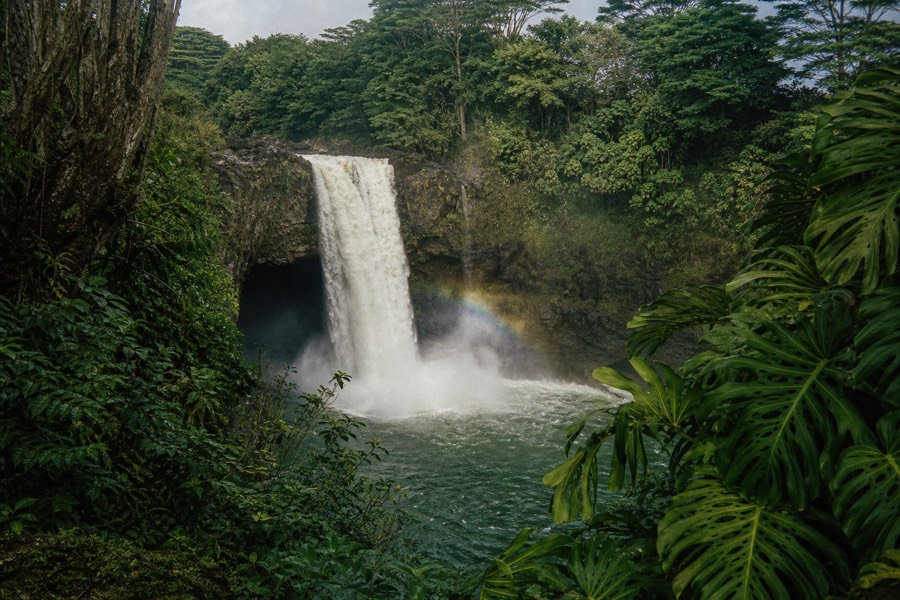
Akaka Falls sits about 11 miles north of Hilo with no public bus to the park gate. On a cruise day your real options are a ship excursion, an independent tour timed to port hours, a rideshare with a pre-arranged return, or the zipline with cruise-ship pickup. Cell reception at the park is poor, so arrange your return in advance.
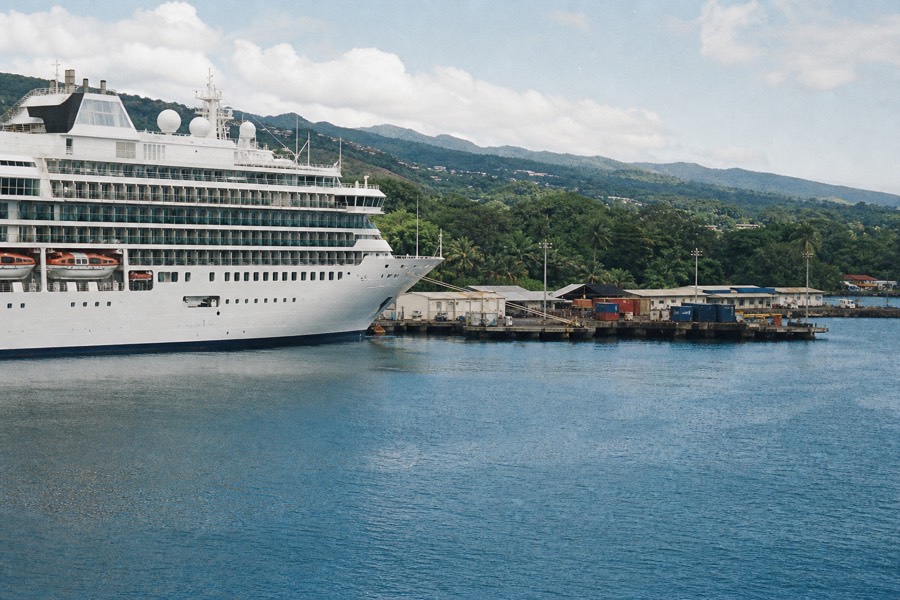
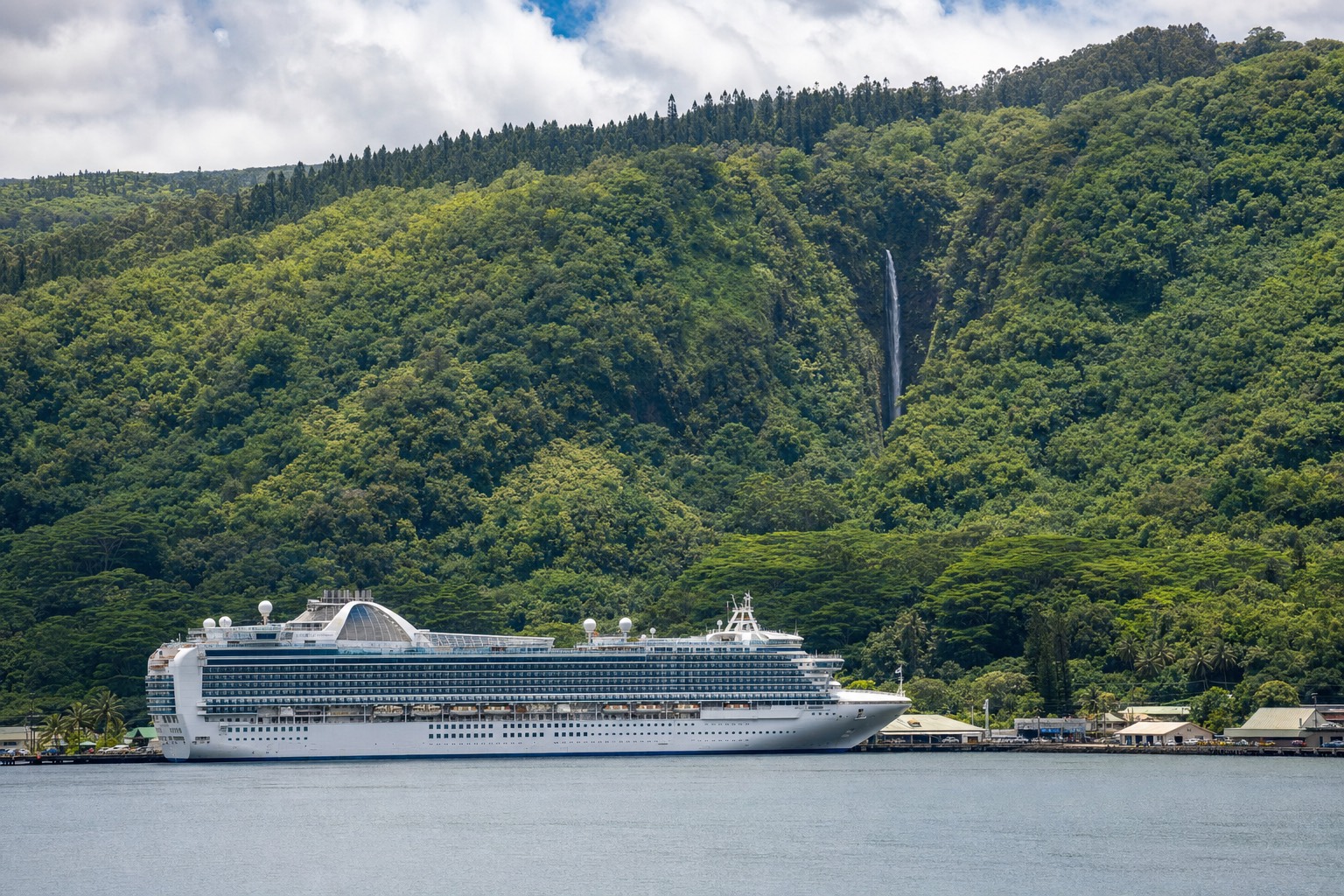
I can usually spot the cruise passengers at the falls by their walking pace. Everyone else strolls the loop, stopping where the light does something interesting. The cruise crowd checks the time at the Kahuna Falls viewpoint, again at the main lookout, once more halfway up the stairs, and one of them is always holding a phone at arm's length trying to make a bar of signal appear. After years of guiding on this coast I have enormous sympathy for them, because they are doing the hardest version of an easy trip: a world-class waterfall about 11 miles from the pier, wrapped inside a countdown that ends with a ship leaving without them.
Here is the whole game in one sentence. Getting to ʻAkaka Falls from Hilo is trivial, and getting back on a deadline is the part you actually plan. There is no public bus to the park gate. Cell reception at the park is poor. The loop itself takes under an hour for most people. Choose your transport for the return leg rather than the outbound one, and a port day at the falls stops being stressful and becomes what it should have been all along: a short, wet, green walk to a very tall waterfall, followed by a coffee in a plantation town, followed by a gangway.
About 11 miles. ʻAkaka Falls State Park sits at the end of Highway 220, which is 3.6 miles southwest of Honomū town on the Hamakua Coast north of Hilo. Driving takes well under half an hour each way in normal traffic. No public bus reaches the gate, so every option involves a vehicle you arrange yourself.
Eleven miles sounds like nothing, and as raw distance it is nothing. You could see the general direction of it from the ship if the cloud lifted. The geography is simple: the pier sits on the south side of Hilo Bay, the coastal highway runs north out of town along a shelf of old sugar land, and after a handful of small gulch crossings you turn inland and uphill at Honomū. That turn is the part nobody pictures in advance.
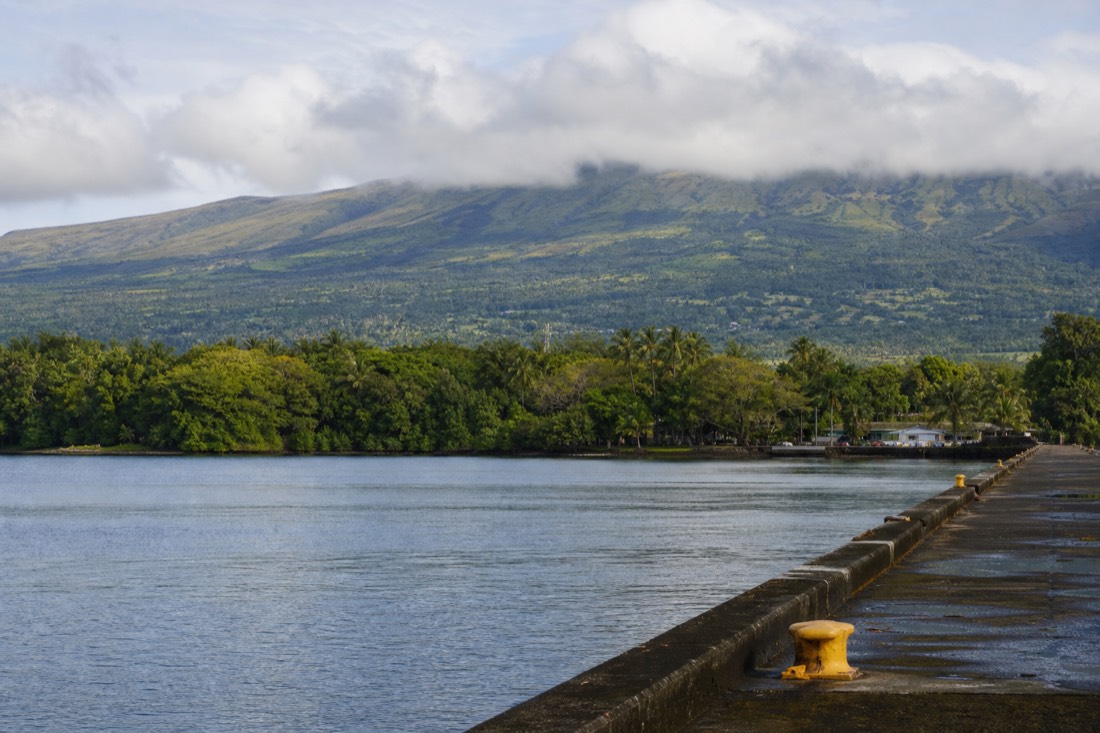
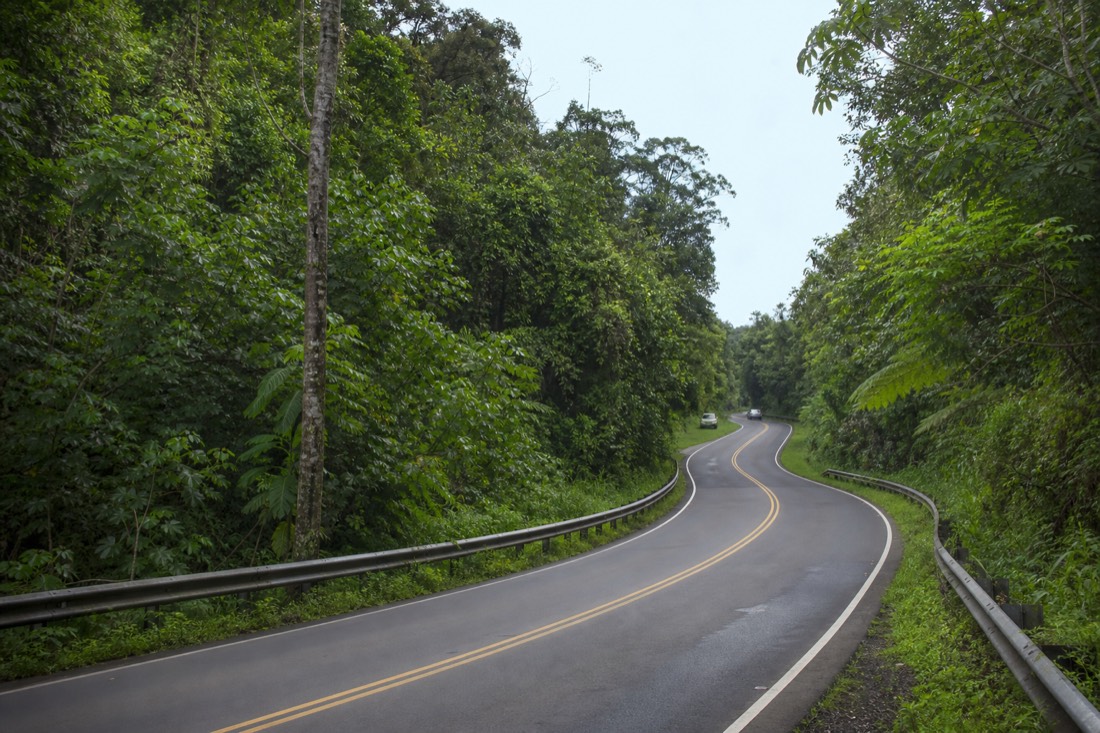
ʻAkaka Falls Road climbs 3.6 miles through cane-era country, past mango trees and old worker housing and a couple of blind curves that keep everyone honest. It is narrow, it is often wet, and it ends in a modest parking area with a pay station and a trailhead. There is no roundabout, no shuttle stand, no line of waiting taxis. What you drove up in is what you are going back down in, which is the single most important sentence in this guide.
Two facts from the official park page shape every cruise plan. First, hours and fees: the park is open daily 8:30am to 5:00pm, entry is $5 per person for non-residents plus $10 per vehicle for parking, payment is credit card only, residents are free with ID, and children 3 and under are free. The state encourages paying online before you arrive through gostateparks.hawaii.gov precisely because reception up there is poor. For a couple arriving together in one car that is a small, fixed number, and it is the only money the park itself asks of you.
Second, the walk is genuinely short. It is a 0.4-mile paved loop with stair sections, officially described as requiring some physical exertion, and it is not wheelchair accessible. Most visitors finish it comfortably inside an hour, and the time-needed guide breaks that down by pace. There is also an official shortcut: take the left, south path at the first junction and you reach the ʻAkaka Falls overlook and the 442-foot free fall in a fraction of the distance.
So the falls themselves ask very little of your day. Thirty to sixty minutes on the ground covers it. Everything else you are budgeting for is road, and the road is the piece that can go wrong.
Because the park sits at the top of a dead-end rural road, not on a transit corridor. The county system serves Hilo and runs the coast highway, but nothing scheduled turns up ʻAkaka Falls Road to the gate. That rules out the cheap fallback most city travellers assume exists, and it leaves four real transport options.
I get asked this at least once a week, usually by someone who has already checked a route app and been given a walking leg they did not read closely. Even where a coast-highway service gets you as far as Honomū, you are then looking at 3.6 miles of uphill road with no sidewalk, no shoulder worth the name, and a hard return leg on a timer. Nobody should attempt that on a port day, and I have never once recommended it.
Strip the fantasy options away and the honest list is short. A ship excursion. An independent tour that already knows what a port call is. A rental car. Or a driver, taxi or rideshare, booked as a round trip with the return leg fixed before you go. That is it. Every one of those has a different failure mode, and the failure modes matter more than the price, because the worst outcome on a port day is not overspending.
The distinction that actually predicts how your day goes is not cost or comfort. It is who owns the return leg. On a ship excursion the line owns it. On an independent tour the operator owns it, and they have built the product around port hours because their business depends on people making it back. In a rental car you own it completely, which is either freedom or a burden depending on your temperament. With a driver, ownership is shared, and it holds only as far as what you actually agreed out loud.
Here is that same set laid out against a realistic time budget and the risk that shadows all of it.
| Option | Door-to-door time budget | Who owns the return leg | All-aboard risk |
|---|---|---|---|
| Ship excursion | Half a day, on the ship's schedule | The cruise line | Lowest, the line holds for its own tours |
| Independent tour timed to port hours | Varies by product, pickup near the port | The operator | Low, their whole product depends on it |
| Cruise-terminal-pickup zipline | About 2.5 hours of activity plus transfers | The operator, from the ship and back | Low |
| Rental car | 3 to 5 hours with stops | You, entirely | Medium, and every minute is your call |
| Driver or taxi with a booked return | 2.5 to 3.5 hours | Shared, only as far as you agreed | Medium, hinges on the driver arriving |
| Rideshare improvised at the park | Unknown | Nobody | High, do not plan this |
That last row is not a joke entry. It is the single most common way a good port day turns into a bad one, and it gets its own section below.
Ship excursions buy you insurance and cost you time at the falls. Independent tours usually give you more park time and better pacing at similar effort. A booked driver is the most flexible middle path. Poor cell reception at the park is the fact that decides between them, because it kills anything improvised.
Start with what a ship excursion really is. You are buying a guarantee: if the tour runs late, the ship waits, because it is the line's own bus. That guarantee is worth real money to nervous travellers and to anyone on a first cruise, and I would never talk somebody out of it. What you give up is pace. Ship buses are large, they load slowly, they often stack the falls with two or three other stops, and the group moves at the speed of its slowest boarding.
An independent tour sits in a different place. The operators who run Hilo waterfall days do this every time a ship is in, they know all-aboard times better than most passengers do, and the smaller vehicles mean the group moves. On the longer Hilo days you can get a full hour at the falls rather than a hurried lap, which changes the visit completely: you have time to walk the whole loop instead of shortcutting, time to stand at the overlook until the mist clears, time to notice the bamboo.
The trade is the guarantee. An independent operator will build the day around your all-aboard time and will get you back with margin, but the ship is under no obligation to hold for them. In practice this is a manageable risk rather than a scary one, provided you pick an operator that advertises cruise pickup and you keep your own two-hour buffer, which the section below turns into arithmetic.
A booked driver is the quiet option nobody writes about. Fix a round trip with waiting time, agree the pickup hour at the lot, and you get near-rental-car freedom without the paperwork or the unfamiliar road. Drivers on this coast run the falls constantly and most will quote a wait-and-return without blinking. It falls apart only when people treat it as a rideshare rather than a booking.
Feature by feature, this is what you are actually buying with each one.
| Ship excursion | Cruise-pickup zipline | Rental car | Booked driver | Independent Hilo tour | |
|---|---|---|---|---|---|
| Pickup at or near the ship | Yes | Yes, built for port days | No, you reach the depot | Yes | Usually, check the listing |
| State park fees handled | Usually, check the description | Not applicable, private zipline site | You pay $5 per person plus $10 parking | You pay the park fees | Usually included |
| Timed around all-aboard | Yes | Yes | No, that is on you | Only as agreed | Yes |
| Stands at the ʻAkaka Falls overlook | On waterfall-themed excursions | No, it flies a different waterfall nearby | Yes | Yes | Yes |
| Typical time on the loop | Short, group-paced | None | As long as you like | As long as you booked | Generous on the longer days |
| Room for Honomū or Hilo town | Rarely | No | Yes | Negotiable | Often built in |
Read that overlook row twice. It is the most common mix-up on this coast, and the zipline section below explains exactly why.
Cell reception at the park is poor, which is why the state tells you to pay fees before arrival. The same weak signal means you may not be able to open an app and request a ride from the lot. Book the return before you leave town and write it somewhere that is not your phone.
I have watched this happen more times than I can count. A couple arrives by rideshare, has a lovely 40 minutes on the loop, walks back to the lot, opens the app and gets nothing. Sometimes the request goes through and no driver is within range, because the road is a dead end and no sensible driver sits at the top of it hoping. Sometimes the phone simply will not talk to anything. Then the clock, which was comfortable, is not comfortable any more.
The fix costs nothing and takes two minutes. While you still have ship wifi or town signal, arrange a round trip: same driver, waiting time included, or a fixed pickup hour at the lot. Then confirm the specifics before you step out of the car at the top. Not by text later, not by app later. Out loud, at the trailhead, with a number written on paper.
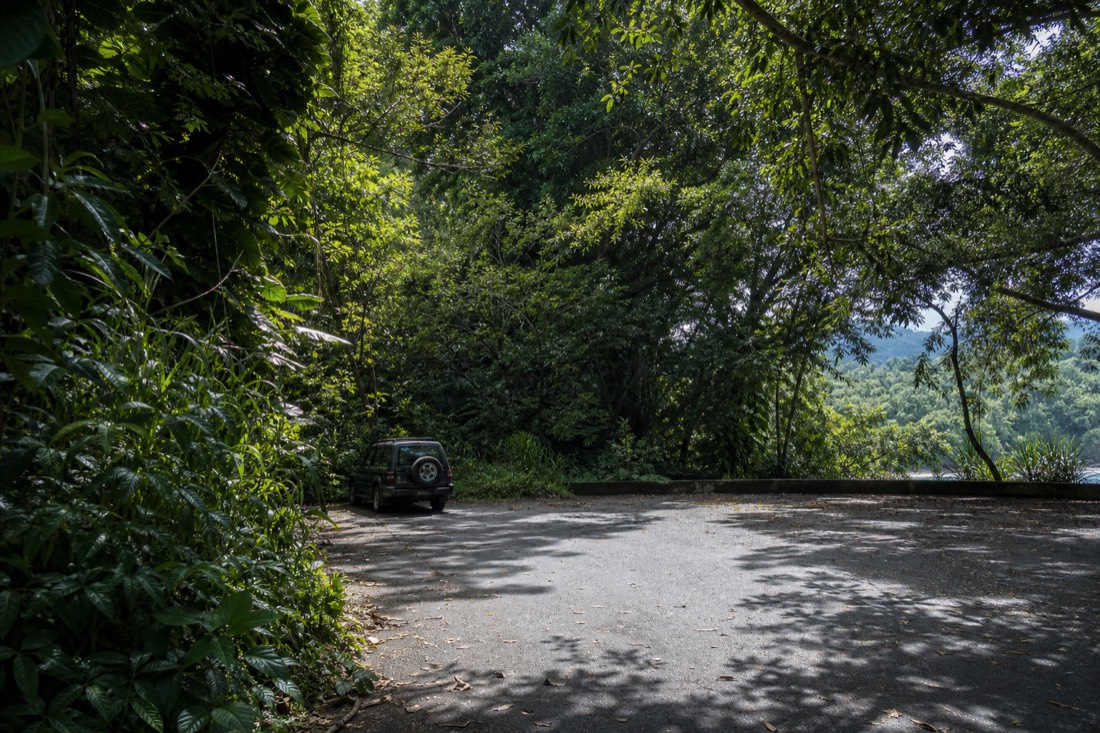
Treat the signal as absent and you will never be caught out. That is not pessimism, it is how the local terrain works: the park sits beside a gorge, wrapped in dense canopy, at the end of a rural climb. Even when a bar or two appears near the pay station, it can vanish thirty steps down the loop. Plan as if the phone is a camera and nothing else, and the day holds together.
Here is the short list of things to nail down before you lose signal. Every row on it exists because I have seen the version where it was skipped.
| What to fix | How to say it | The failure it prevents |
|---|---|---|
| Return time | "Pick us up at the lot at 11:40, not before" | Standing in the lot with no way to call |
| Waiting versus returning | "Do you wait, or do you leave and come back?" | Assuming a wait that was never agreed |
| Driver's direct number | Written on paper, not only in the app | App dependence at a place with no signal |
| Your ship and all-aboard time | "We are back on the ship by all-aboard, and that is 4:30" | A driver who does not understand the deadline |
| A fallback meeting point | "If the lot is full, we walk to the road junction" | Two people waiting 200 metres apart |
| Fare or fee agreed up front | Confirmed before you get out of the car | A negotiation while the clock runs |
| Who calls whom if late | "You call the number on the paper" | Silence in both directions |
Do those seven things and a taxi or rideshare becomes one of the better options on this list. Skip them and it becomes the worst.
Take your all-aboard time, subtract a two-hour buffer, and treat that earlier moment as your real deadline. Everything you plan has to fit before it. A falls run needs roughly three hours door to door with a short stop in Honomū, and less if you drive straight up and straight back.
All-aboard is not a suggestion and there is no rebooking desk. A missed flight costs you a fee and an afternoon. A missed ship costs you a hotel, a flight to the next port, and the rest of your holiday spent catching up with your own luggage. So the arithmetic is worth doing properly, on paper, before you walk off.
The method is simple. Write your all-aboard time. Subtract two hours. That is your planning deadline, and it is not negotiable no matter how confident you feel by mid-morning. Then work backward from there through the return drive, the time on the loop, the outbound drive, and the gangway queue, and you will discover your real departure time from the pier. Usually it is earlier than people expect, which is exactly the point of doing it in advance rather than at 10am with a coffee in your hand.
Two more things belong in that arithmetic. Check your itinerary sheet for whether the call is alongside or by tender, because a tender adds a queue at both ends and those queues get long right before all-aboard. And remember the ship's own excursions are the one category the line will hold for. Everything you booked yourself, including the excellent independent operators, you are responsible for.
Here is the count laid out for a worked example. Say your card reads all-aboard 4:30pm, and adjust every row to your own sailing.
| Step, counting backward | Worked example | Notes |
|---|---|---|
| All-aboard printed on your card | 4:30pm | The hard line, never the plan |
| Two-hour buffer subtracted | 2:30pm | Your real deadline back at the pier |
| Gangway or tender queue | 15 to 30 minutes | Double it on a tender call |
| Return drive from the park | Well under half an hour | Add for rain or a slow truck |
| Optional Honomū stop | 20 to 30 minutes | The first thing to cut |
| Time on the 0.4-mile loop | 30 to 60 minutes | 20 minutes on the left-path shortcut |
| Outbound drive from the pier | Well under half an hour | Plus pickup or rental paperwork |
| Latest sensible departure from the ship | Around 11:30am | Earlier is always better |
Look at that final row and notice how much slack a normal port call actually has. The problem is almost never the total. It is people spending the slack in the morning and then needing it in the afternoon.
Enough, if you keep it to one thing. Five hours ashore means roughly three usable hours after buffers and queues. That covers the falls and a short Honomū stop on an organised half-day, or a straight there-and-back with a booked driver. It does not cover the volcano as well.
Short calls are where discipline pays. Five hours looks generous on the itinerary sheet and shrinks fast once you subtract the two-hour buffer, the gangway, and the walk to whatever is collecting you. What is left is a single well-chosen outing, done calmly, with nothing improvised in the middle of it.
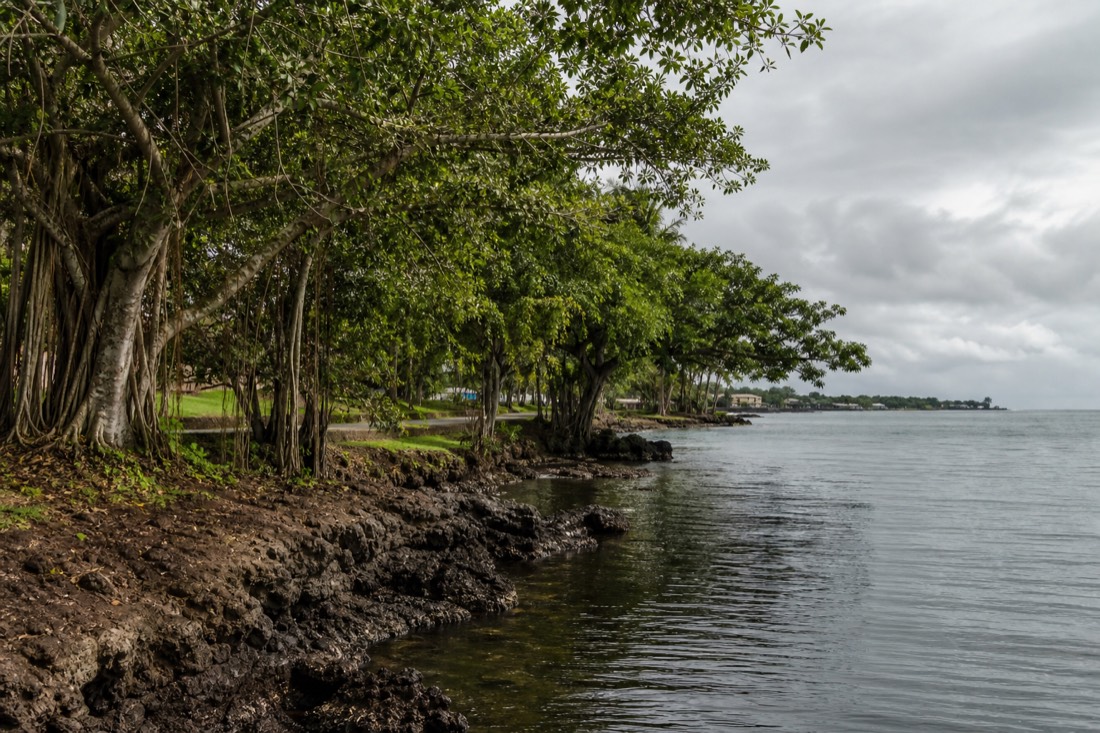
The falls fit that shape almost perfectly. Thirty to sixty minutes on the loop, well under half an hour of road each way, and a park that opens at 8:30am, which is usually before your ship has finished clearing. Go early, go straight there, and you will be back downtown with time for a coffee and a wander among the banyans instead of a sprint.
The version I recommend most often for a five-hour call is a short organised waterfall circuit out of Hilo. Somebody else drives, the timing is built around the ships, and you are not the person doing mental arithmetic in a rental car queue. If your call is on the short side and you want one clean decision rather than six small ones, check price and availability for the half-day circuit and stop planning.
Use the left path at the first junction if the clock is genuinely tight. It takes you to the ʻAkaka Falls overlook directly, and while it does not remove the steps, it removes a good chunk of the distance. The full loop is lovely and I would rather you walked it, but a fast look at a 442-foot waterfall beats a stressed look at nothing. The hike guide has the junction described properly.
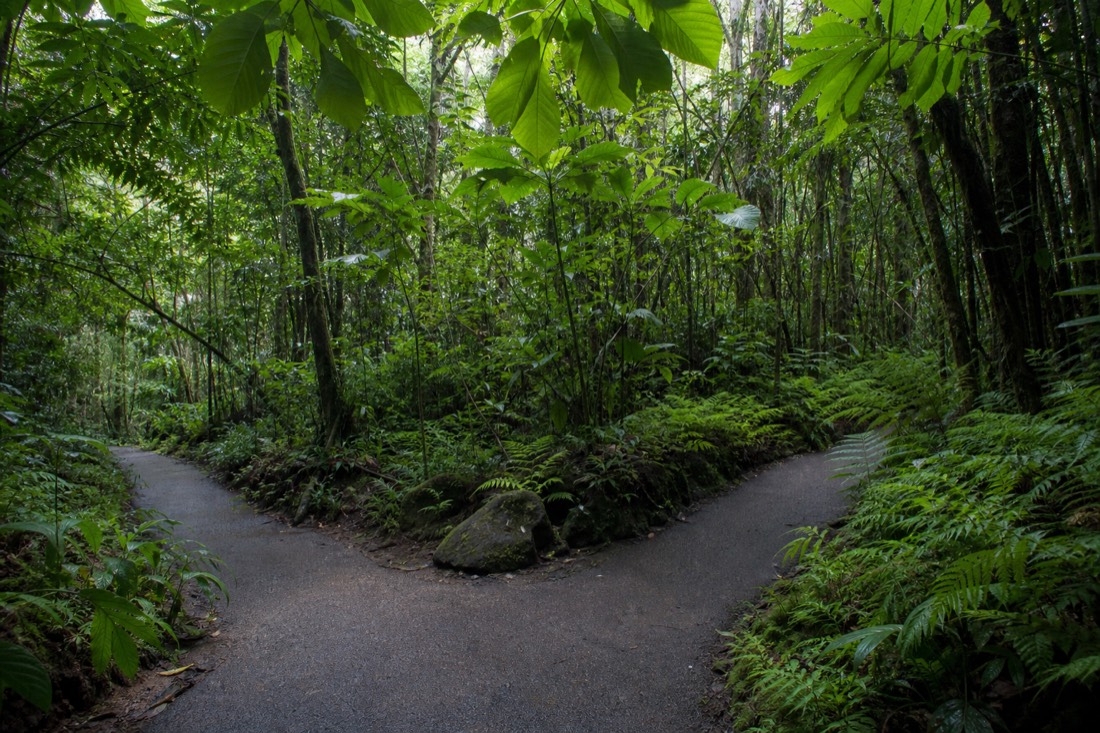
Below is how the three common port-call lengths compare once buffers are removed. It is the table I wish every passenger saw before booking anything.
| 5 hours ashore | 7 hours ashore | 9 hours ashore | |
|---|---|---|---|
| Usable time after buffers | About 3 hours | About 5 hours | About 7 hours |
| The falls | Yes, comfortably | Yes, with a full loop | Yes, with time to linger |
| Honomū town | Short stop only | Yes | Yes |
| A second Hilo waterfall | Tight | Yes | Yes |
| Volcano country | No | No, not honestly | Yes, on an organised day |
| Zipline instead of the loop | Yes, cruise pickup | Yes | Yes, plus the falls |
| Self-drive advisable | Only if confident | Yes | Yes |
| Best default choice | Organised half day | Booked driver or rental | Long organised Hilo day |
A proper falls morning with room to spare. Seven hours ashore leaves about five usable hours, which is the falls at full-loop pace, a real stop in Honomū, and a second waterfall back in Hilo. It is the sweet spot for a rental car or a booked driver rather than a bus.
Seven hours is the call length where independent travel starts to make obvious sense. The buffer is still two hours, the drives are still short, and what changes is that you finally have slack to spend on the things that make a Big Island day memorable rather than merely completed. That usually means Honomū, which most tours drive straight past.
Honomū is one street of wooden plantation storefronts on the way up, and twenty minutes there does more for your memory of the day than a third viewpoint would. Painted facades, a bakery smell, a couple of galleries, no rush. It also sits at exactly the right point in the drive to break the climb. If the weather turns, and on this coast it does turn, the rain notes explain why a shower is often the best thing that can happen to your photographs.
With five usable hours you can also fold in Rainbow Falls on the way back into town, since it is minutes from the bayfront and takes almost no time to see. Two waterfalls, one plantation town, and back aboard with an hour of margin is a genuinely full day by port-call standards, and nothing in it is rushed.
Here is how a seven-hour call actually runs when it goes well, hour by hour, for a ship with all-aboard at 4:30pm.
| Clock | What you are doing | Margin check |
|---|---|---|
| 8:45am | Off the ship, meeting your driver or collecting the car | Fees already paid on ship wifi |
| 9:15am | On the coast highway heading north | Ahead of the tour buses |
| 9:45am | Parked at the park, walking the full loop | Park opened at 8:30am |
| 10:45am | Back at the lot, driver confirmed and waiting | The written pickup time did its job |
| 11:05am | Honomū town, coffee and a wander | The first thing to cut if late |
| 11:45am | Back on the highway toward Hilo | Two and a half hours of margin left |
| 12:15pm | Rainbow Falls, ten minutes on the overlook | Optional, and easy to drop |
| 12:45pm | Lunch on the Hilo bayfront | Walking distance from the pier |
| 2:00pm | Back at the ship, two and a half hours early | Buffer never touched |
Notice that nothing in that day is rushed and the buffer is never spent. That is what a well-planned port call looks like: boring, in the best possible way.
A full Big Island day. Nine hours ashore is about seven usable hours, which is enough for the falls plus volcano country on a single organised run, or for a leisurely self-driven waterfall and coast day. Do not try to combine the volcano with self-driving unless you have done it before.
Nine hours changes the question from what fits to what you most want. The falls need under an hour on the ground. The road eats another hour round trip. That leaves a large, tempting block, and the thing most people want to spend it on is the volcano, which sits southwest of Hilo in the other direction entirely.
That combination works, but only as an organised day. The driving is long, the park is large, the good stops are not obvious, and the last thing you want at 3pm is to be reading a map on an unfamiliar highway with a ship waiting. The longer Hilo tours exist precisely for this: falls in the morning at a pace that includes a full hour on the loop, volcano country in the middle, town on the way back, all timed to your all-aboard. The perfect day guide sketches the same shape for people with their own car and no deadline.
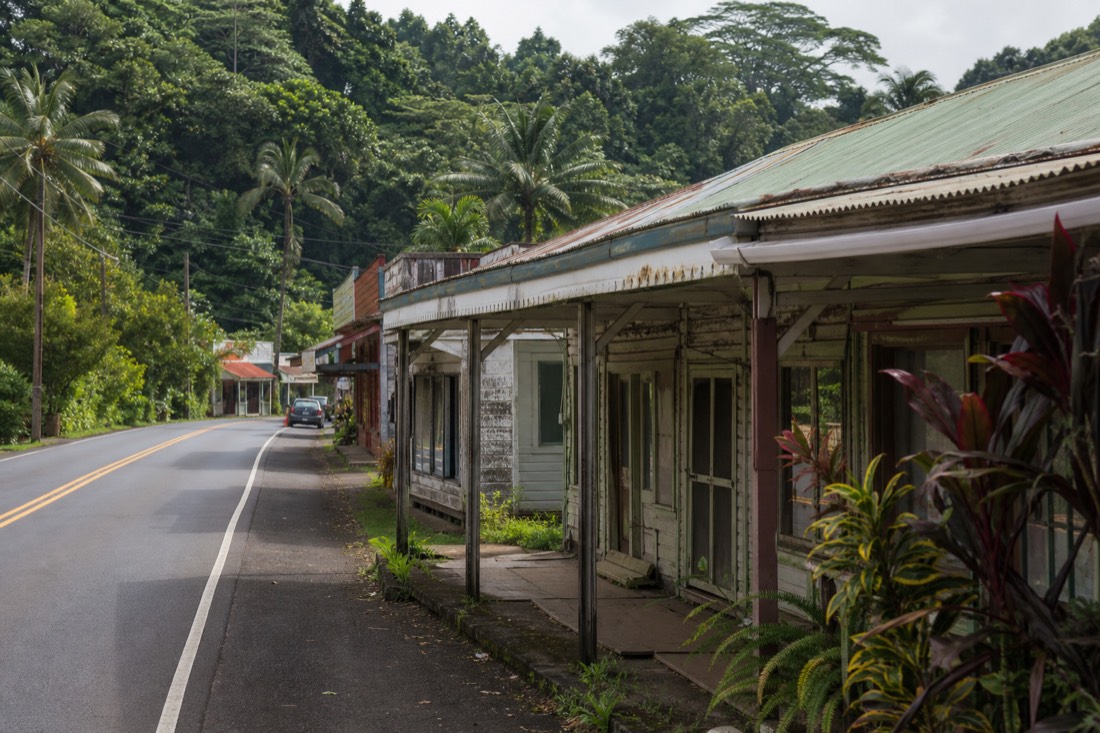
The self-drive version of nine hours is also excellent, provided you point it north rather than southwest. Falls, Honomū, then the coast road with its old bridges and one-lane gulch crossings, and if the day is clear you can push toward the Hamakua and Waipiʻo side for the lookout. That is a beautiful use of a long call and it keeps every leg short and reversible, which matters when you are the one holding the deadline.
What I would not do with nine hours is treat it as unlimited. The buffer stays at two hours. The tender queue, if you have one, stays in the arithmetic. And the further southwest you go, the less forgiving a late start becomes, because there is only one road back. If you want the volcano and the falls in the same port call without owning that risk, the long Hilo day is the honest way to do it, and you can look at the dates it runs against your itinerary.
One small planning note for long calls: the falls are best early. Light on the overlook is kinder before midday, the lot is emptier, and the tour buses have not landed yet. The best-time guide makes the same case for anyone with a choice about when to walk it.
Very well, with one thing understood clearly. The zipline course near the park crosses 250-foot KoleKole Falls, not ʻAkaka Falls itself. Hawaii Zipline Tours runs it, the flying takes about 2.5 hours, and the cruise-terminal-pickup version is built around port schedules, which removes the all-aboard risk entirely.
This is the option I recommend most often to nervous first-time cruisers, and also to families with teenagers who will not thank you for a paved loop. Somebody collects you at the ship. Somebody returns you to the ship. In between you fly a series of lines and a hanging bridge over a green gulch with a waterfall in it, and the only thing you have to manage is your own nerve.
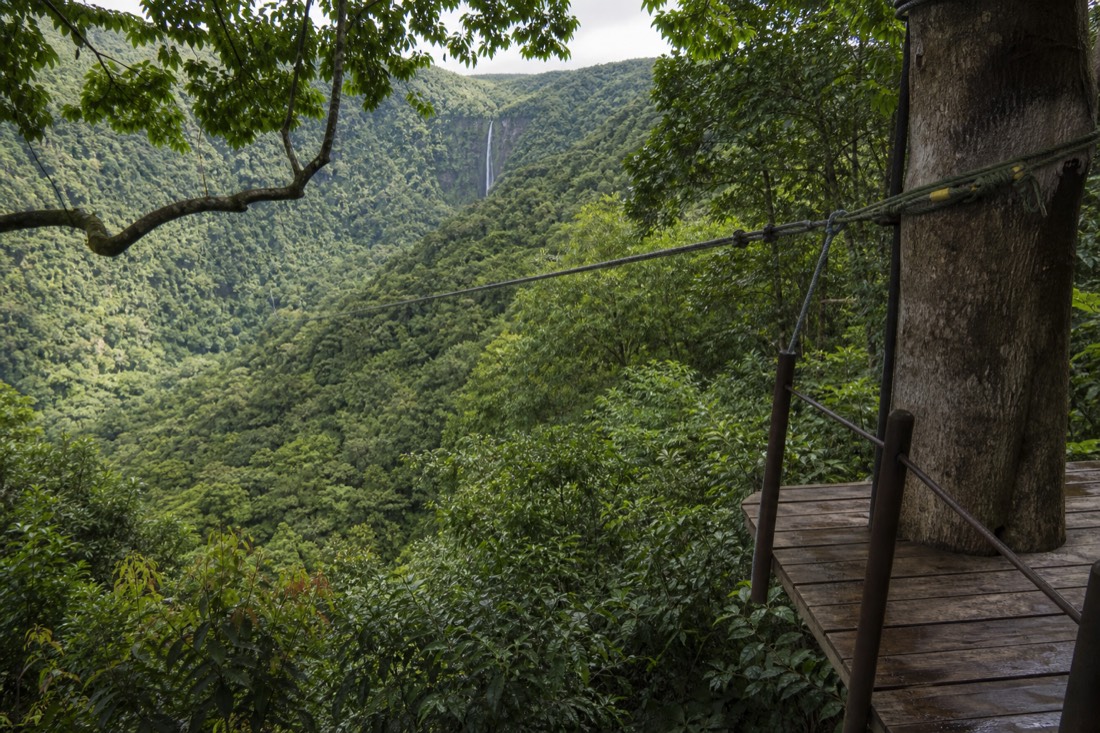
Now the part that gets confused constantly. The waterfall you fly is KoleKole, a 250-foot fall on private land near the park, and it is genuinely spectacular from the air in a way no trail can offer. It is not ʻAkaka Falls. If you have come 4,000 miles specifically to stand at the 442-foot drop, the zipline is not a substitute for it, it is a companion to it. Plenty of people on a long call do both, and that is the best version of the day. The zipline page walks through the course properly, including what actually happens on the first platform when your legs decide they have opinions.
There are two ways to book it, and they suit different travellers. The cruise-terminal-pickup version is the low-anxiety one: transport from and to the ship is part of the product, so the operator holds the clock. If that is what your day needs, check the times against your sailing and book it before the ship's own excursion desk sells you a longer bus day.
The other way suits people who have already sorted their own transport. If you have a rental car or a booked driver, you can take the standard course, arrive under your own steam, and stack it against a falls visit in the same morning, since the two sit minutes apart. That is the strongest use of a nine-hour call I know: fly at nine, walk the loop at noon, coffee in Honomū, aboard by two. Either way, treat the height honestly. If stairs are already a question for anyone in your party, the kids and seniors guide is the better place to start.
Some port days should not include the falls. Very short calls, tender ports with slow queues, late arrivals, groups with real mobility limits, parties that will not move together, and any day where you also want the volcano without an organised operator. In each case there is a better answer, and it is usually closer to the pier.
I would rather tell you not to come than watch you spend four hours anxious. The falls are wonderful and they are also 11 miles away up a dead-end road, which means they punish a plan that was already tight. There is no shame in a Hilo day that stays in Hilo, and the things to do in Hilo guide is full of things worth doing within walking distance of the pier.
The mobility case deserves specific honesty. The loop is paved, but it has stair sections, the official description says it requires some physical exertion, and it is not wheelchair accessible. The left-path shortcut cuts the distance and does not remove the steps. For a passenger who finds stairs genuinely hard, this is a trip that ends in disappointment at a junction, and I would send them to a bayfront waterfall with a roadside view instead.
The group case is the one people underestimate. Twelve people who cannot agree on a departure time will lose an hour before the vehicle moves, and that hour comes out of your buffer, not out of the morning. If your party will not commit to a single decision made in advance, put the decision in somebody else's hands and buy an organised day.
Here are the cases where I would steer you away, with what I would do instead.
| The situation | Why the falls are a bad fit | What I would do instead |
|---|---|---|
| Call under four hours | Buffer eats nearly all of it | Bayfront, banyans and a market on foot |
| Tender port with slow queues | The queue is unpredictable at both ends | Anything within walking distance of the tender dock |
| Arrival after midday | The park closes at 5:00pm and the clock is against you | A short Hilo waterfall stop by taxi |
| Stairs are a real problem for someone | Paved loop still has steps, not wheelchair accessible | Rainbow Falls, viewable from near the car park |
| Group of ten or more, no agreed plan | Departure drift destroys the buffer | An organised day where someone else owns the clock |
| You also want volcano country | Two directions, one deadline, no margin | A single long organised Hilo day |
| Nobody wants to arrange a return | The lot has no signal and no waiting taxis | Cruise-terminal pickup, zipline or excursion |
Every row above has a version where it worked out fine. Every row also has a version where somebody watched their ship from the pier. Choose accordingly.
Pay the park fees on ship wifi before you walk off, carry a paper note with your driver's number and your all-aboard time, take a light rain layer and shoes with grip, and have a one-page plan you agreed with your party the night before. Ten minutes of preparation removes almost every failure mode in this guide.
The night before a Hilo call I would do four things. Confirm all-aboard from the daily programme rather than memory. Agree the departure time with everyone in your party, out loud, so there is no negotiation at breakfast. Pay the state park fees online while the wifi works. And write the essentials on a piece of paper: driver's number, pickup time, all-aboard, ship name and pier.
On fees, the arithmetic is small and worth knowing. Non-residents pay $5 per person to enter plus $10 per vehicle to park, and it is credit card only, so a couple arriving in one car is $15 in total. Residents are free with ID and children 3 and under are free. If you are on an organised day, the fees are typically handled for you, and the cost guide sets out who pays what.
Then the rain habit, which is the most local piece of advice I can give you. This coast is wet, and the falls are wet because of it. A shower that would ruin a beach day makes the gorge glow and the falls run hard, and the canopy over most of the loop means you get less of it on your head than you expect. Take a packable layer, do not take an umbrella you will fight with on the stairs, and wear shoes that grip a wet painted surface. Then stop checking the forecast. The people who enjoy this walk most are the ones who accepted the water before they got off the ship.
Last, the plan itself. One page, one departure time, one return time, one fallback. Keep it in a pocket rather than a phone, because up there the phone is a camera. If you would rather not build it at all, hand the whole problem to an operator who does port days for a living, and if you have already sorted your own wheels, you can see what slots are open and stack the morning yourself. Either way, the falls will be there, dropping 442 feet into the gorge, doing what they have done all along. Your job is only to get back to the gangway.
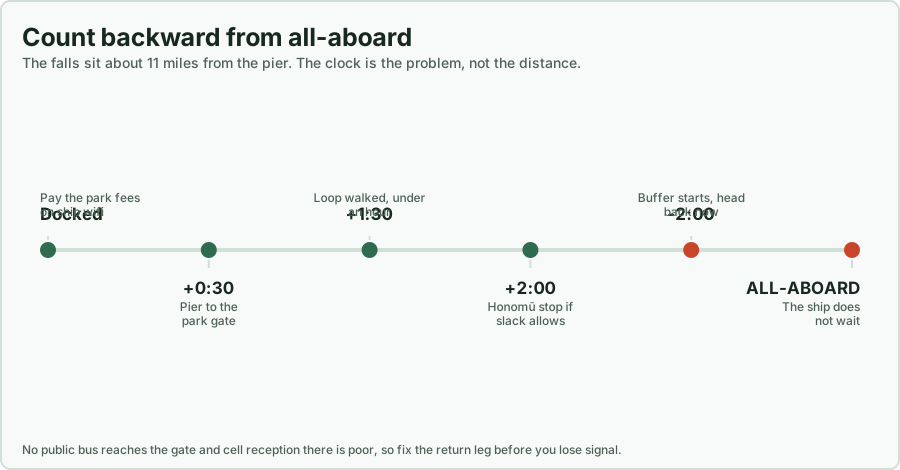
Eleven miles, one short loop, one hard deadline. Handle the return leg first and the rest of the day is just a beautiful coast doing what it always does.
Half day
from $309per person, varies by date Check availability →Half day
from $229.99per person, varies by date Check availability →7 to 8 hours
from $179per person, varies by date Check availability →