Akaka Falls, Volcanoes & Hilo day (full hour at the falls)
7 to 8 hours
from $179per person, varies by date Check availability →Under an hour, gate to gate. The interesting question is what you do with the rest of the morning.
 Verified by Kekoa Kalani, Akaka Falls tour guide and island nature specialist
Short answer
Plan 30 to 45 minutes for the 0.4-mile paved loop, or a full hour if you photograph everything or take stairs slowly. Guided stops run 35 minutes on the circle-island day, about 40 on the Kona waterfall day, and a full hour on the Hilo-based Aloha Aina day.
Ten years of walking groups around this loop has given me a private stopwatch. A fit couple who mostly wants the photo: 25 minutes. A family with a curious seven-year-old: 45. A photographer waiting for the mist to lift off the gorge: the full hour, and they would stay longer if the van did not have a schedule. I have stood at the ʻAkaka Falls overlook in flat grey drizzle at nine in the morning and in gold afternoon light with the wind pushing the whole column of water sideways, and the honest truth is that the clock barely moves either way. This is the rare famous sight where "how long do I need" has a genuinely short answer. So let me give you the exact numbers, show you where people lose time they did not need to lose, and then help you spend the hours the falls hands back.
Thirty to forty-five minutes covers the 0.4-mile paved loop for most visitors, including honest pauses at both waterfall viewpoints. Add parking and the pay kiosk and you are under an hour gate to gate. Only photographers and anyone genuinely slow on stairs needs longer than that.
That number surprises people, usually because the falls looks like a bigger commitment than it is. Forty-five minutes is the figure I give every guest who asks, and it has held up across something north of a thousand travellers. It is not a rushed forty-five either. It includes stopping at the Kahuna Falls viewpoint long enough to actually find the water across the valley, standing at the main railing until you have looked at ʻAkaka Falls rather than just photographed it, and walking the stairs at whatever speed your knees prefer.
Gate to gate means something specific here, so let me define it. It covers the walk from your car across the lot, the pay kiosk, the loop itself, and the walk back. The lot is compact and it fills, which is the only part of the visit that can add unpredictable minutes. Arrive before the first vans and the lot is a non-issue.
The mistake I see most often runs in the other direction. People block out three hours for ʻAkaka Falls because it is the headline waterfall on the Hamakua Coast, then finish the loop in half an hour and stand in the parking lot with no plan. That is a wasted morning on an island this big. The park is 65.4 acres and the trail is a fenced viewing loop, not a hiking network, so there is no extra mileage waiting to absorb your spare time. Budget an hour, treat anything under it as a gift, and have the next stop already chosen. The full-day version of that thinking is laid out in the perfect Akaka Falls day.
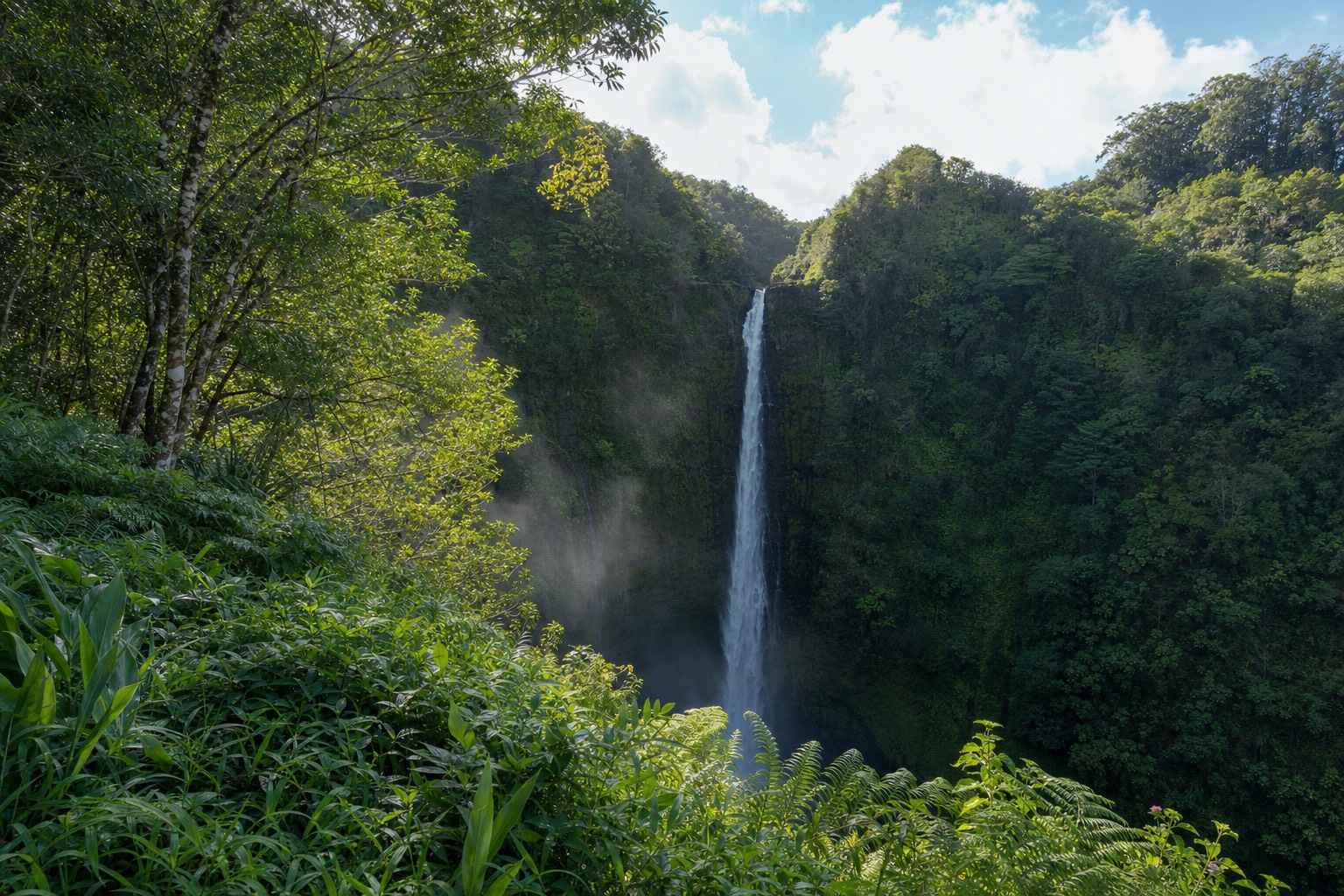
It is a 0.4-mile paved loop through bamboo and fern forest, past cascading Kahuna Falls and then the main ʻAkaka Falls overlook, where the water drops 442 feet into a stream-eroded gorge. The state calls it a footpath requiring some physical exertion, with multiple steps, and not wheelchair accessible.
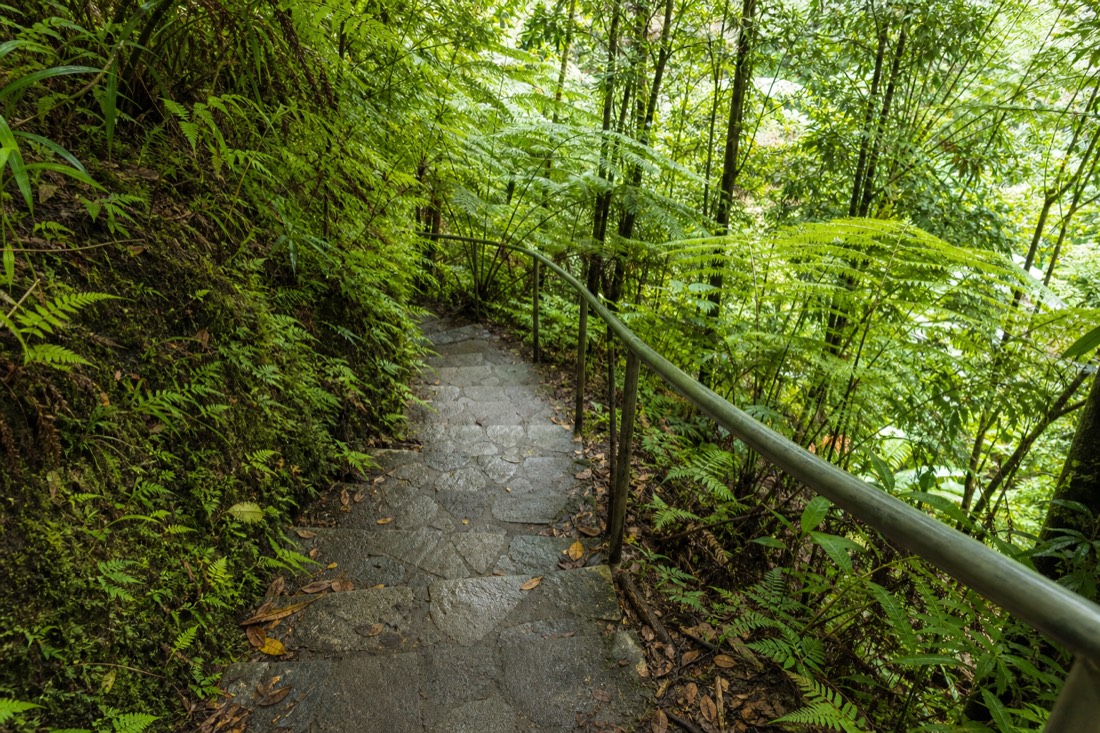
People hear "0.4 miles" and mentally file it as five minutes. On a flat sidewalk, correct. Here the pavement drops down the gorge side and climbs back out, and it does that on stone and concrete steps rather than a ramp. The official park page is straight about it: some physical exertion, multiple steps in places, no wheelchair access. That is an accurate description and it is also the single most useful sentence on that page for planning your time, because stairs are what make one visitor's twenty-five minutes into another visitor's hour.
Weather bends the clock more than fitness does. This is the wet side of the island and a passing shower closes nothing, because the pavement drains well and the falls only gets louder. What rain changes is your footing on the steps, which turn slick enough that I add ten minutes to any group's estimate and tell people to use the handrails without embarrassment. A small umbrella beats a poncho on this trail, since showers here arrive and leave inside a single loop. I have written more about what the wet days actually feel like in rain at the falls.
Here is the loop broken into the pieces I actually count when I am pacing a group, walking it the standard way round: right and north first to Kahuna, then the bamboo, then up to the main overlook, then back to the entrance on the south path.
| Stretch of the walk | What it is | Rough time |
|---|---|---|
| Car to the trail entrance | Compact paved lot, restrooms, the pay kiosk | 3 to 5 minutes |
| Entrance to the first junction | Level paved path under heavy canopy | 2 minutes |
| Down toward the Kahuna viewpoint | The first real descending stair section | 8 to 10 minutes |
| The Kahuna Falls viewpoint | Fenced overlook across the valley | 3 to 5 minutes |
| Bamboo and wild ginger corridor | Flattest, quietest, prettiest stretch of the loop | 6 to 8 minutes |
| Climb to the ʻAkaka overlook | The longest continuous run of steps | 5 to 7 minutes |
| The main overlook railing | 442 feet of free fall straight ahead | 5 to 15 minutes |
| Overlook back to the entrance | Short paved climb on the south path | 4 to 6 minutes |
Add the middle of every range and you land around forty-four minutes, which is why "budget an hour" almost never fails. The stretch that swings widest is the railing itself, and that is the one worth protecting. A full step-by-step read of the surfaces, railings and where the steepest sections fall is in the trail guide.
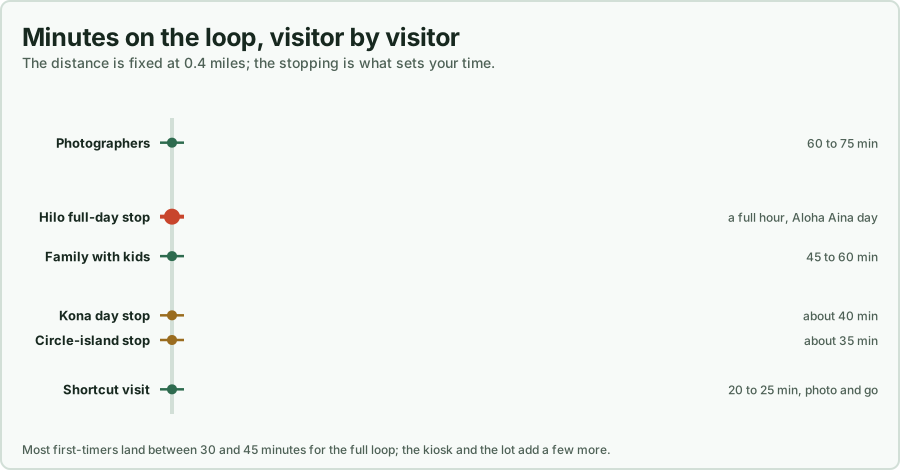
Pace here is set by knees, curiosity and cameras rather than fitness. A fit couple taking the shortcut can be done in twenty-five minutes. Families with small children run forty-five to sixty. Photographers should protect an hour and a quarter, and anyone slow on stairs should plan the same.
Ten years of watching people move around this loop has sorted them into a handful of reliable types, and I can usually call the number before we leave the parking lot. The variable is almost never cardiovascular. It is the stairs, the number of times someone stops to look at something, and whether anyone in the group brought a tripod.
Families are the group most often underbudgeted. Small children do not walk a rainforest loop, they investigate it, and the bamboo corridor is where they stop dead because the stalks knock together in the wind and it sounds like something alive. That is a good forty-five minutes, not a problem to be solved. Grandparents move at a different pace for a different reason, and both ends of that range are covered properly in the kids and seniors guide.
Photographers are the other honest outlier. The main overlook faces a 442-foot free fall into a gorge that generates its own mist, and that mist moves. Waiting for it to open, then closing down for a long exposure, then waiting again because the light shifted, is not indulgence: it is the only way to come home with the shot people think they will get in ninety seconds. If that is you, the framing, the angles and the times of day worth targeting are covered in the photography guide.
| Visitor type | Realistic loop time | What sets the pace |
|---|---|---|
| Quick visit, main falls photo and out | 20 to 25 minutes | Taking the left path straight to the ʻAkaka overlook |
| Typical first-timer walking the full loop | 30 to 45 minutes | Both viewpoints, bamboo stops, no rushing |
| Family with young children | 45 to 60 minutes | Stairs, snacks, and everything being interesting |
| Photographer with a tripod | 60 to 75 minutes | Waiting on mist and light at the main railing |
| Slow on stairs, taking it gently | 45 to 60 minutes | Resting between stair sections; the shortcut helps a lot |
| Cruise passenger on a fixed window | 30 to 40 minutes | Working backwards from all-aboard, not from the trail |
One line I repeat at the trailhead: nobody has ever told me they wish they had spent less time here. Plenty have told me the opposite.
From the first junction after the entrance, the left path, the south side, leads directly to the ʻAkaka Falls overlook. The state signs it as the route for seeing the main falls only. It saves roughly fifteen minutes and the deepest stair sections, and it costs you Kahuna Falls and the bamboo corridor.
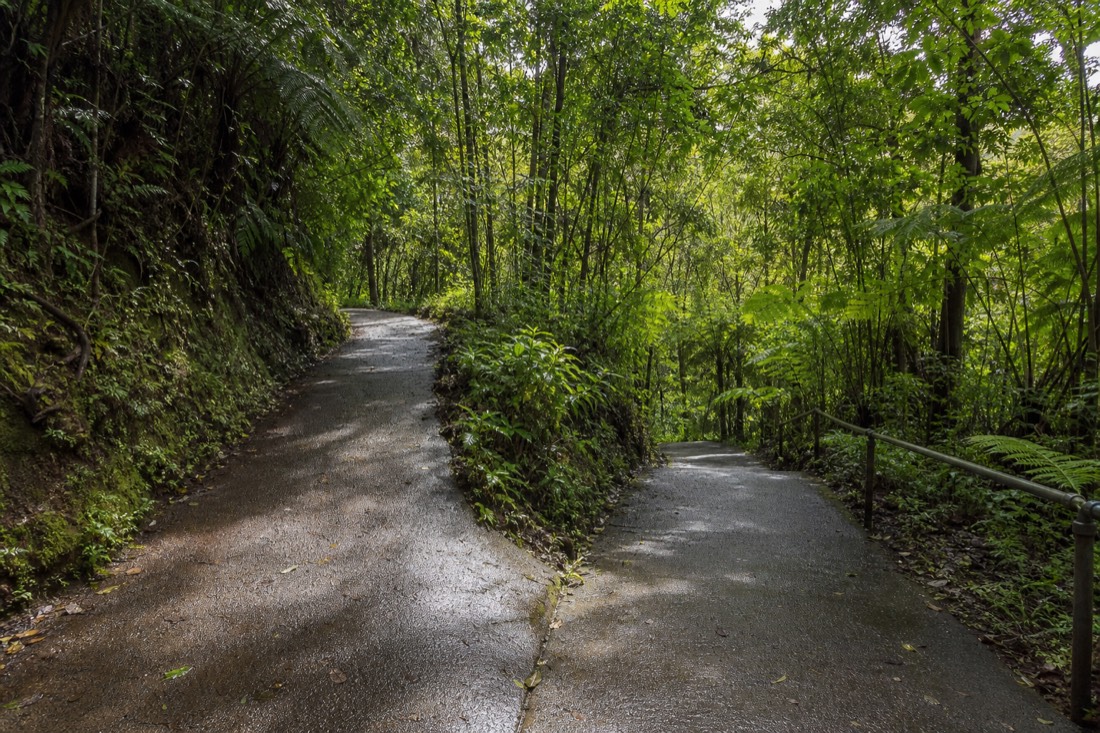
This is my standard route for guests who want the payoff without every step, and I want to be clear that it is not a cheat. The main falls is the reason people come. Going left gets you there on the shortest paved line, you stand at the same railing looking at the same 442 feet of water, and you walk back the way you came. For a visitor with a bad knee, a tight ship schedule or a toddler who has already used up the day's walking, it is simply the right call.
What you give up is the part of the loop that makes this feel like a rainforest rather than a viewpoint. Kahuna Falls is the cascading one on the far side of the valley, easy to miss if you do not know where to look and quietly beautiful once you find it. The bamboo corridor between the two viewpoints is the stretch guests talk about afterwards more than they expect to, because it is the only place on the walk where you cannot hear a car. If you have the time and the knees, walk the whole thing. If you do not, take the left path and enjoy the falls without a shred of guilt.
Here is the tradeoff laid out plainly.
| Left path, main falls only | The full loop | |
|---|---|---|
| Time on the trail | 20 to 25 minutes | 30 to 45 minutes |
| Stairs involved | The shortest run of steps on the trail | Two substantial stair sections, down and back up |
| What you see | ʻAkaka Falls from the main overlook | ʻAkaka Falls, Kahuna Falls, bamboo and ginger forest |
| How it walks | Out and back on the same paved path | A circuit, no backtracking |
| Who it suits | Tight schedules, sore knees, small children, cruise mornings | First-timers, families with time, anyone here for the forest |
Stop lengths vary more than most people expect. The circle-island day allows about 35 minutes, the Kona waterfall day about 40, and the Hilo-based Aloha Aina day a full hour. All three cover the loop comfortably. What differs is how much lingering the schedule permits at the main railing.
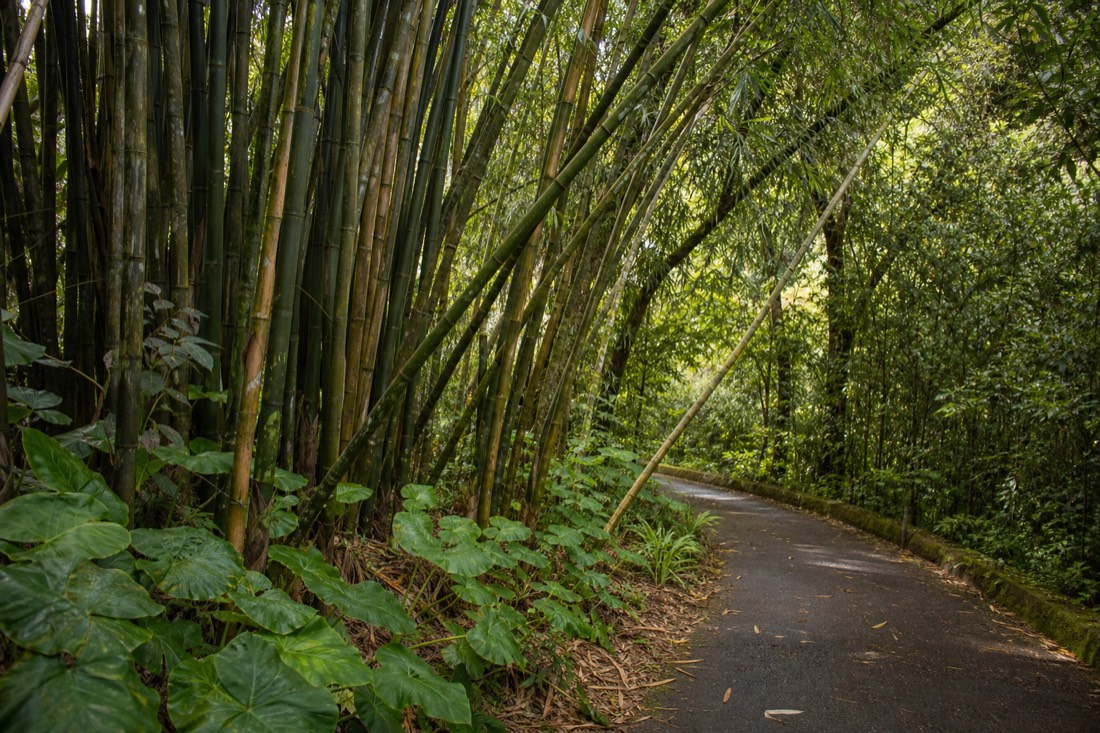
This is the question I wish more people asked before they book, because stop length is where waterfall days quietly differ and it is rarely the headline on any itinerary. Thirty-five minutes is genuinely enough for the full loop at a steady pace. It is not enough for a photographer, and it is not enough for someone who wants to stand at the railing until a tour group moves on. Forty minutes buys you the loop plus a couple of unhurried minutes. An hour changes the character of the stop entirely, because you stop doing arithmetic in your head and start actually looking.
Guided days also handle the money at the gate for you, which is worth a sentence. Non-residents pay $5 per person plus $10 per non-commercial vehicle, credit card only, and commercial vehicles pay a different scale entirely: $25 for one to seven passengers, $50 for eight to twenty-five, $90 for twenty-six and up. On the days below, that admission sits inside the ticket. If you are driving yourself instead, the arithmetic for every party size is worked through in what it costs.
| The day | Time at the falls | Pickup side | What that stop length actually allows |
|---|---|---|---|
| Circle-island day, about 11 hours | About 35 minutes | Kona and Waikoloa | The full loop at a steady pace, brief time at the railing |
| Waterfall-first day, about 10 hours | About 40 minutes | Kona and Kohala | The full loop plus a few unhurried minutes at the overlook |
| Hilo falls, volcano and town day, 7 to 8 hours | A full hour | Hilo | Loop, both viewpoints, and real waiting time for the mist |
| Hilo waterfall circuit, half day | Set inside a half-day outing | Hilo | The falls without committing your whole day to a tour |
The circle-island day treats ʻAkaka Falls as one highlight among several, which is the right trade if you want the whole island in a single shot: volcano, black sand, Rainbow Falls, this. The waterfall-first day gives the falls a little more room inside a route built around water. The outlier is the Aloha Aina day out of Hilo, a small-group operation capped at fourteen guests, and the only one that budgets the falls a full hour. If unhurried time at the railing is the point of your trip, that hour is the whole difference. It anchors the Hilo-side lineup, and you can check dates and availability before you commit to a self-drive morning.
You can be at the main railing twelve minutes after parking if you take the left path and move. I have done it on a schedule and I do not recommend it. Wet steps punish hurrying, and the mist that makes the photograph needs a few minutes of patience you will not have.
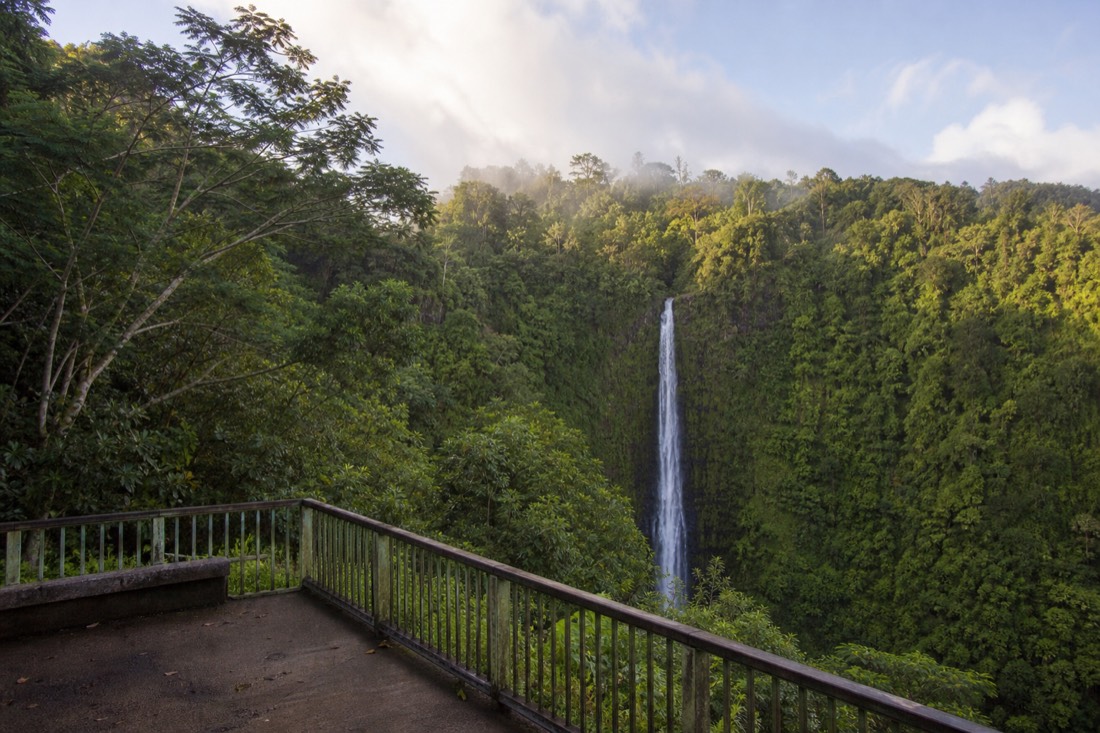
The twelve-minute version exists and it is real. Left at the junction, straight down the paved path, stand at the overlook, turn round, walk out. If a ship's departure or a flight genuinely leaves you no other option, take it, because seeing ʻAkaka Falls for four minutes still beats not seeing it. What I want you to understand is exactly what that version costs, so you are choosing it rather than stumbling into it.
First, the steps. Every fall I have seen on this trail happened on a descent, in the wet, to someone moving faster than their feet. The pavement is well maintained and the handrails are there for a reason, and rushing down them in trail runners after a shower is the one avoidable risk on the whole visit. Second, the mist. The gorge generates its own weather, and there are minutes when ʻAkaka Falls is almost entirely hidden behind cloud. Visitors who leave in that moment walk away thinking the falls was disappointing. Visitors who wait usually get the reveal, and it is better than the postcard, because you see the water arrive out of nothing.
The other rushed version is the late arrival. The park runs 8:30am to 5:00pm daily, and I do not recommend starting a loop after about 4:15pm. You will be watching a clock instead of a waterfall, the light in the gorge is already going, and the stairs are the last place you want to be hurrying at the end of a long day. If your afternoon has slipped that far, park the idea and come back at 8:30 the next morning. This place rewards being early far more than it rewards being late.
Leave Hilo around 8:00am, pay the park fees from your phone before you lose signal, and be walking the loop when the gates open at 8:30. You will be finished before the first vans land and drinking coffee in Honomū by 9:45, with the entire day still in front of you.
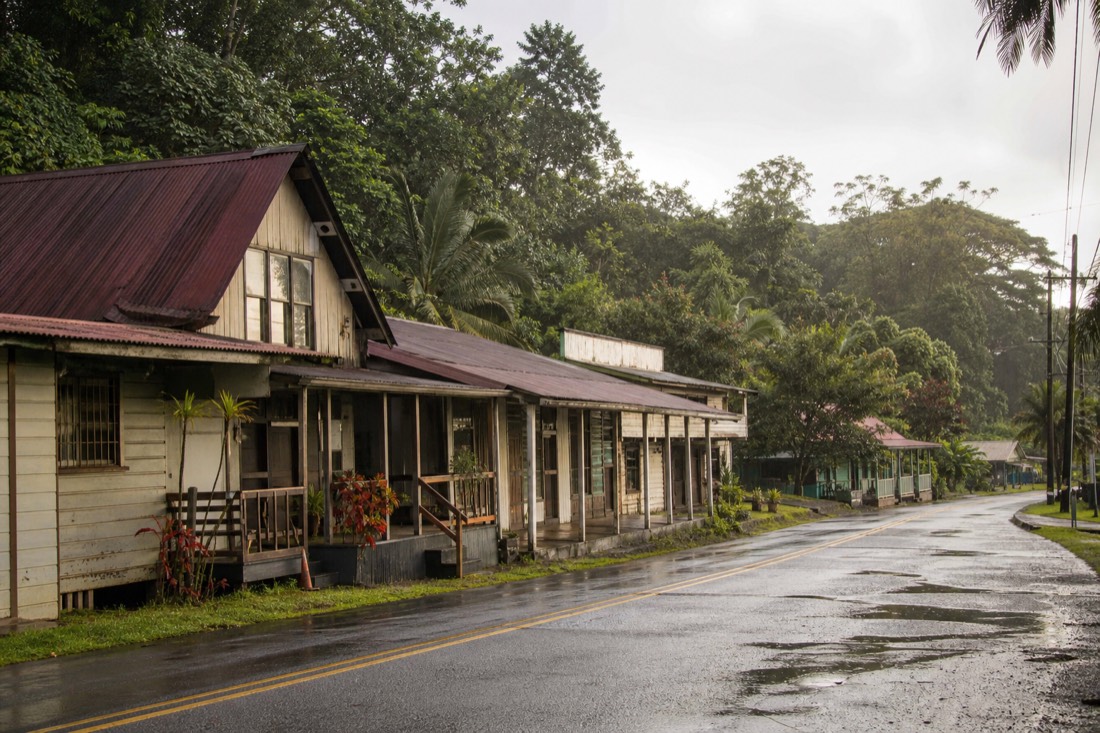
The falls sits at the end of ʻAkaka Falls Road, Highway 220, about 3.6 miles southwest of Honomū and roughly eleven miles from Hilo. Those eleven miles drive longer than they read, the same way the trail does, because the last stretch is a steady climb on a two-lane road with no reason to hurry. From the Kona side it is closer to ninety minutes each way, which changes the shape of the day completely and is worked through in the Kona drive guide.
One step saves more time than any other, and almost nobody does it: pay before you arrive. The kiosk takes credit cards only, cell reception up there is poor, and the state itself encourages paying in advance through its online portal. Two minutes on your phone over breakfast beats ten at the gate watching a loading spinner while the lot fills behind you. Hawaii residents go free with a driver's licence or state ID, and children three and under are free.
Here is the schedule I run with private guests staying in Hilo. It works exactly as well self-driven.
| Time | What you are doing |
|---|---|
| 8:00am | Leave Hilo; pay the entrance and parking fees from your phone before you lose signal |
| 8:30am | Gates open; park while the lot is still half empty and start the loop |
| 8:35 to 9:15am | Full loop with unhurried stops at the Kahuna and ʻAkaka overlooks |
| 9:15 to 9:30am | Back at the railing for a second look now that you know where the mist sits |
| 9:45am | Down Highway 220 into Honomū for coffee and banana bread |
| 10:15am | North up the Hamakua Coast, or south back into Hilo town |
That second visit to the railing at 9:15 is the part people skip and the part I would keep. You have already seen the falls once, you know how the light falls, and the loop has not yet filled. A longer version of this same morning, written as it actually happened, is in a morning at Akaka Falls. If you would rather not build the morning yourself, and you want the volcano and the black sand beach in the same day, the circle-island day that includes the park admission does the whole route for you in one ticket.
Afternoons are the mirror image and they have real advantages. Tour vans thin out after about 2pm, the light goes softer down in the gorge, and a 3:30 loop still leaves comfortable margin before the 5:00pm close. The tradeoff is rain, which on this coast tends to build later in the day.
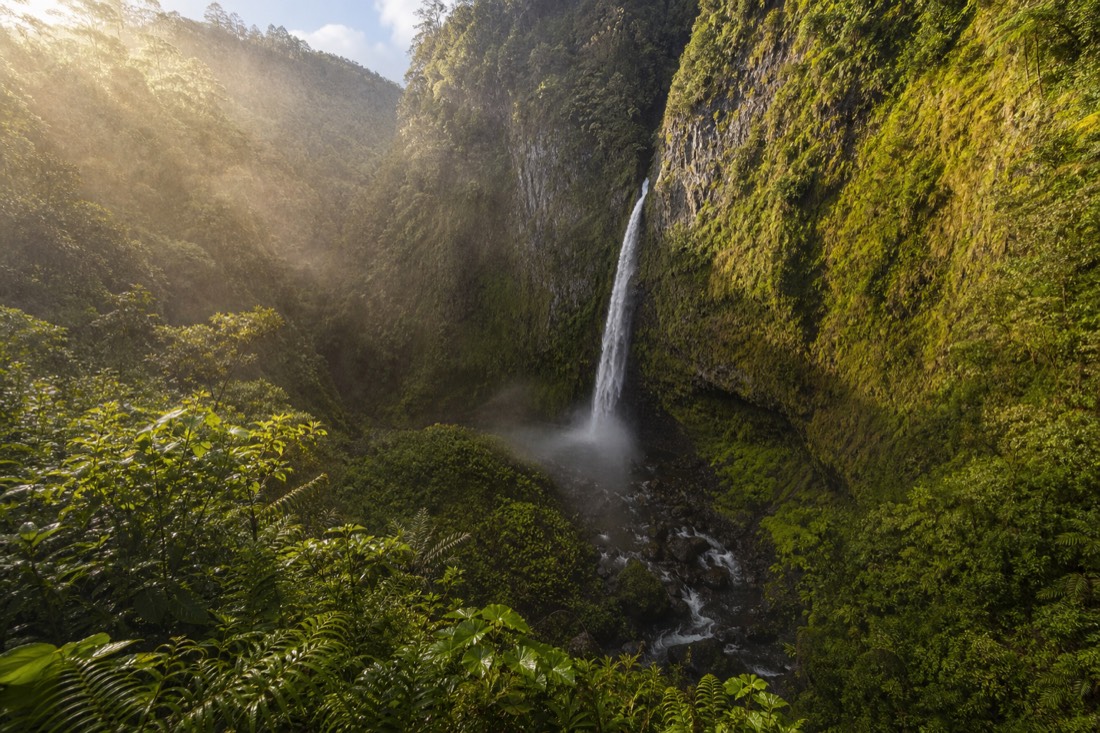
I send a lot of guests here in the afternoon and they rarely regret it. By two o'clock most of the commercial vans have moved on to their next stop, and the trail changes character: quieter, slower, with actual gaps at the railing. If your morning is already spoken for by a volcano drive or a boat, the 3:00 to 4:00 window is a perfectly good slot and not a consolation prize.
Light is the part people get wrong. Down in the gorge the direct sun is gone long before the sky loses it, and what you get instead is a soft, even light that flatters wet rock and green. Late afternoon is gentler on both your eyes and your sensor than the harsh midday contrast between a lit rim and a shadowed gorge.
The catch is weather, and I will not pretend otherwise. The Hamakua Coast builds cloud through the day far more often than it clears, so afternoon visits carry a higher chance of walking the loop in rain. That is survivable and occasionally spectacular, since the falls runs harder after rain and the gorge fills with drifting spray. Bring the umbrella, take the steps slowly, and accept that you may not get a blue-sky photograph. If you are choosing between seasons as well as hours, the month-by-month patterns are in the best time to visit.
One firm boundary: 5:00pm is 5:00pm. Plan to be walking back toward the lot by quarter to, not still standing at the overlook hoping the mist opens one more time.
Three variables, and they pull against each other: crowds, light and weather. Mornings win on crowds and on clean light into the gorge. Midday is the worst of the three on every count. Afternoons win on quiet and soft light, and lose on rain. Pick the one you care about most.
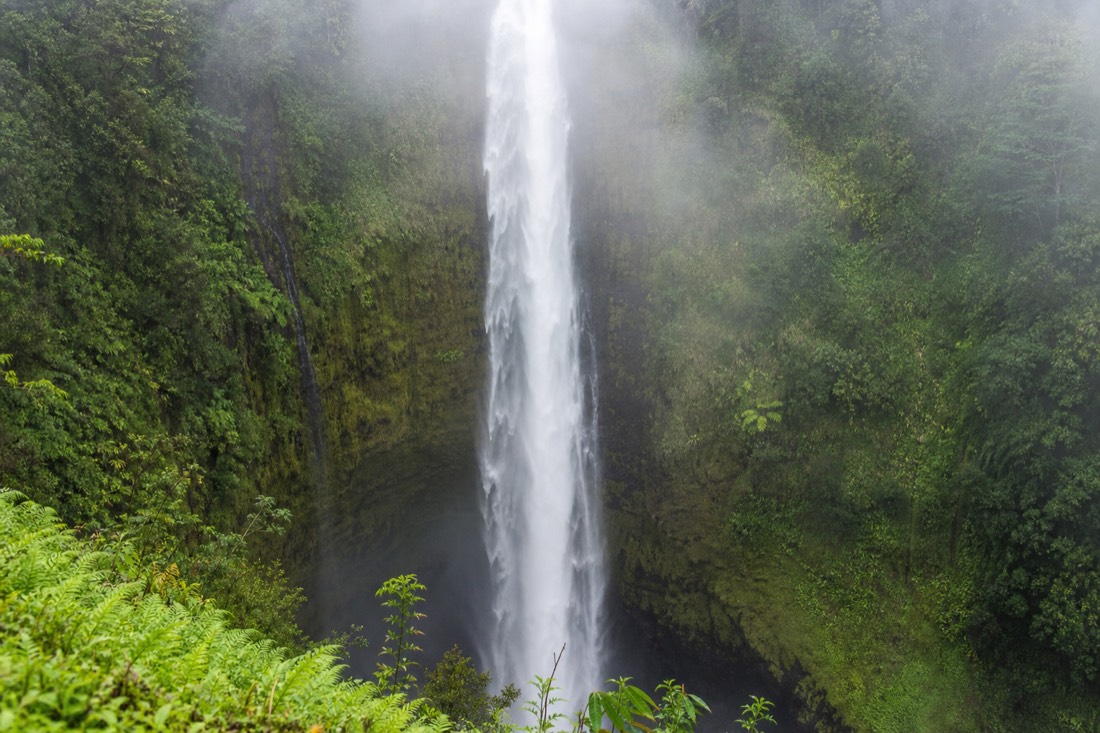
Nobody gets all three. That is the honest version, and once you accept it the decision gets easy. I ask guests one question: are you here for the photograph, for the quiet, or because this is the only slot your day has?
The mist deserves its own note because it drives more disappointment than crowds ever do. ʻAkaka Falls drops 442 feet into a narrow, stream-eroded gorge, and all that falling water makes weather at the bottom of it. Cloud rolls up the gorge, swallows the falls, then tears open again, often inside a few minutes. The single most valuable piece of pacing advice I give is this: if the falls is hidden when you reach the railing, do not leave. Give it five minutes. The odds are good, and the version that appears out of the cloud is the one people remember.
Crowd rhythm is more predictable than the weather. The first ninety minutes after the 8:30am opening are the quietest stretch of the day, every day. Commercial vans start landing mid-morning and the middle of the day is a steady churn. After about two in the afternoon it drains again. There is no timed-entry system and no reservation to chase, so this is entirely about when you choose to show up.
| Window | Crowds | Light in the gorge | Weather odds | The verdict |
|---|---|---|---|---|
| 8:30 to 10:00am | Lightest of the day | Clean, coming over the rim | Driest window on this coast | Best overall, and best for photographs |
| 10:00am to 2:00pm | Heaviest, vans stacked in the lot | Harsh contrast, rim lit and gorge dark | Cloud beginning to build | Workable if it is your only slot |
| 2:00 to 4:00pm | Thinning steadily | Soft and even on wet rock | Highest chance of showers | Best for quiet, bring the umbrella |
| After 4:15pm | Very light | Fading fast down in the gorge | Variable | Too tight before the 5:00pm close |
A compressed visit works: thirty to forty minutes on the trail, the left path if you are tight, and a hard buffer before all-aboard. Pay the fees from your phone at breakfast, because poor reception at the gate is where cruise-day schedules lose the ten minutes they cannot spare.
Cruise passengers ask me this more than anyone, and the answer is more reassuring than they expect. ʻAkaka Falls is genuinely doable on a Hilo port day, and the whole thing fits inside a morning with room left over. What kills cruise-day plans is never the trail. It is the drive back, the queue at the pier, and the ten minutes lost at a payment kiosk with no signal.
Work backwards, always. Fix your all-aboard time, subtract a generous buffer, subtract the drive, and whatever is left is your time at the falls. If that number lands under thirty minutes, take the left path to the main overlook and skip the full circuit without a second thought. The specific timings from the pier, and how much margin your ship really needs, get proper treatment in the cruise-port guide.
Here is how the falls fits into the four scenarios I am asked about most.
| Your scenario | Time to give the falls | How much of the day that is | What to do with the rest |
|---|---|---|---|
| Cruise day in Hilo | 30 to 40 minutes on the trail | A small slice of a short window | One more stop close to town, then back early |
| One free morning from Kona | 45 minutes at the falls | Most of the day goes to the 90-minute drive each way | Make it a Hamakua Coast day, not a single stop |
| Hilo half day | A full hour, unhurried | Roughly a quarter of the outing | Rainbow Falls, Hilo town, or a second waterfall |
| Full circle-island day | About 35 minutes | One highlight among several | The itinerary already fills it: volcano, coast, town |
For a short window that still wants more than one waterfall, a half-day waterfall circuit out of Hilo is the shape that fits, because it does not ask you to hand over the whole day to a volcano itinerary you do not have time for.
The falls asks for your morning's best forty-five minutes and then hands the rest of the day back. That is its most underrated feature. On the Hamakua Coast you are minutes from a zipline, a scenic drive, more waterfalls, and a town worth an afternoon.
Once you accept that ʻAkaka Falls is a forty-five minute stop, the planning question changes into a better one: what does this coast give you within half an hour of the gate? Quite a lot, as it happens. Turn north out of Honomū and the Hamakua Coast unrolls through old plantation country toward the Waipiʻo Valley lookout, a drive I would happily give a whole afternoon and have described in the Waipiʻo and Hamakua guide.
Turn south instead and you are back in Hilo inside half an hour, with Rainbow Falls, the farmers market and a genuinely good small-town afternoon waiting. If you are trying to work out whether both waterfalls earn a place in one day, the comparison is in Rainbow Falls versus ʻAkaka Falls.
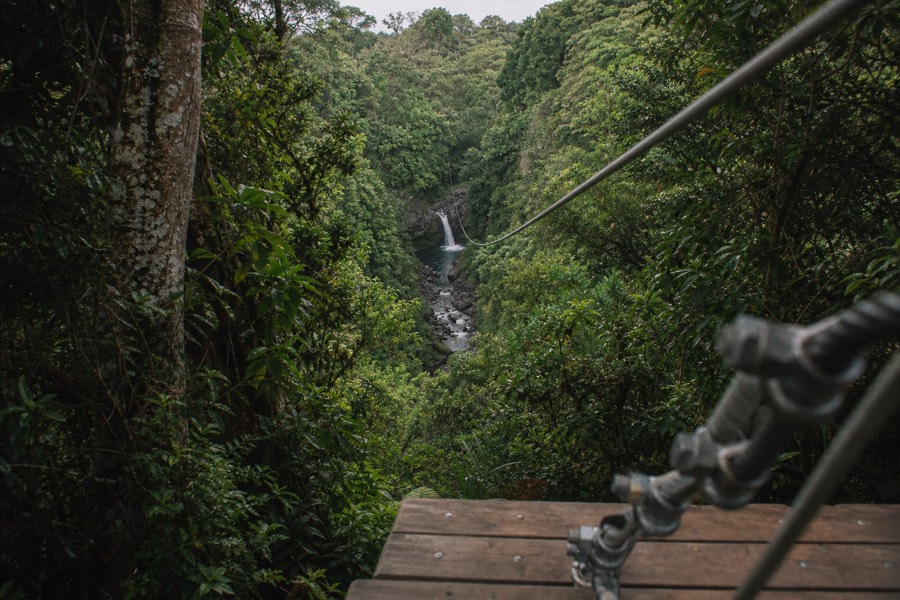
The pairing I recommend most often is the zipline a few minutes from the park gate, over the 250-foot KoleKole Falls. It runs about two and a half hours, which is exactly the shape of hole a short falls visit leaves in a morning, and it gives you the thing ʻAkaka Falls cannot: you get out over the water instead of looking at it from behind a rail. Details are on the zipline page, and you can see which morning slots are open before you lock in your day. One thing it will not solve is swimming, because the ʻAkaka loop is a fenced viewing trail into a gorge with no water access at all.
One last pacing thought from the trail. The guests who remember this place best are never the ones who saw it fastest. They are the ones who stood at the railing long enough to watch the wind bend the falling water sideways once, or who waited out the cloud and got the reveal. Build your schedule so that moment has room to happen, because it takes four minutes and it is the whole reason you drove up here.
So budget an hour and you will never feel rushed. Take the left path if your knees or your ship say so, walk the full loop if they do not, and come early if you have any say in the matter. The falls does not want your day. It wants your morning's best forty-five minutes, and then it gives the rest of the Hamakua Coast straight back to you. On an island this size, that is a bargain.
7 to 8 hours
from $179per person, varies by date Check availability →Half day
from $229.99per person, varies by date Check availability →About 2.5 hours
from $246per person, varies by date Check availability →