Kona to Akaka Falls: Drive It or Book It?
The falls are on the wrong side of the island from your resort. That is the whole problem, and there are exactly two good ways to solve it.
 Verified by Kekoa Kalani, Akaka Falls tour guide and island nature specialist
Short answer
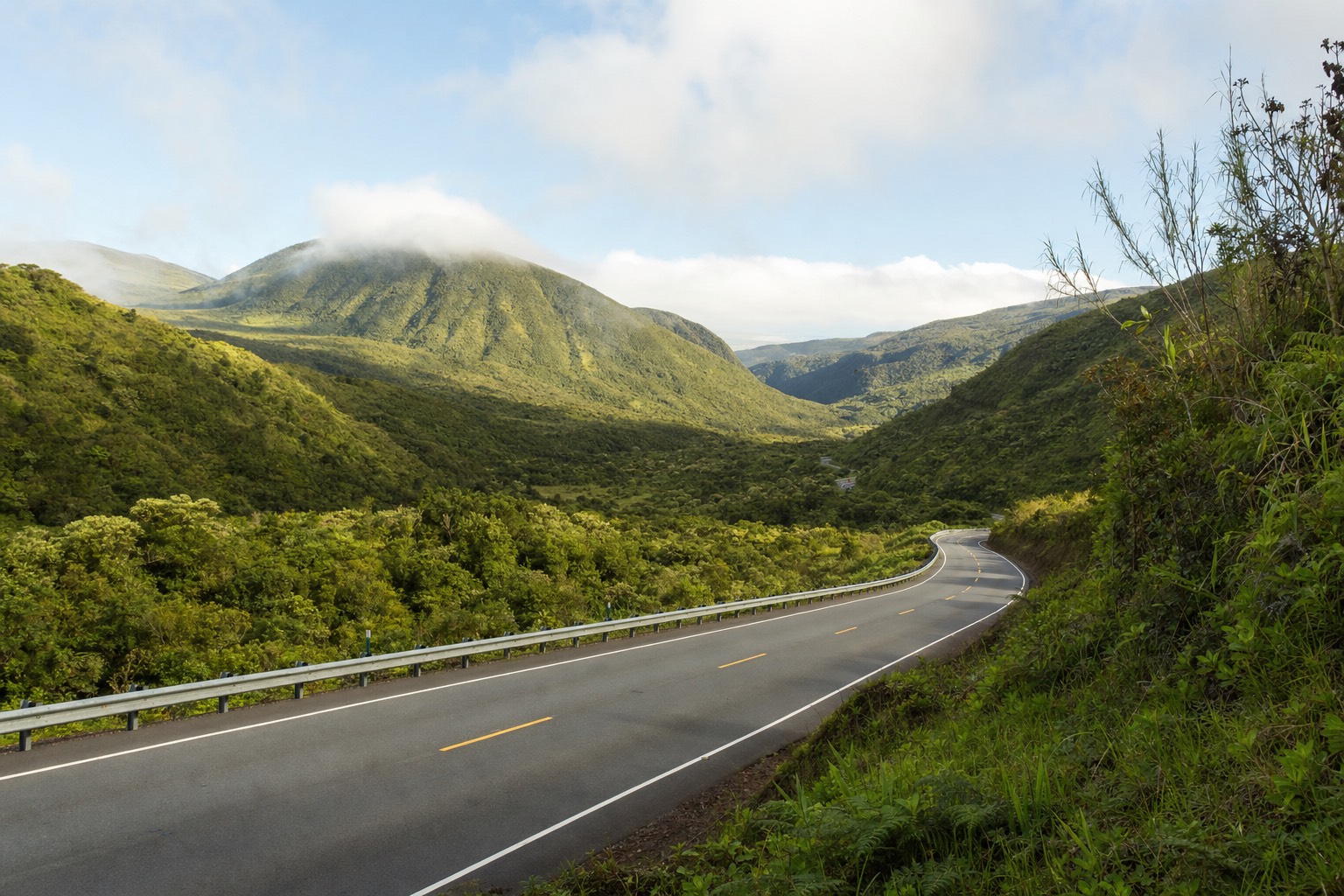
Akaka Falls is roughly a 90-minute drive from Kona each way, over the Saddle or around through Waimea. Self-driving costs the $5 per person entry plus $10 parking and a long day at the wheel. The Kona-side waterfall days bundle pickup, admissions, and more stops, so book if you want the day handled.
Most of the visitors I meet at the falls who look tired did not hike hard. They drove from Kona. I can pick them out at the first junction: sunglasses still on in the shade of the tree ferns, car keys in hand, a slight glassiness that comes from three hours of concentration rather than any exertion. The Big Island is bigger than every other Hawaiian island combined, and ʻAkaka Falls sits on the wet Hamakua Coast, about 11 miles north of Hilo, which puts it roughly 90 minutes from the Kona side each way. I have watched that math surprise people since 2015: three hours of driving wrapped around a 0.4-mile walk.
That does not make the trip a mistake. It makes it a decision, and it is a decision with a right answer that changes person to person. You can drive it yourself and build your own day around the crossing, or you can hand the wheel to one of the Kona-pickup waterfall days that bundle the falls with admissions and a stack of other stops. I do not operate either kind of trip. I have guided since 2018, past a thousand travellers by my own count, and what I have is a long view of which visitors arrive relaxed and which arrive already spent.
The thing nobody tells you at the rental counter is that the drive is not the price you pay for the falls. On a good day the drive is half the reason to go. Get it right and the crossing becomes the trip. Get it wrong and you spend a vacation day looking at the back of a rental SUV in the rain, wondering why the famous waterfall felt like an errand.
How long is the drive from Kona, once you count the whole day?
Plan on roughly 90 minutes each way from the Kona side before any stops. The falls sit at the end of Highway 220, 3.6 miles southwest of Honomū, about 11 miles north of Hilo. Add the loop walk, a town stop and lunch, and the round trip fills six to eight hours of your day.
Ninety minutes is the honest planning number and it assumes you drive straight through, which almost nobody does. Both routes across the island are among the best drives in Hawaii and something will pull you over. A scenic point above the lava. Coffee in Waimea. That sudden moment where the dry leeward slopes hand over to the wet side and the whole windscreen turns green.
So do the arithmetic properly. Ninety minutes over. Twenty minutes at the gate paying, parking and getting your shoes sorted. Forty to sixty minutes on the loop, which is what most people actually spend once they stop at both overlooks, as I break down in the guide to how much time you need at the falls. Then a stop in Honomū at the bottom of the falls road, lunch somewhere, and ninety minutes home. You have built a full day around one waterfall, which is exactly why the question in this guide's title exists.
Here is the detail that trips up first-timers. The 0.4-mile loop is short, but it is a real trail with stair sections and it "requires some physical exertion" in the state's own wording, so it is not a two-minute lookout you can knock off in flip-flops on the way past. It is also not long enough to justify three hours of driving on its own. What justifies the driving is everything the crossing puts within reach: the coast, the gulches, the towns, the second and third waterfall. Treat the falls as the anchor of a Hamakua day rather than the whole point and the maths stops feeling absurd. The perfect day plan is built around exactly that idea.
One planning note before you turn the key. Fees at the park are credit card only, and the state encourages paying before you arrive through the Hawaii State Parks portal because reception at the park is poor. Do that from hotel wifi the night before, not from a stalled phone at the gate with a line of cars behind you.
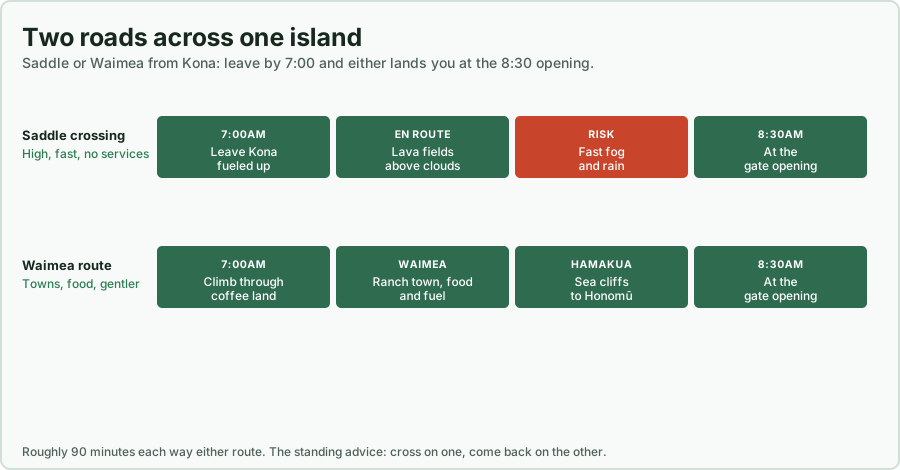
Saddle Road or the Waimea coast: which way should you drive?
Take the Saddle for the direct high crossing between the volcanoes, or the northern route through Waimea for ranch country, small towns and the Hamakua cliffs. The Saddle is faster in feel and more exposed to mountain weather. The coastal way has services and scenery. Best answer: one out, the other back.
The Saddle crossing, the modern Daniel K. Inouye Highway, is the drive people do not expect from Hawaii. It is a wide, well-built road that climbs out of the coastal green into open lava country between the island's two great mountains, and on a clear morning you are driving in an enormous quiet space with a volcano shoulder on either side. Sometimes you are above the cloud, looking down at it. It is the efficient choice and, when the sky cooperates, a genuinely spectacular one.
It also has moods. Weather at that elevation moves in fast, and I have driven the same stretch in bright sun one way and headlights-on fog the other, on the same day. There is very little up there in the way of fuel, food or a place to buy a bottle of water, so leave Kona with a full tank and something to drink. Cell coverage comes and goes. If your driver is nervous in cloud, this is not the leg to save for the tired trip home.
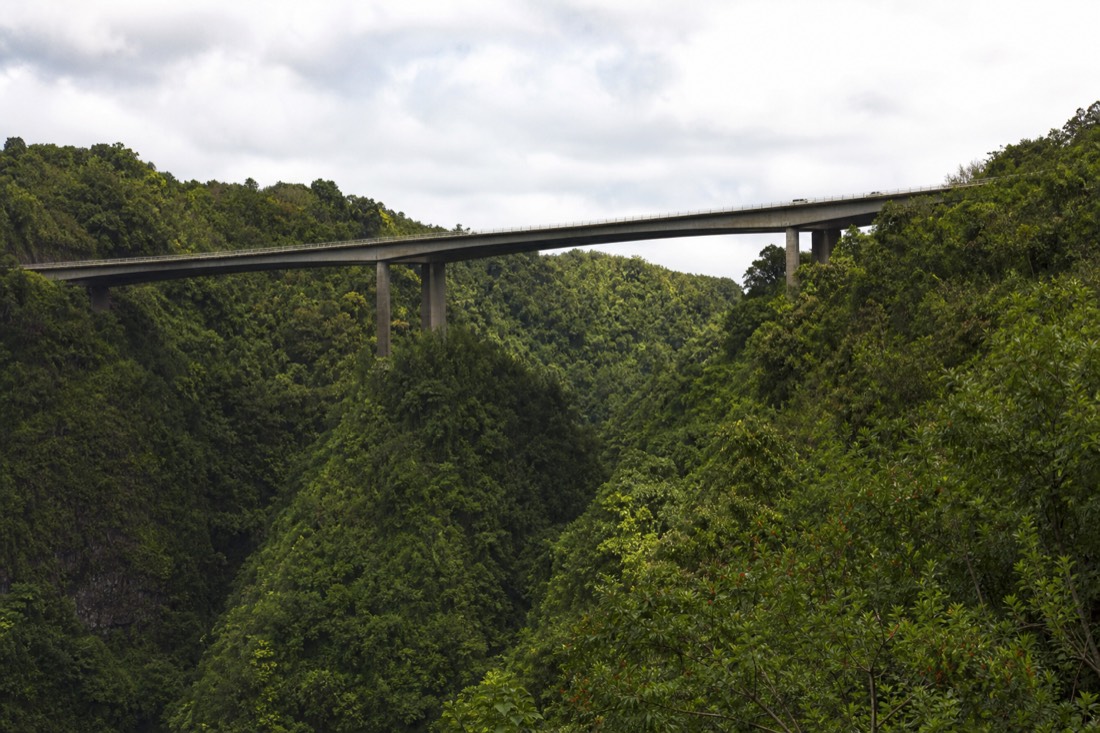
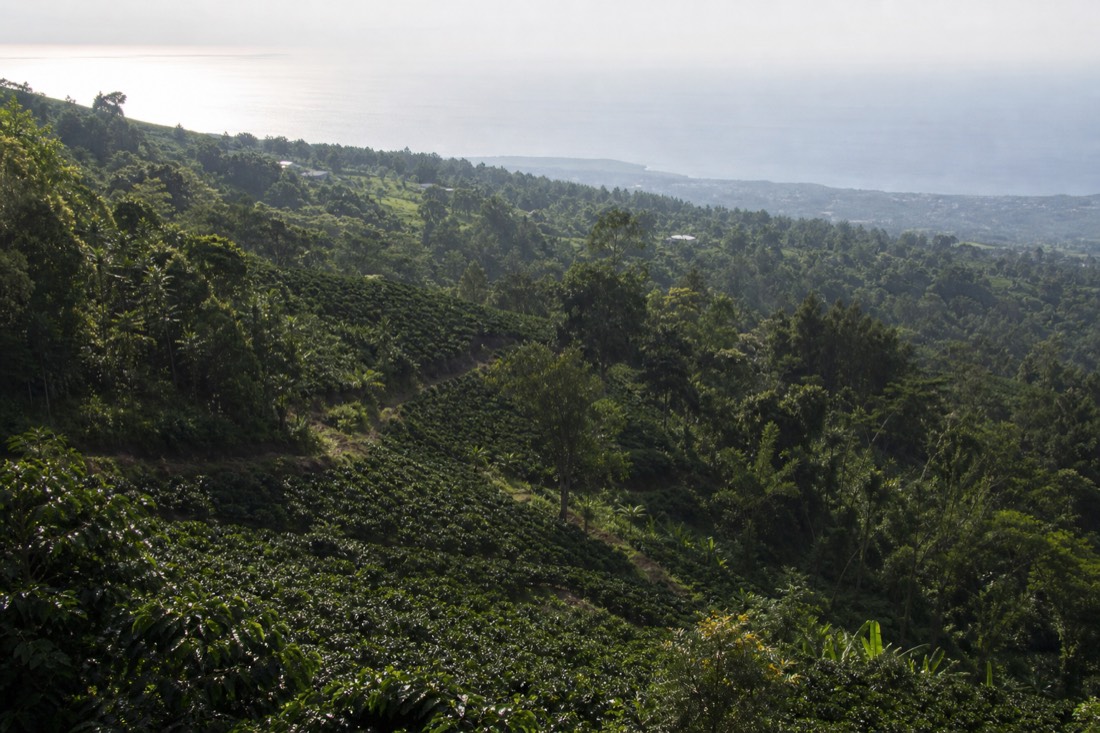
The northern route trades altitude for character. You climb through the coffee slopes above the leeward coast, then into Waimea, which is cool, green, high paniolo country that does not look like anyone's postcard of Hawaii until you have been there. From Waimea the road drops toward the coast and runs south along the Hamakua cliffs through a series of deep gulches, past old sugar towns, into the wet air I write about in the Hamakua Coast guide. More towns, more food, more reasons to stop, and it handles bad weather better than the high crossing.
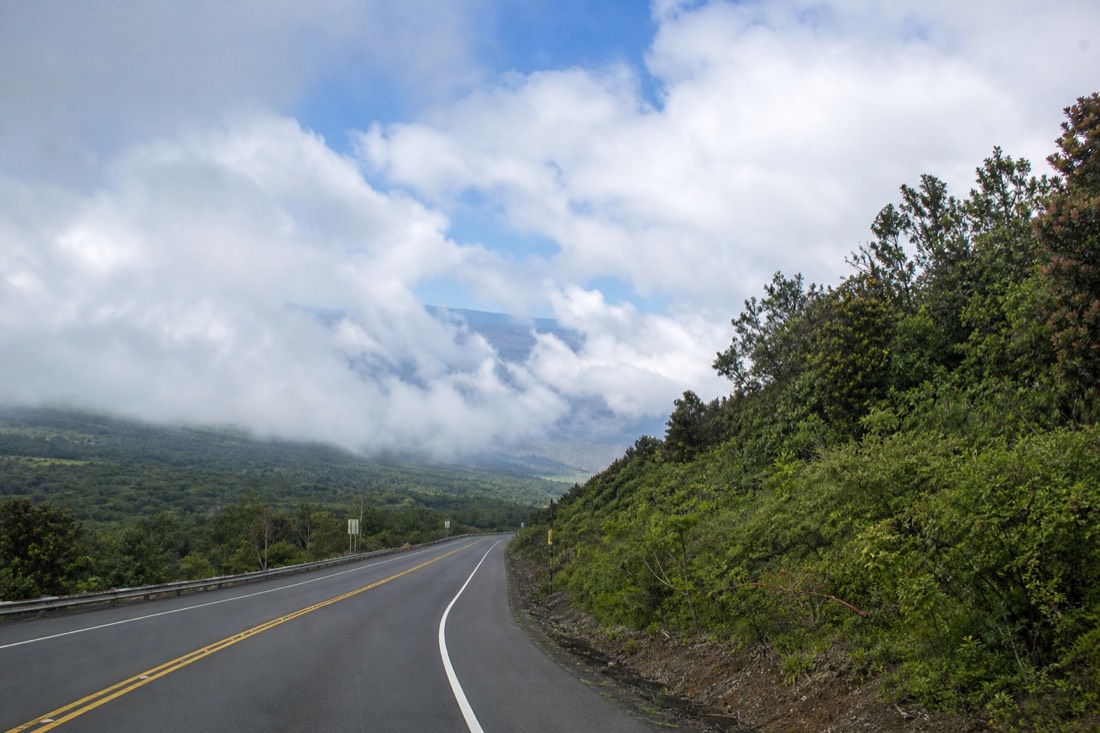
My standing advice has not changed in years: go over on one, come back on the other. You see two completely different islands for the same total time behind the wheel, and you get a second chance at whichever one was socked in. If the forecast is ugly at elevation, run the coast both ways and lose nothing but a view you would not have had anyway. The rain guide covers what wet weather does to the falls themselves, which is mostly to improve them.
Compared side by side, the two routes are not really competing on speed. They are competing on what kind of day you want.
| Saddle crossing | Waimea and the coast | |
|---|---|---|
| Character | High, open, volcanic, often above the cloud | Ranch land, plantation towns, sea cliffs |
| Weather exposure | Fog and rain arrive fast at elevation | Coastal showers, rarely a real problem |
| Services on the way | Very few, fuel and water before you climb | Waimea and Honokaʻa have food and fuel |
| Driving demand | Steady, open, dull in cloud | More turns, more towns, more stopping |
| What it shows you | The volcanic interior almost nobody sees | Working ranch country and the gulch coast |
| Best used for | Getting there while everyone is fresh | The unhurried leg, whichever one that is |
What does the crossing cost you in daylight?
Daylight is the currency this trip is priced in. The park runs 8:30am to 5:00pm, the drive takes three hours of it round trip, and the good light at the falls lands early. Leave late and the return leg swallows the best part of your afternoon, plus the stops you meant to make.
Think of the day as a budget rather than a route. You have roughly eight and a half hours of open gate and, depending on the season, a bit more usable light on top. Three of those hours are already committed to the road. What is left is where the whole decision lives.
Light at ʻAkaka Falls is a real constraint, not a photographer's fussiness. The falls drop into a narrow, stream-cut gorge with high green walls, so for much of the day the plunge sits in its own shadow while the rim above is blown out and bright. Early morning is soft and even. Late morning is the harshest window. Overcast, which the Hamakua Coast supplies generously, is the great equalizer and makes everything easier, which is why my favourite falls mornings are the ones other people would call disappointing. The photography guide has the detail, and the best time to visit covers season by season.
Now run the daylight ledger backwards from your hotel. If you want to be back on the Kona side before dark, and in your first days on the island you should, you need to leave the Hamakua Coast in the mid to late afternoon. That means the falls are a morning thing and anything else you want on that side has to fit before the turnaround. One good extra stop is realistic. Two is ambitious. Three means you are driving home in the dark on an unfamiliar road, which is the failure mode I see most.
There is a reason the guided days from the resort coast are built the way they are. They run long, often ten to eleven hours door to door, precisely because the crossing costs what it costs. Nobody has found a shortcut. The difference is whether that time is spent driving or spent looking out of a window while somebody else drives, and whether the afternoon return leg is your problem or theirs.
If handing back your whole afternoon sounds better than defending it, the Kona-side waterfall day is built around this exact geography and you can check price and availability for your dates before you commit a rental day to it.
What does a self-drive day really cost, in cash and in attention?
In cash, very little. Entry is $5 per person for non-residents, parking is $10 per vehicle, credit card only, so $15 covers a couple with a car. Residents are free with ID and children three and under are free. The real cost is three hours of driving plus every routing decision on the day.
Here is the part of this site's honest angle that never moves: visiting the park is cheap and quick. Nobody needs a booking to walk through that gate, and I will never pretend otherwise. The state's fee is small, the loop is short, and the full cash breakdown lives in the what it costs guide. If you are already on the Hilo side, this is close to a free morning.
From Kona, the fee is the least interesting number in the day. What the self-drive version actually costs you is attention. One person in the car does not see the Saddle, because they are driving it. Somebody has to research which additional stops are worth the detour, in what order, and whether each one has parking or a fee or a closure. Somebody has to notice fuel, keep an eye on the weather at elevation, and make the call about turning back. None of that is hard. All of it is work, and you are doing it on a day you paid a lot of money to have off.
There is a subtler cost too, and it is the one experienced travellers underrate. Decision fatigue compounds. By four in the afternoon, after the drive over, the walk, lunch and one detour, the group in the car stops making good choices. That is when people skip the stop they most wanted, or push on to one more thing they should have dropped, or start the return leg an hour later than they said they would.
Set the two versions of the day beside each other feature by feature and the trade becomes obvious. It is not cheap against expensive. It is cash against effort.
| Self-drive day | Booked Kona-side day | |
|---|---|---|
| Park fees | $5 per person plus $10 to park, card only | Admission handled for you |
| Driving | Around three hours round trip, one of you at the wheel | None, pickup near the resort coast |
| Route decisions | Yours, live, with weather and closures | Made by someone who crosses weekly |
| Other stops | You research, route, park and pay each one | Built into the itinerary |
| Time at the falls | As long as you want, gate hours permitting | Fixed, roughly 35 to 40 minutes on the Kona days |
| Local context | Whatever you read the night before | A working guide talking all day |
| Where it fails | Late start, tired return leg, skipped stops | A stop you wanted more time at |
The case for driving, and the case for booking, argued straight
Drive if you want to set your own pace, linger at the falls, chase good weather and build a day nobody else designed. Book if the crossing itself is the obstacle, if your group would rather look than steer, or if you want one price to cover the whole island crossing with the falls inside it.
The case for driving is genuinely strong and I will make it properly. You control the clock, which matters more here than at most attractions, because arriving at opening is worth more than any other single decision you can make. You can sit at the ʻAkaka overlook for twenty minutes if the light is doing something, then keep going up the coast, or turn around when the weather closes in. You can eat where you want. You can stop at a gulch pullout nobody in a fifteen-seat van will ever see. If your group has photographers, or a child who needs an unscheduled hour, self-drive is the only version that flexes.
The case for booking is equally real. It is not about the walk, which anyone can do. It is about the crossing and everything strung along it. Somebody who does this route weekly knows which side of the island the cloud is sitting on today, which stop is worth cutting, where lunch is quick. You get the interior of the island narrated instead of guessed at. Nobody in your party is excluded from the view by the steering wheel. And the return leg, the part that goes wrong, happens while you doze.
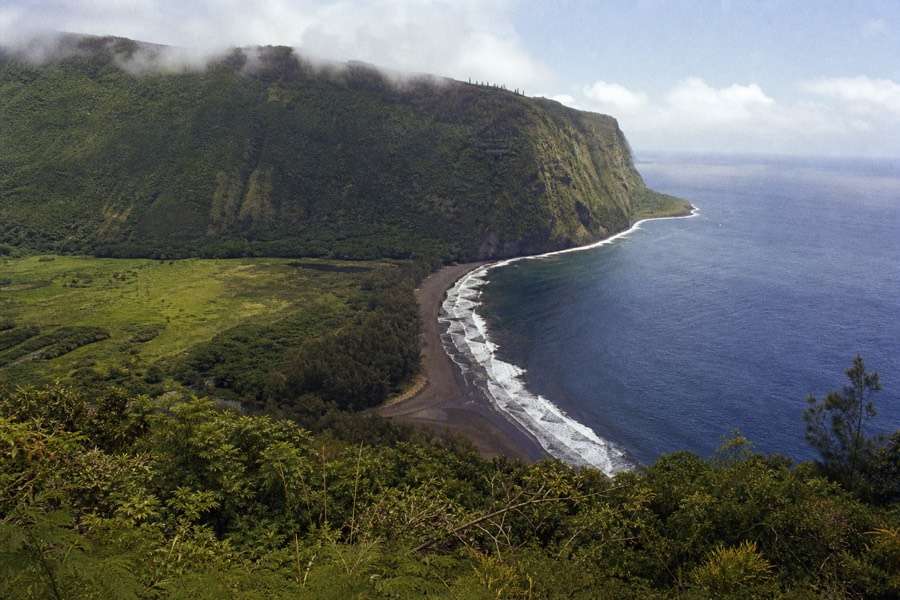
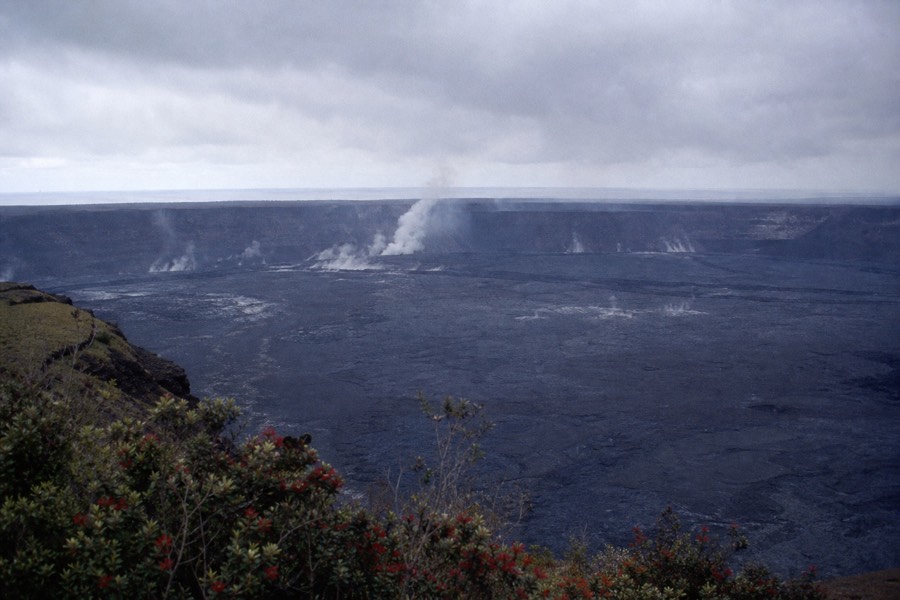
There is a third position, and plenty of visitors land on it: do the whole island in one crossing rather than a waterfall day, because you are only here a week and the volcano is on the same side as the falls. That version runs about eleven hours with a small group, folding ʻAkaka Falls in alongside the volcano, the black sand coast and Rainbow Falls, which is a very different animal from ʻAkaka: roadside, wide, easy, over in ten minutes. It is a long day and it does not pretend otherwise. If you want the island's greatest hits from a Kona base in a single go, that is the one to look at first for your dates.
What I would not do is take the middle path by accident: drive yourself, start late, plan nothing and hope. That is the version that produces the tired faces at the first junction.
What does a booked Kona-side day bundle that you would otherwise assemble?
Pickup near the resort coast, the driving, the routing, park admissions, a sequence of stops that actually fits the daylight, and a guide narrating the island as you cross it. Assembled yourself, that is an evening of planning and a full day of execution. Bundled, it is one ticket.
Break the booked day into its parts and you can see what you are buying. First, the pickup: it starts on the Kona and Kohala coast, which removes the leg most people underestimate, the pre-dawn scramble out of a resort with coffee and a map. Second, admissions handled, including the park's card-only fee, so nobody is standing at the gate with a phone that will not load.
Third, and this is the part that quietly matters most, routing. The dedicated waterfall day from Kona runs around ten hours and is built waterfall-first: roughly forty minutes at ʻAkaka Falls, plus the Waipio Valley Lookout at the top of the coast and Kulaniapia on the Hilo side. That is a sequence I would struggle to improve on with a map and a free afternoon. It faces the same daylight budget you do and solves it by knowing the road.
Fourth, the narration. The Big Island's interior is one of the strangest landscapes in the Pacific and it means almost nothing without someone telling you what you are looking at. Lava flow ages, the reason one slope is desert and the next is rainforest, why the sugar towns are where they are. I do this work for a living on other stretches of the island, so I am biased, but I have also watched a hundred self-drive families walk the loop having absorbed nothing about where they were. It is the difference between seeing a waterfall and understanding a coast.
What you give up is the ability to linger. Thirty-five to forty minutes at the falls is enough for the full loop at a decent pace with photos, and it is not enough to sit and wait for the light to change. If the falls themselves are the point of your trip and everything else is filler, drive. If the falls are one great stop inside a day about the island, the bundle wins.
Where should you break the drive, in each direction?
Waimea for coffee and cool air on the northern route, Honokaʻa for an old plantation main street, the Hamakua gulch pullouts for the coastline itself, and Honomū at the bottom of the falls road for a bakery stop before or after the loop. On the Saddle, plan on no services at all.
Breaking the drive well is what turns three hours of transit into a day worth having. These are the places I actually send people, in the order they arrive.
Waimea sits high and cool in ranch country and is the natural first break heading north. It is a proper town with food, fuel and a working feel, and after the dry leeward climb the temperature drop is startling enough that people reach for a jacket. On the way home it is the last decent stop before the long descent to the coast.
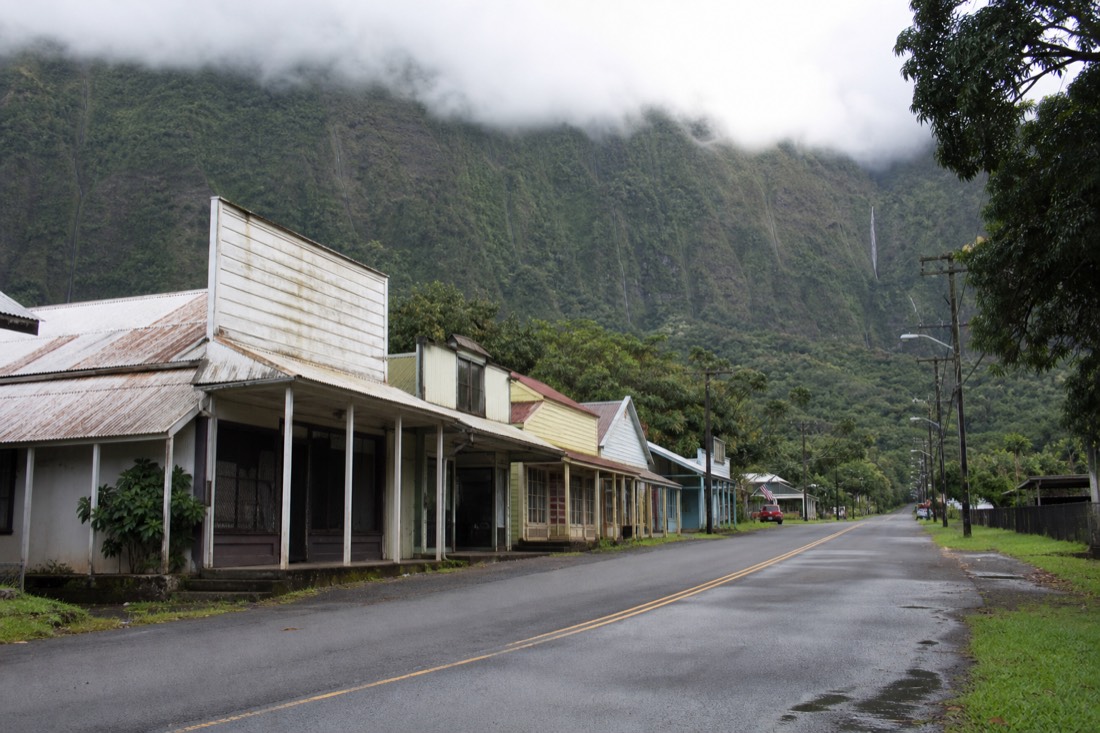
Honokaʻa is the one visitors skip and regret. A short main street of wooden false-front buildings from the sugar era, a couple of good places to eat, and the sense that you have stepped sideways into a different decade. It costs you twenty minutes and it is the most textured stop on the route.
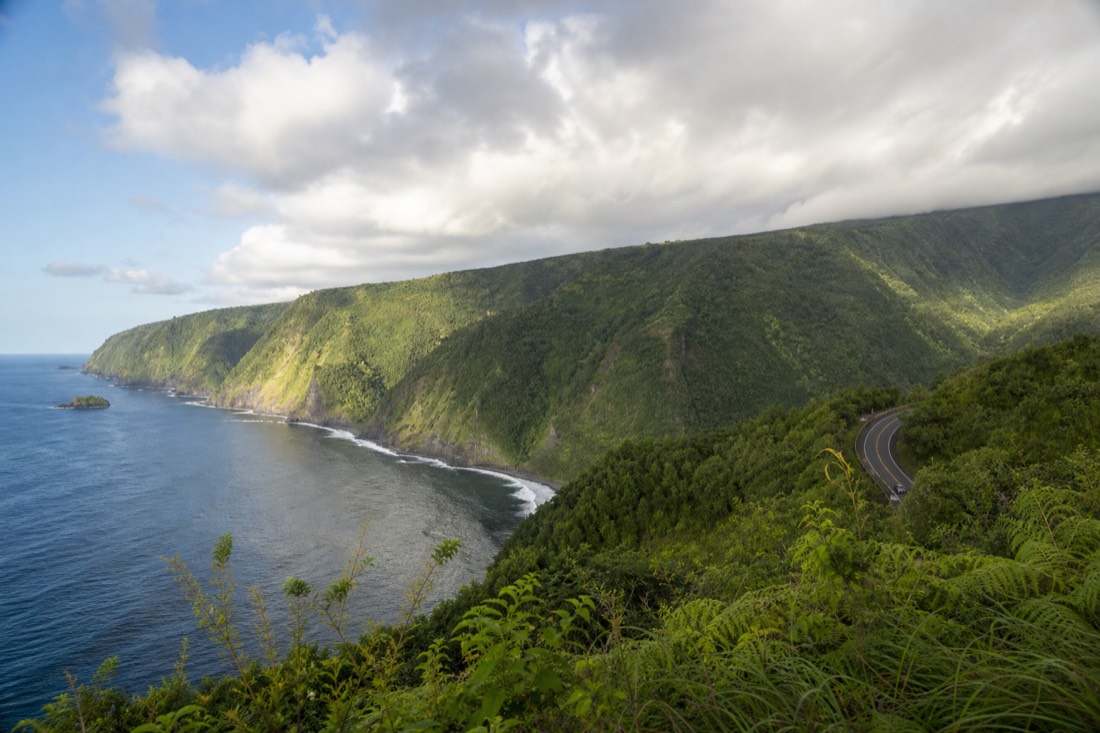
The gulch pullouts between Honokaʻa and Honomū are the coast's best argument for itself. The road crosses one deep green ravine after another, each with its own stream, and a few have space to pull over safely. Do not invent a parking spot on a blind bend. Take the ones that exist.
Honomū is where the falls road leaves the highway, a small strip of storefronts and a bakery at the bottom of Highway 220. Coming down from the park it is the obvious reward stop, and it is also where you decide whether to keep going toward the other waterfalls near Hilo or turn for home.
Each stop does a different job, and knowing which is which stops you spending the day's spare hour in the wrong place.
| Stop | Which route | Good for | Keep in mind |
|---|---|---|---|
| The high Saddle pullouts | Saddle crossing | The volcanic interior, big silence | No fuel, food or reliable signal up there |
| Waimea | Northern route | Coffee, real food, cool air, a leg stretch | Easy to lose forty minutes here |
| Honokaʻa | Northern route | Plantation-era main street, lunch | Compact, park once and walk it |
| Hamakua gulch pullouts | Northern route | The coastline itself, short photo stops | Only use built pullouts, the road is narrow |
| Honomū | Both, at the falls road | Bakery stop, the turn onto Highway 220 | Better after the loop than before it |
| The falls road end | Both | The park gate, the 0.4-mile loop | Gate hours 8:30am to 5:00pm, card only |
If you have crossed the island anyway, the strongest thing you can add at the far end is something you cannot do on the Kona side at all. The ziplines run minutes from the park over KoleKole Falls and take a couple of hours, which is the neatest way I know to make a long crossing pay for itself. There is more on that in the zipline pages, and it pairs naturally with a morning at the loop.
Why does the return leg go wrong more often than the drive over?
Because the drive over happens at 7am with fresh legs and the drive home happens after a full day, in fading light, on a road you have seen once. Add mountain weather at dusk and jet lag that woke you at four and turns on you by five, and the return is where the real risk sits.
Nobody gets in trouble on the way to the falls. The morning leg is the easy one: you are early, alert, the light is good and the road is new enough to be interesting. Every problem I hear about happens on the way back.
Jet lag is the two-faced element in this. Mainland visitors in their first days wake absurdly early, which is a gift for this particular trip, because a 6:30am departure feels like a lie-in. That same body clock collapses in the late afternoon. If you woke at four, then by five in the afternoon you are running on nothing, and that is exactly when you are asking yourself to drive a mountain crossing.
Then the road. Coming home over the Saddle after dark is a different experience from crossing it at nine in the morning. It is a good road, but it is unlit, high, and weather there does not care what time it is. Cloud that was a novelty in daylight becomes headlights in soup. On the northern route the risk is different and lower: more towns, more traffic, but also more turns and more of it in the dark. Either way you are tired, on a rental you have driven for two days, at the end of a day that started before dawn.
Practical fixes, and they are simple ones. Swap drivers at the falls so the fresh person takes the harder leg. Eat properly on the Hamakua side rather than pushing through hungry. Set an actual turnaround time before you leave the hotel and treat it as fixed, because the temptation to add one more stop always arrives when you are least able to judge it. If you have small children or an older parent in the car, look hard at the kids and seniors guide, because the trail is only part of what a long day asks of a group.
And the honest version: if reading that paragraph made you tired, that is information. A day where somebody else drives the return leg while you watch the coast go by is not a luxury purchase, it is a different risk profile. You can see which dates are still open and compare it against the version where you drive both ways.
What time should you leave Kona?
Leave by 7:00am. That puts you at the gate near its 8:30am opening for the softest light and the emptiest trail, and it hands you the whole afternoon back. Mid-morning still works but lands you in the busiest, harshest window. Anything after midday means driving home in the dark.
The park opens at 8:30am daily and closes at 5:00pm, and those two times shape everything. There is no timed-entry system to book, no reservation window to miss, just a gate that opens and a gate that closes.
Early is not a photographer's preference here, it is the whole trick. At opening the parking area is close to empty, the loop belongs to a handful of people, the tree ferns are still dripping from overnight and the gorge has soft even light in it. By eleven the same trail has a steady stream on it, the overlook has a queue for the rail, and the light is at its worst. I have walked that loop in both states more times than I can count and they are barely the same place. The trail I love at eight thirty is a trail I would send nobody to at eleven.
Work backwards from 8:30am and a 7:00am departure gives you a little slack for coffee, fuel and the first wrong turn. Six-thirty is better if your body clock is still on mainland time and you want the Saddle in clean morning air. Later than nine and you are trading the good part of the day for an extra hour in bed, which is a fine trade on holiday as long as you make it deliberately.
Your departure time does more than decide the trail's mood. It decides how much island you get afterwards.
| Leave Kona | At the gate | Trail feel | What the rest of the day looks like |
|---|---|---|---|
| 6:30am | Right at 8:30am opening | Empty, soft light, dripping ferns | Falls, two real stops, home in daylight |
| 7:00am | Shortly after opening | Quiet, still excellent | Falls, one good stop, an unhurried lunch |
| 9:00am | Late morning | Filling steadily, harsh overhead light | Falls plus lunch, one stop, tight |
| 11:00am | Early afternoon | Busiest window of the day | Falls only, and a return leg into dusk |
| 2:00pm | Late afternoon | Thinning out, softer again | Falls only, dark drive home, no margin |
The 5:00pm closing is the hard backstop. Whatever you have planned, the gate does not care about your schedule, and there is no version of this trip where arriving at 4:50pm is a good idea after a 90-minute drive.
How do you build the day, hour by hour, either way?
The self-drive version runs on an early gate, one route out and the other back, a single big afternoon stop and a fixed turnaround time. The booked version runs on resort pickup, a set sequence of stops with admissions handled, and a return leg you spend asleep. Both are full days.
Take the self-drive plan first. It assumes a 7:00am departure, the Saddle outbound while everyone is fresh, and the coast home so the tired leg has towns and food on it. It leaves one slot open on purpose, because a day with no slack is a day that breaks.
| Time | Where you are | The point of it |
|---|---|---|
| 7:00am | Leaving Kailua Kona, fuelled, fees already paid | Beat the gate, not the traffic |
| 8:30am | At the park gate as it opens | Empty loop, best light of the day |
| 9:15am | Walking the 0.4-mile loop, both viewpoints | Do the whole circuit, not just the shortcut |
| 10:15am | Down the falls road into Honomū | Bakery stop, decide the afternoon |
| 11:00am | One chosen extra: coast, another waterfall, or Hilo | The stop that justifies the crossing |
| 1:30pm | Lunch on the Hilo side or in Honokaʻa going back | Eat before the tired leg, not after |
| 2:30pm | Turnaround, northern route home | Fixed time, no negotiating with it |
| 4:30pm | Back on the Kona side in daylight | The whole evening still yours |
The booked day is shaped differently, and the difference is not the falls, it is everything wrapped around them. This is the Kona-side waterfall day, roughly ten hours door to door.
| Time | What happens | What you are not doing |
|---|---|---|
| Early morning | Pickup on the Kona or Kohala coast | Finding parking, buying fuel, reading a map |
| Morning | The crossing, narrated | Driving the Saddle in cloud |
| Mid-morning | ʻAkaka Falls, admission handled, around 40 minutes | Queueing at a card-only gate with no signal |
| Midday | Waipio Valley Lookout at the top of the coast | Working out where the lookout parking is |
| Afternoon | Kulaniapia and the Hilo-side waterfalls | Researching which second waterfall is worth it |
| Late afternoon | The return leg, someone else at the wheel | The part of the day that goes wrong |
| Evening | Dropped where you started | Arriving with nothing left for dinner |
Both plans work. Only one of them requires you to be the most alert person in the car at the end of it. If you would rather compare what each version covers before deciding, the operator's page for the waterfall day is the fastest way to see what the day includes alongside the plan above.
When should you skip the crossing entirely?
Skip it on a one-night stopover, on a day with a hard evening commitment, with a group carrying small children or limited mobility, or when the forecast has the mountain socked in and the coast flooding. Better answers exist: move the falls to a Hilo-side day, or trade them for something closer.
Not every itinerary should make this drive, and I would rather say so than watch another family burn their only free day on a road. Four situations where I steer people away.
One night on the island, flying in and out of Kona. Three hours of driving out of a twenty-four hour window is a poor trade, and you will see the falls through a fog of travel fatigue. Two, a hard evening commitment: a luau, a dinner reservation, an early flight the next morning. This crossing does not respect deadlines, because weather and traffic on the coast are not predictable to the half hour. Three, a group with toddlers or anyone who finds stairs difficult. The loop has real stair sections and is not wheelchair accessible, so a long drive can end at a trail that does not work for everybody in the car. Read the hike guide before committing to it. Four, a genuinely bad forecast: rain improves the falls, but a storm sitting over the Saddle with the gulch roads flooding is a day to spend on the leeward side, which is dry far more often than the windward coast.
The strongest alternative is not to cancel, it is to move the falls onto a day you were already spending on that side of the island. If the volcano is on your list, the falls are on the way to it. Plenty of visitors base a night in Hilo, do the falls and the volcano properly from there, then cross back once instead of twice. Hilo itself repays a day, as the things to do in Hilo guide sets out.
That approach has one more advantage worth naming. The Hilo-side guided day gives a full hour at ʻAkaka Falls, the longest of any of the options here, and pairs it with the volcano and Hilo town in seven to eight hours instead of eleven. If you are staying on that side, or willing to move for a night, it is the version with the least driving and the most time actually standing in front of the water.
One last cut of the same question, because most groups already know which type they are. This is how I sort them at the trailhead.
| Your situation | What I would do | Why |
|---|---|---|
| Photographers, early risers, flexible day | Drive it | Gate at opening, linger for the light |
| One driver, long trip, everyone wants the view | Book from Kona | Nobody loses the crossing to the wheel |
| Volcano also on the list | Book the circle day or base in Hilo | One crossing instead of two |
| Small kids or limited mobility | Rethink the day | Long drive, then a stair trail |
| Staying on the Hilo side already | Just drive over, it is close | About 11 miles, a cheap easy morning |
| Cruise day or a hard evening deadline | Do not cross from Kona | No margin if the coast slows down |
Either answer is a good day. The only bad version is the unplanned one, where you leave at eleven, hit the midday crowd, skip the stops that make the crossing worthwhile, and drive home wondering what the fuss was about. Ninety minutes is a long way to go for a walk. It is a very short way to go for the Hamakua Coast.
Ways to cross the island
Big Island in a Day circle tour
About 11 hours
from $276per person, varies by date Check availability →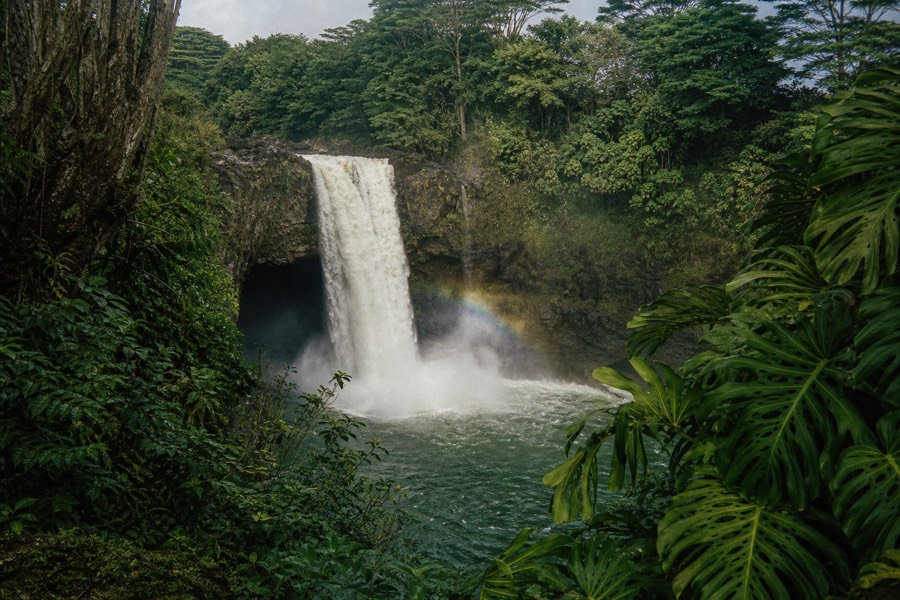
Akaka Falls, Volcanoes & Hilo day (full hour at the falls)
7 to 8 hours
from $179per person, varies by date Check availability →