Akaka Falls, Volcanoes & Rainbow Falls day
Full day
from $188per person, varies by date Check availability →The cheapest big sight on the island, as long as you arrive knowing the kiosk takes cards only.
 Verified by Kekoa Kalani, Akaka Falls tour guide and island nature specialist
Short answer
Non-residents pay $5 per person entry plus $10 per vehicle for parking, credit card only, with Hawaii residents free with ID and children 3 and under free. A visiting couple pays $20 total. Tours that stop at the falls include the admission in their price, so you never pay the kiosk twice.
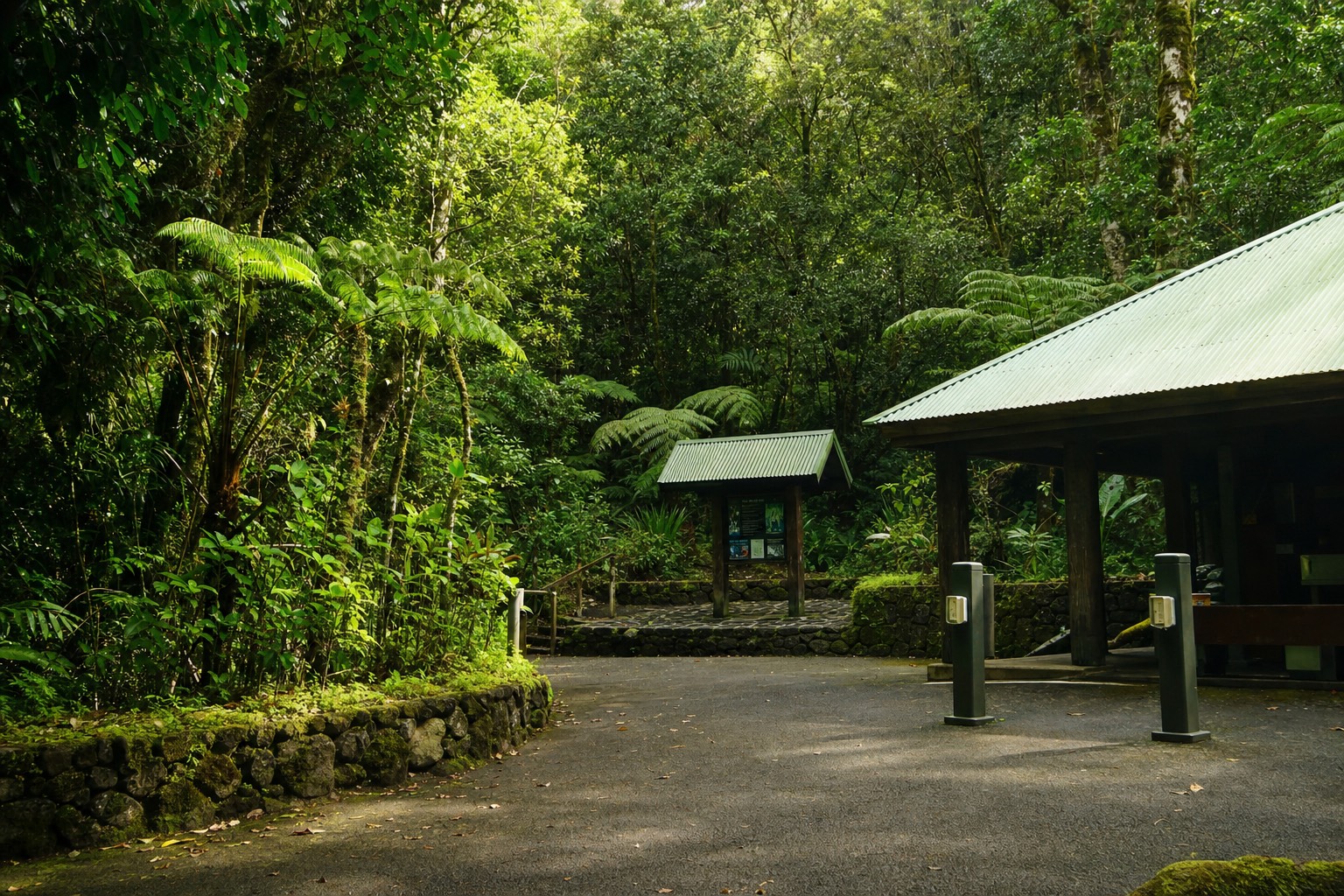
The pay station sits at the top of ʻAkaka Falls Road under a metal roof, and on most mornings it is the only piece of infrastructure standing between you and a 442-foot waterfall. I have watched a visitor fan out a stack of twenties beside it like a poker hand, in horizontal rain, while the machine sat there wanting a card. It has wanted a card for years. That single detail causes more grumbling at this gate than the prices themselves, which by Hawaii sightseeing standards are almost quaint. I have been coming up this road since 2015 and guiding on it since 2018, and the cost question is still the one I answer most. So here is the whole picture: the official schedule, what each line actually buys, what your specific group will hand over, and the honest math on whether driving yourself saves you anything once you count the hours.
Non-residents pay $5 per person to enter and $10 per vehicle to park, credit card only. Hawaii residents pay nothing with a state ID or driver's licence, and children 3 and under are free regardless of residency. There is no reservation, no booking fee and no upgrade tier. A visiting couple in one rental car pays $20.
Those figures come straight from the official DLNR park page, and they are worth trusting over anything else you find. The park moved to per-person pricing some years back, which is why "$5 per car" is still circulating on travel forums and old blog posts. That number is dead. If you budget on it you will be short at the gate, usually by exactly the amount that turns a cheerful arrival into a small argument in the parking lot.
The structure matters more than the totals. Entry is charged per body, parking is charged per vehicle, and the two are separate transactions on the same card. Hold those two rules and you can work out the cost of any group in your head, which is more than you can say for most attractions on this island. Four adults in one car is $20 of entry plus $10 of parking. Four adults in two cars is $20 of entry plus $20 of parking. The car is what costs you, not the passenger seat.
What surprises people who have just come from Volcanoes National Park is how small the number is. A week of Big Island sightseeing tends to run on three-figure line items: a boat, a helicopter, a luau, a national park pass. ʻAkaka Falls asks for the price of a plate lunch and gives you one of the tallest single-drop waterfalls you can reach on a paved path anywhere in the state. That is the deal in one sentence, and everything below is detail on how to not get it wrong.
Seven line items cover every visitor: non-resident entry at $5 per person, resident entry free with ID, children 3 and under free, non-commercial parking at $10 per vehicle, and three commercial vehicle tiers at $25, $50 and $90 by passenger count. Every one of them is credit card only.
The commercial tiers are the part nobody reads, and they are the part that explains the rest of this article. When a licensed operator brings a van up the hill, the operator pays a flat vehicle rate that scales with capacity, and the passengers are covered under that arrangement rather than queueing at the kiosk one by one. That is why a guided day never asks you for $5 at the gate, and why you should never pay the kiosk on a day you have already booked a tour. Here is the full schedule as the state publishes it.
| Fee item | Rate | Notes |
|---|---|---|
| Entry, non-resident | $5 per person | Credit card only, charged per body |
| Entry, Hawaii resident | Free | With Hawaii ID or driver's licence, shown at the kiosk |
| Entry, children 3 and under | Free | Any residency, no proof asked for |
| Parking, non-commercial vehicle | $10 per vehicle | Free for residents with ID, one charge per car |
| Commercial vehicle, 1 to 7 passengers | $25 | Paid by the operator, not by you |
| Commercial vehicle, 8 to 25 passengers | $50 | Paid by the operator, not by you |
| Commercial vehicle, 26 or more passengers | $90 | Paid by the operator, not by you |
Two things are absent from that table and their absence is the good news. There is no timed-entry reservation system at this park, unlike a growing list of Hawaii sights that now require you to book a slot days ahead. And there is no seasonal or peak pricing: the rate on a dead Tuesday in October is the rate on the busiest Saturday of spring break. You can decide to come at breakfast and be walking the loop by mid-morning, which is worth something on a trip where half the good things need planning.
The one thing that will catch you out is the hours. The gate runs 8:30am to 5:00pm daily, and the kiosk goes with it. Arrive at 4:50pm and you are paying full price for a loop you will be walking at a jog, which is a poor use of both the money and the falls. I go into the timing properly in how long you actually need up there, but the short version is that the fee assumes you have an hour, and the park closes whether or not you have used it.
Access to all 65.4 acres: the 0.4-mile paved loop, the main overlook facing the 442-foot free fall, the Kahuna Falls viewpoint, and the tree-fern and bamboo corridor that links them, daily 8:30am to 5:00pm. No premium tier exists. Nobody inside the gate will try to sell you anything else.
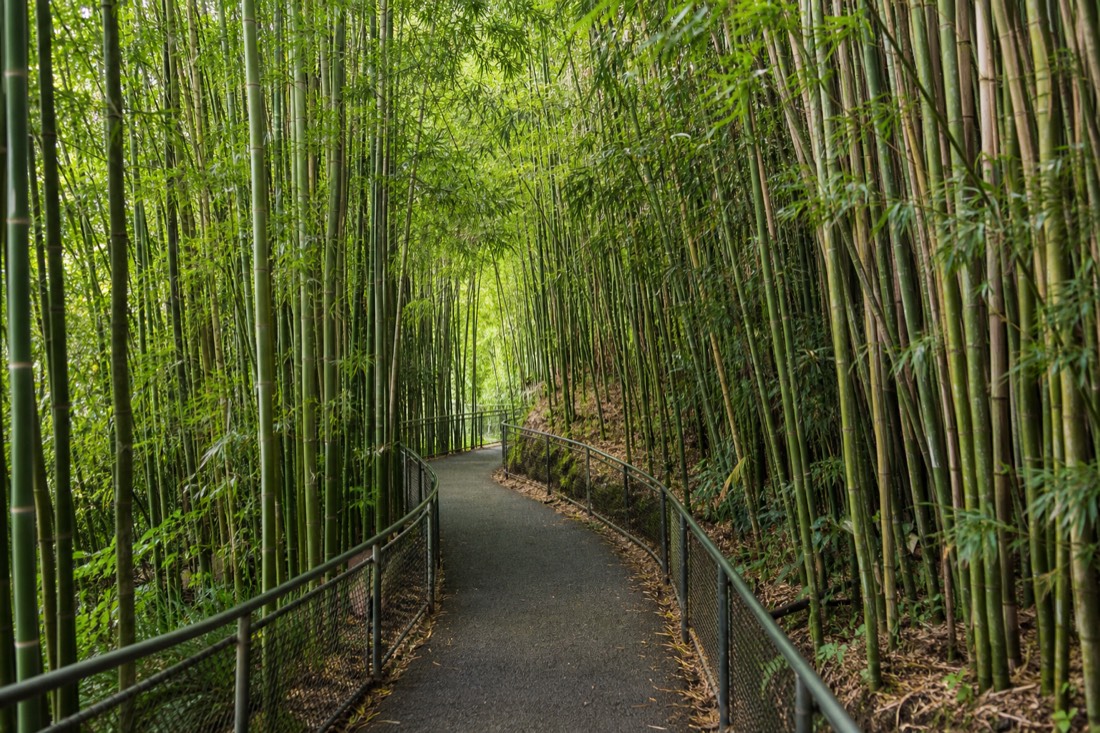
This is the part I like explaining, because it runs against everything visitors expect from a paid attraction. There is no gift shop, no cafe, no locker bank, no gear counter, no photo package waiting at the exit. Your card gets charged once at the top of the road and then the park simply leaves you alone. What you are buying is a maintained paved path through a gulch that would otherwise be impassable jungle, plus the railings that let you stand where the ground drops away, plus the fact that somebody clears the fallen albizia after every storm.
Knowing what the fee does not include saves more arguments than knowing what it does. It buys no water access at all: the loop is a fenced viewing trail above a stream-eroded gorge, and there is no path down to the pool at the bottom. It buys no guide, so if you want somebody to tell you what the ʻōhiʻa is or why the water runs brown after rain, you either bring that knowledge or book somebody who has it. And it explicitly does not buy accessibility, because the official page calls the loop out as requiring some physical exertion, with multiple steps and no wheelchair access.
| What you might expect | Covered by the fee? | What it means on the day |
|---|---|---|
| The full 0.4-mile paved loop | Yes | Walk it as slowly as you like inside opening hours |
| The 442-foot ʻAkaka Falls overlook | Yes | The railed main viewpoint, no extra ticket |
| The Kahuna Falls viewpoint | Yes | On the longer arm of the loop, easy to skip by accident |
| Tree-fern and bamboo corridor | Yes | The best shade on the walk, and the best photos |
| Parking inside the gate | No, separate $10 | Charged per vehicle, not per person |
| Swimming or any water access | No | Fenced viewing loop into a gorge, no route to the water |
| A guide or commentary | No | Nobody is stationed on the trail to explain what you see |
| Lockers, gear rental, food or drink | No | Nothing inside the gate sells anything, buy in Honomū first |
| Step-free or wheelchair access | No | Official page lists steps and no wheelchair access |
The no-swimming line is the one that ruins days when people learn it at the railing rather than at home. It is not a rule the staff invented to be difficult, it is the shape of the land: a 442-foot column of water landing in a gorge with vertical walls. I answer the swimming question at length on its own page, and there is a real alternative for people who want the water, which I come back to further down.
Entry follows the person and parking follows the car. Anyone with a Hawaii state ID or driver's licence enters free, and a resident driver's ID covers the vehicle. A visiting passenger in a resident's car still pays their own $5. Nobody in a group pays twice for the same thing.
Mixed groups turn up here constantly and they cause no drama at all once you know the two rules. A Hilo family hosting mainland relatives drives up in one car: the resident driver shows an ID, parking is free, and the visiting relatives each pay $5 for themselves. A visiting couple who have rented a car and picked up a local friend pay $10 of entry, $10 of parking, and the friend walks in on their licence. Neither arrangement requires explaining yourself; the kiosk transaction is just a smaller number.
Residency is proved by the ID, not by the address you say out loud, and not by the licence plate. Rental plates are ordinary Hawaii plates, so nobody is judging your car. If you have moved to the island recently and have not swapped your mainland licence yet, you are a non-resident for this purpose, which occasionally annoys people who have lived in Puna for six months. Children 3 and under go free either way and nobody asks for a birth certificate, though a nine-year-old is not going to pass as three no matter how the conversation goes.
| Scenario | Who pays entry | Who pays parking | Total at the gate |
|---|---|---|---|
| Two visitors, one rental car | Both, $5 each | The car, $10 | $20 |
| Two residents with ID, one car | Nobody | Nobody | $0 |
| Resident driver, two visiting relatives | The two visitors, $5 each | Nobody, resident ID covers the car | $10 |
| Visiting couple plus a local friend | The couple, $5 each | The rental car, $10 | $20 |
| Resident family of five with one visiting cousin | The cousin only, $5 | Nobody | $5 |
| Six visitors carpooling in one van-sized rental | All six, $5 each | The vehicle, $10 | $40 |
That last row is the one worth staring at. Six people in one non-commercial vehicle pay a single $10 parking charge between them, which works out at under $2 each. Six people in three cars pay $30 of parking for exactly the same view. If your group is spread across rentals and you are heading up together anyway, consolidating into fewer cars is the only genuine discount available at this park, and the lot up there is not large enough to want three of your cars in it either.
Most parties pay between $15 and $40. A solo visitor with a rental car pays $15, a couple pays $20, a family of four with a toddler pays $25, two couples sharing a car pay $30, and a Hawaii resident family with ID pays nothing. The totals scale with heads and cars, not with how long you stay.
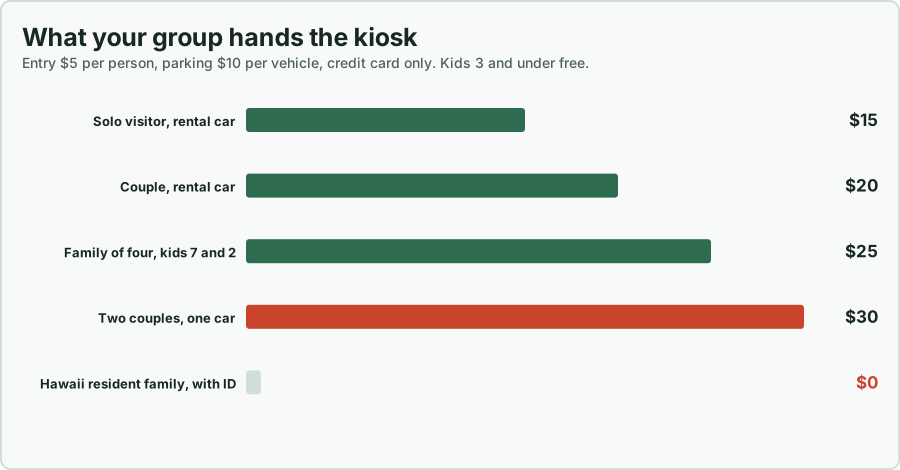
Here is the arithmetic worked through for the groups I actually see arriving, so you can find yours and stop doing sums.
| Your group | Entry | Parking | Total at the gate |
|---|---|---|---|
| Solo visitor, rental car | $5 | $10 | $15 |
| Couple, one rental car | $10 | $10 | $20 |
| Family of four, children aged 7 and 2 | $15 | $10 | $25 |
| Two couples sharing one car | $20 | $10 | $30 |
| Family of six, two of them under 3 | $20 | $10 | $30 |
| Group of eight in two cars | $40 | $20 | $60 |
| Hawaii resident family with ID | $0 | $0 | $0 |
The family-of-four line is the one that surprises parents. A seven-year-old is charged as a full person, because the free tier stops at three, and there is no youth or student rate anywhere on the schedule. That is unusual and slightly harsh compared with most mainland parks, but it also keeps the schedule simple enough that nobody argues about it at the kiosk. If you are bringing small children or older relatives, the money is the least of the planning; the steps are the thing, and I cover that in the kids and seniors guide.
The resident line is not a typo. With a Hawaii ID, the state charges nothing at all, for entry and for parking. I walk this loop for free and always have, which I admit colours how good a deal I think it is. It also means the visitor economics and the local economics of this park are completely different conversations, and any local who tells you the falls is cheap should be gently reminded that they have never paid for it.
One more thing the totals do not capture: your time at the gate is free but finite. The fee buys you until 5:00pm and no later, so a $20 visit that starts at 4:45pm is objectively worse value than a $20 visit that starts at 9:00am, for the identical money. Time of day is the real lever on value here, and the best time to come is worth more thought than the price.
Because the park sits in a gulch with poor cell reception and no practical way to handle cash safely. Every fee is credit card only, no exceptions, no cash box. The state runs an online portal at gostateparks.hawaii.gov and actively encourages paying before you arrive, which sidesteps the signal problem entirely.
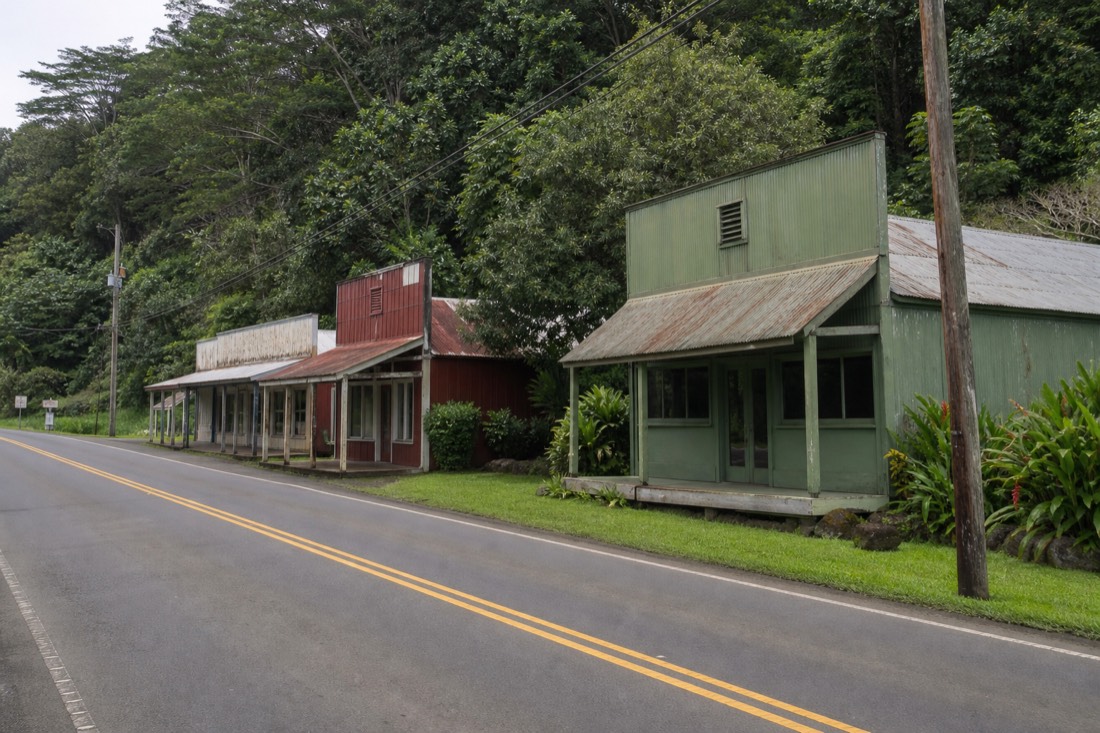
The reception problem is real and it is the thing that turns a two-minute transaction into a ten-minute one. The park sits at the end of Highway 220, 3.6 miles southwest of Honomū, in terrain that swallows signal. On a bad morning I have watched a card reader hang while three cars idle behind it, everyone perfectly polite and everyone quietly wondering whether this is normal. It is normal. It is also completely avoidable, because the state publishes an online payment portal and asks visitors to use it before arrival rather than at the gate.
My standing advice: pay in Honomū. Stop in town, where the coffee is and where the signal is, settle the fee on your phone, and drive the last few minutes up the hill with the transaction already done. Honomū is a genuinely good stop anyway, a row of plantation-era storefronts that takes twenty minutes and rewards them. Doing your paperwork there rather than in the queue is the single most useful piece of logistics in this whole article.
Bring a card even if you have paid online. Phones die, screens fail to load a confirmation in a dead zone, and a physical card is the fallback that always works. What will not work, under any circumstances, is cash. There is nowhere to put it. If you have driven up from Kona with a wallet full of notes and no card, your only options are to drive back down for signal or to go home without seeing the falls, and I have seen both happen in the same week.
If your day is already booked with a guided operator, none of this applies to you at all: the vehicle pays the commercial rate on arrival, nobody in the group touches a kiosk, and the whole card question evaporates. Kona-side visitors weighing a long self-drive against that convenience often land on the full circle day that starts on the resort coast, where the falls admission is inside the ticket along with everything else on the route.
More than $20, and I will not pretend to know how much more. The gate fee is fixed and knowable. Your fuel, your rental day and your hours are not, because they depend on your car, your week and where you sleep. From Hilo it is twenty minutes. From Kona it is roughly ninety minutes each way.
I get asked for a per-gallon figure and a daily rental rate constantly, and I refuse to invent them. Fuel prices on this island move, rental rates swing by season and by how far ahead you booked, and a number I make up today would be wrong by the time you read it. What I can describe honestly is the shape of the cost, which is more useful anyway.
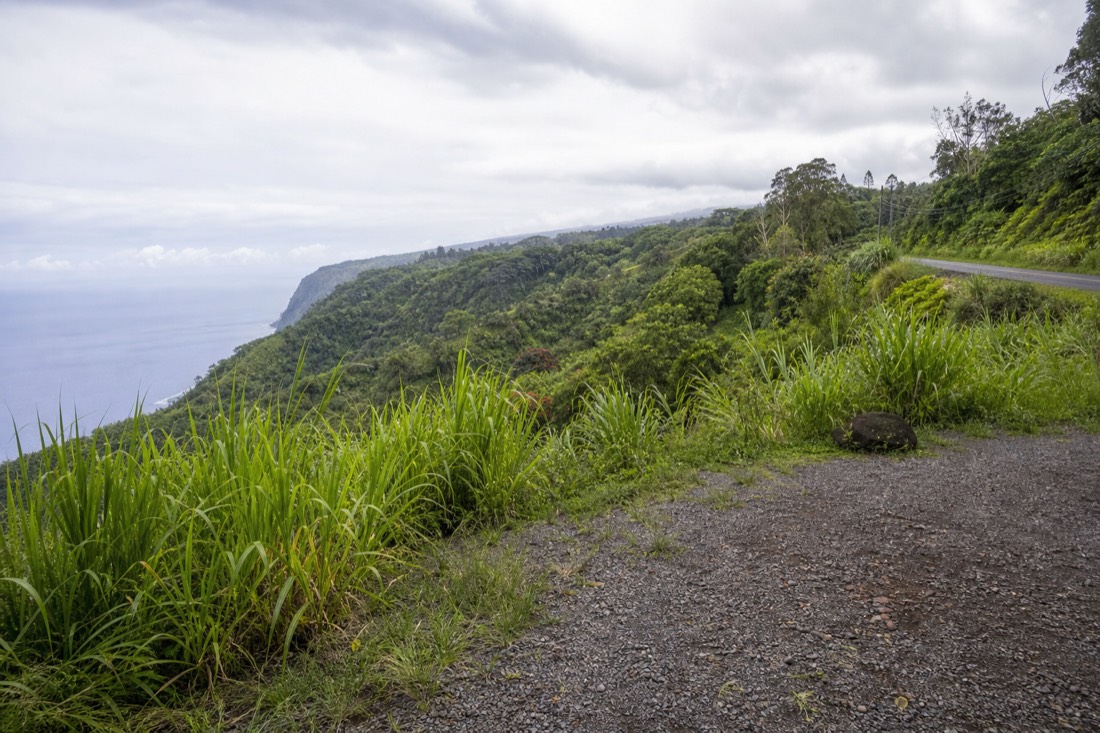
Self-driving commits you to a rental day. If you already have the car for other reasons, the marginal cost of the falls is fuel and hours. If you would otherwise not have rented, the falls is suddenly carrying a whole day of vehicle cost. Then there is the geography. From Hilo the park is about eleven miles north, twenty minutes of easy coastal driving, and the whole outing fits in a morning with change left over. From the Kona side you are looking at something close to ninety minutes each way, which is three hours of your holiday spent in a seat, and I lay out both route options in the drive from Kona.
Then the smaller costs nobody budgets for. A second driver on the rental agreement, if your partner is going to share the ninety minutes. Parking wherever else you stop that day, because Hilo town is not free either. And the largest cost of all, which does not appear on any receipt: the hours. Three hours of driving for a forty-minute walk is a real trade, and on a seven-day trip it is roughly two percent of your entire holiday spent on Highway 19.
None of this makes self-driving wrong. From Hilo it is obviously the right answer, and I say so plainly. From Kona it becomes a genuine question rather than an obvious one, and the answer depends on whether you are stacking other stops onto the same drive. I ran through the same arithmetic for a whole waterfall day in what a Big Island waterfall day really costs, and the conclusion held: the gate is cheap, the driving is not.
Admission for every passenger, the commercial vehicle rate the operator pays at the gate, hotel or port pickup, a routed itinerary, a licensed guide, and ten or eleven hours of driving you do not do. You are not paying a premium to walk a $5 trail. You are paying for the day around it.
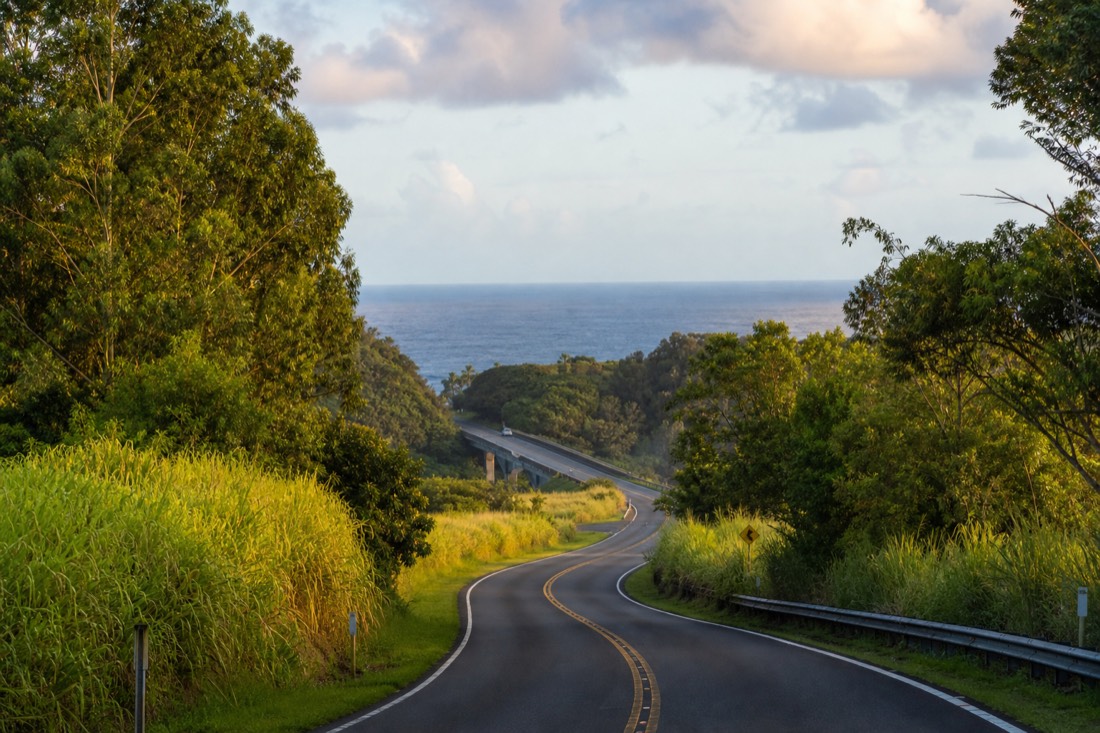
This is where the cost conversation usually goes sideways, because people compare a tour price against a $5 entry and conclude they are being fleeced. They are comparing the wrong things. The gate fee is one line item inside a guided day, and a small one. What the operator is actually selling is the routing: the order of the stops, the timing that gets you to the falls before the tour buses and to the volcano before the light goes, and the driver who takes the Hamakua bends while you look out of the window.
So rather than a price column, here is what each option gives you and who it suits, which is the comparison that actually decides the question.
| Option | What you pay at the gate | What is handled for you | When it makes sense |
|---|---|---|---|
| Self-drive from Hilo | $5 per person plus $10 for the car | Nothing, and nothing needs to be | You have a car and a free morning |
| Self-drive from Kona | $5 per person plus $10 for the car | Nothing, three hours of driving is yours | You are stacking several Hamakua stops on one trip |
| Full guided day from Hilo | Nothing, admission is inside the ticket | Pickup, routing, guide, volcano and Hilo town in one day | You want the falls and the volcano solved together |
| Full circle day from the Kona side | Nothing, admission is inside the ticket | Resort-side pickup, an eleven-hour route, every entry | You sleep on the west side and want the whole island once |
| Half-day waterfall circuit from Hilo | Nothing, admission is inside the ticket | A guided falls morning without a full-day commitment | Short windows, cruise mornings, slow travellers |
| Guided hike to a swimmable waterfall | Not applicable, different location | A Native Hawaiian guide and actual water access | You came to Hawaii to get in a waterfall |
The Hilo-side operator I hear the best trail-side feedback about is Aloha Aina Tours, a small outfit whose full day threads ʻAkaka Falls together with Rainbow Falls, the Onomea scenic drive and Volcanoes National Park. If your date is flexible, it is worth checking availability on their official listing before you commit to doing the whole loop yourself, because the driving they absorb is the expensive part of the day.
Where the trade genuinely tips depends on your bed. From Hilo, self-driving wins most of the time and I say so to guests without hesitation. From Kona or Waikoloa, the calculus flips, because you are buying back six hours of your week and someone else eats the Saddle Road in the dark. Either version can be built well. Neither is built well by accident, which is the argument for handing the routing to somebody who drives it weekly.
No rental car, a hard all-aboard deadline, and a taxi fare that makes the $5 entry irrelevant. The falls sits about eleven miles from the Hilo pier with no public bus to the gate, so your real cost on a ship day is transport and schedule risk, not admission.
Cruise passengers are the group for whom the fee schedule matters least and the logistics matter most. You arrive with a fixed window, usually seven or eight hours, and you have no vehicle. The eleven miles between the pier and the park gate is the entire problem. There is no public bus that reaches the gate, so you are choosing between a booked day with transport included, a taxi or rideshare with a return leg you have to arrange yourself, or a same-day rental that eats an hour of your window at the counter.
| No-car option | What it solves | What it does not solve | Who it fits |
|---|---|---|---|
| Ship's own shore excursion | Transport and the guarantee the ship waits | Group size, pace, and which stops you get | Nervous first-timers on a tight turnaround |
| Independently booked guided day | Transport, routing, admission, terminal pickup | The ship does not formally wait for you | Anyone comfortable with a sensible time buffer |
| Taxi or rideshare each way | The outbound leg, quickly | The return leg, which is the hard one at the gate | Short in-and-out visits, small groups splitting the fare |
| Same-day rental car | Total freedom and a cheap gate fee | An hour lost at the counter, twice | Long port calls of nine hours or more |
| Zipline day with terminal pickup | Transport, timing built around all-aboard | It crosses KoleKole Falls, not ʻAkaka itself | Cruisers who want adventure over sightseeing |
The return leg is the trap. Getting a car up to the park is easy; getting one back at 2pm from a gulch with poor signal is not, and I have met more than one passenger who discovered that the hard way. If you are going independent, arrange your return before you leave the pier. Options built around a ship schedule solve this by design, which is what the zipline day with cruise terminal pickup is really selling: not the ziplines alone but the fact that somebody else owns your all-aboard time. The full port-day breakdown, including how much buffer to leave, lives in Hilo cruise port to the falls.
Arriving with only cash costs you the visit. Arriving at 4:45pm costs you the falls at a jog. Driving three hours from Kona for a forty-minute stop costs you a day. Paying the kiosk on a day your tour already covers costs you $20 for nothing. Expecting to swim costs you the whole plan.
Every one of these is avoidable with five minutes of reading, which is why I keep writing them down. The cash one is the most common and the most absolute: there is no cash box, no ATM, no workaround, and the nearest reliable signal is back down in Honomū. The late-arrival one is the most quietly expensive, because you pay full price for a visit compressed into fifteen minutes, and the gulch is already losing light well before the 5:00pm gate.
| The mistake | What it actually costs you | How to avoid it |
|---|---|---|
| Arriving with cash only | The entire visit, or a round trip back for signal | Bring a card, and pay online before you drive up |
| Budgeting on the old "$5 per car" figure | Being short at the gate for every extra passenger | Entry is per person, parking is per car, always |
| Arriving after 4:15pm | Full price for a rushed loop in fading gulch light | Aim for morning, or any time before mid-afternoon |
| Driving from Kona for the falls alone | Three hours of driving for forty minutes of walking | Stack the Hamakua coast onto it, or let someone drive |
| Paying the kiosk when your tour covers it | Around $20 nobody asked you for | Confirm admission is included, then walk in with the group |
| Planning your day around swimming here | The plan, discovered at the railing | Book a waterfall where swimming is actually allowed |
| Splitting a group across three cars | $20 to $30 of duplicate parking | Consolidate, the lot is small anyway |
The swimming mistake deserves its own paragraph because it is the one that ruins a whole afternoon rather than a few dollars. People arrive with towels and leave with a photograph. ʻAkaka Falls is a viewing loop above a gorge and always has been, and no amount of hoping changes the geology. If getting into fresh water is what you came to Hawaii for, do not fight this park for it. A guided hike to a waterfall with real water access is a different, better answer, and the guides who run those days on private land can take you somewhere you are actually allowed to swim.
The double-paying mistake is the cheapest to fix and the most common among people who booked well. If your day includes the falls, the vehicle pays the commercial rate on arrival and your admission is already settled. Walk in with the group. If you are the sort of traveller who wants a shorter guided morning rather than a full day, the half-day waterfall circuit out of Hilo covers the same ground in less time and settles the gate for you the same way.
Yes, and it is not close. Twenty dollars for a couple, an hour of your morning, and a 442-foot waterfall at the end of a paved path. Almost nothing else on this island delivers that ratio. What can go wrong is the driving around it, not the price of it.
Set it against the rest of a Big Island week and the comparison is almost unfair. A helicopter is a three-figure line item per seat. A manta night dive is a three-figure line item. A luau, a snorkel charter, a summit tour, all three figures. ʻAkaka Falls asks $20 of a couple and hands back the single most photographed waterfall on the island. There is a longer, more honest version of the worth-it argument in is it worth visiting, and it does not turn on money at all.
Some context on how the island's other waterfalls now compare. Rainbow Falls in Hilo, free to visit for decades, moved to the same fee structure as of January 2026: $5 per person, $10 per vehicle, residents free with ID, credit card only, with one payment covering both the Rainbow Falls and Boiling Pots areas of Wailuku River State Park. That change matters if you were planning to pair them, and I compare the two parks directly in Rainbow Falls versus ʻAkaka Falls. Other roadside falls along the coast remain free, and I list them in waterfalls near Hilo.
Where value actually leaks away is the drive. Nobody has ever complained to me about $20. Plenty have quietly regretted three hours in a car for a forty-minute stop, especially on a short trip where those hours had somewhere better to be. The fix is not to skip the falls, it is to make the drive carry more than one thing: the Hamakua coast, Honomū, the ziplines a few minutes away, Waipiʻo, Hilo town. I have written that route up as the Hamakua coast drive, and it is the version of the day I would want as a visitor.
So budget $20 and stop worrying about it. Bring a card, pay before you drive up, arrive in the morning, and give the loop a proper hour instead of a rushed twenty minutes. Those four decisions are worth more to your day than any amount of price comparison, and all four are free. The falls will do the rest. It has been doing the rest since long before there was a kiosk at the top of the road.
Full day
from $188per person, varies by date Check availability →Half day
from $229.99per person, varies by date Check availability →About 11 hours
from $276per person, varies by date Check availability →