Big Island in a Day circle tour
About 11 hours
from $276per person, varies by date Check availability →A lookout visit, not an activity. Knowing that before you go is exactly why it earns its place on the itinerary.
 Verified by Kekoa Kalani, Akaka Falls tour guide and island nature specialist
Short answer
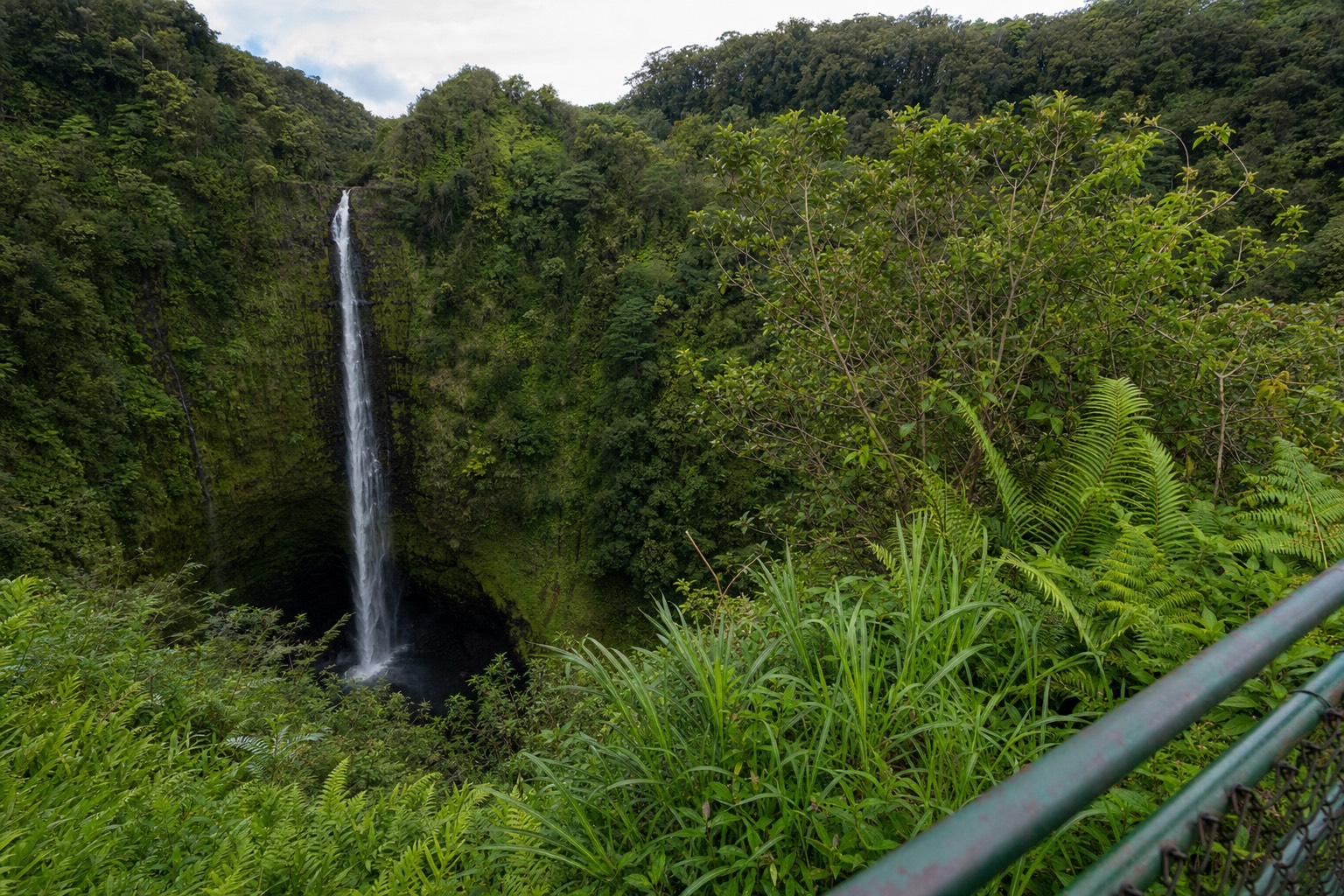
Yes. For $5 a person plus $10 parking you walk a paved 0.4-mile loop to a 442-foot free-falling waterfall, all inside an hour. It is the best effort-to-reward stop on the Hilo side. Treat it as a lookout visit rather than an activity and pair it with the rest of the Hamakua Coast.
The sound arrives before the view does. You come around a bend in the bamboo, the air goes cool and wet, and then the gorge opens up and there is ʻAkaka Falls, dropping 442 feet in one unbroken white line. I have walked guests around this loop since 2015, and the reaction at that first railing is the same in every language: a half step back, then silence, then everyone reaching for a phone at once.
Then, about forty minutes later, we are back in the parking lot.
Both halves of that sentence matter. Most of the arguments people have about this place, in reviews and in the back of my van, come from taking one half seriously and ignoring the other. So here is the honest version, the one I give guests who ask me straight out whether it deserves a slot on a week that already has a volcano, a beach day and a snorkel trip fighting for space.
Yes, for almost everyone on the Hilo side of the island. Entry is $5 a person plus $10 to park, the paved 0.4-mile loop takes 30 to 45 minutes, and the payoff is the tallest easily reached waterfall on the Big Island. The honest caveat: this is a viewpoint, not an adventure, and it does not need more than an hour.
I say "effort-to-reward" a lot when guests ask me this, because that ratio is the thing ʻAkaka Falls wins on. Plenty of Hawaii waterfalls make you earn them with a muddy scramble, a stream crossing, or twenty minutes of rough road that your rental agreement quietly forbids. This one asks for a short walk on pavement with some stair sections, inside a 65.4-acre state park with marked paths and a fenced lookout at the end. The official fee schedule and trail details sit on the DLNR State Parks page, and the basic bargain has not changed: a few dollars, under an hour, a 442-foot waterfall.
Here is that trade laid out plainly, because when people say "worth it" they usually mean four separate things at once and only ever weigh one of them.
| What the stop asks | The real cost | What comes back |
|---|---|---|
| Time | 30 to 45 minutes on the loop, under an hour gate to gate | The full falls view, Kahuna Falls, and a bamboo and fern corridor most people photograph as much as the waterfall |
| Money | $5 per person entry, $10 per vehicle, credit card only | The cheapest headline sight on the island; Hawaii residents with ID pay nothing at all |
| Effort | 0.4-mile paved loop with stair sections, rated as requiring some physical exertion | Railings the whole way, no mud, no route-finding, no navigation apps |
| Planning | None. No timed reservation, open daily 8:30am to 5:00pm | Turn up on any day the weather turns good; paying online first covers you for the poor cell signal at the gate |
Read a lukewarm review of this park closely and you will notice the complaint is almost never about the waterfall itself. It is about the shape of the visit. Someone pictured a half-day jungle expedition, got a paved stroll, and felt shortchanged. Someone else arrived expecting a spectacular forty-minute stop, got exactly that, and called it the best thing they did on the Hilo side. Same water, same trail, two different afternoons.
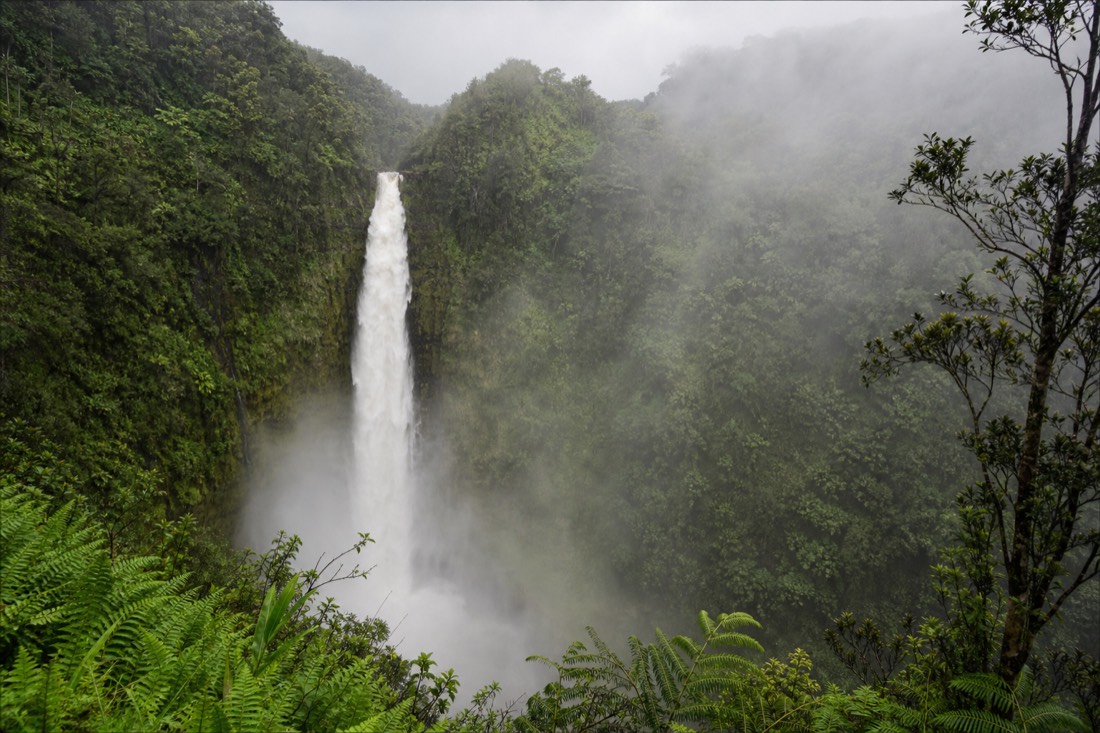
A 442-foot free-fall into a stream-eroded gorge on Kolekole Stream, with a second waterfall, the cascading Kahuna Falls, dropping down the far valley wall earlier on the loop. Around both runs a rainforest corridor of bamboo, wild orchids and tree-sized ferns that is worth slowing down for on its own.
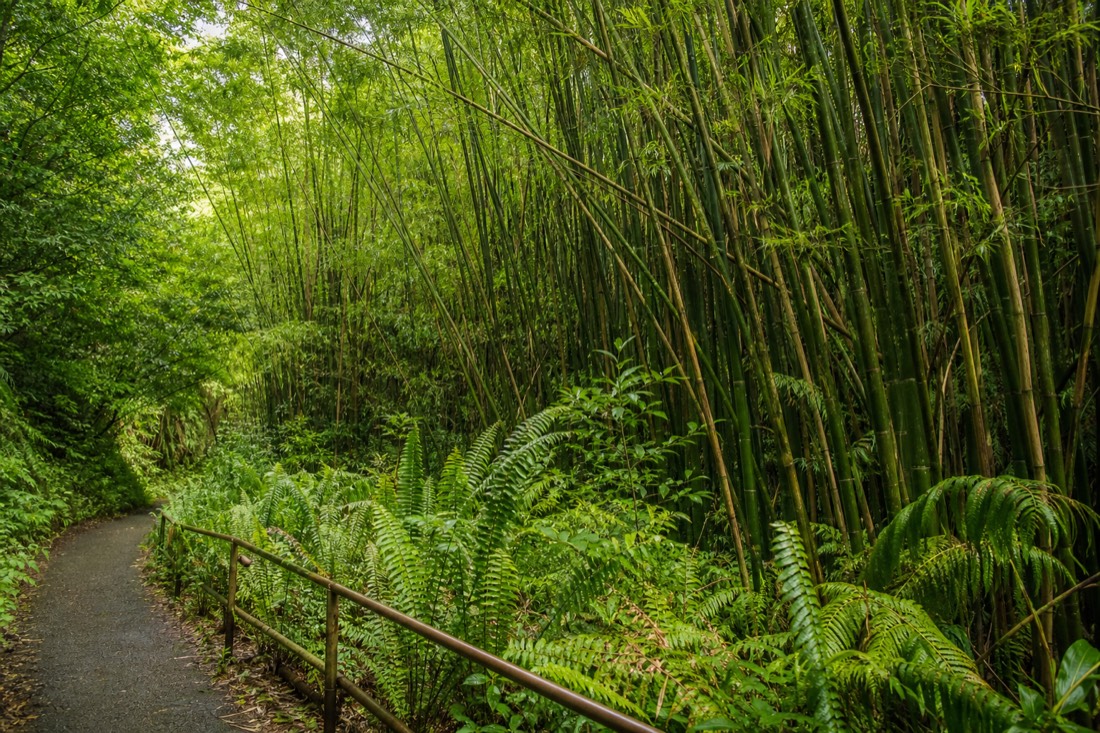
The loop is meant to be walked in one direction, past Kahuna Falls first, then swinging around to the main ʻAkaka Falls overlook so the biggest thing comes last. Kahuna is a cascade across the valley, more distant and often part-screened by trees, and I will be honest that some guests barely register it. A few stand there squinting and ask where the waterfall is. ʻAkaka is the one you came for, and the lookout puts you close to level with the top of the drop, so on a wet week you watch the whole column of water leave the lip and disappear into spray a long way below.
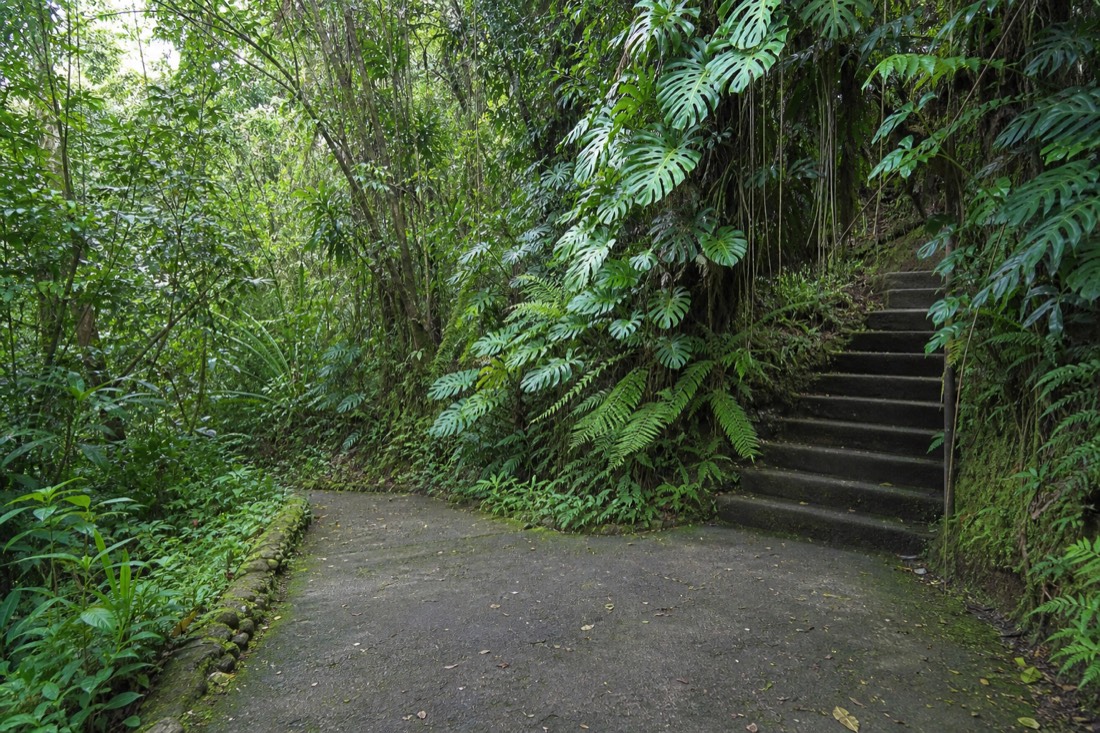
The corridor between the two is the part that surprises people. Bamboo tall enough that it knocks in the wind above your head, philodendron climbing every trunk, ferns the size of a small car. If you like photographing plants more than water, the photography guide covers where the good light lands and when.
What you will not do here is touch the water. The trail is a fenced viewing loop and the gorge below is closed, so there is no swimming anywhere in the park, no pool at the base, no scramble down. That is not a rule anyone bends, and I would rather you hear it now than at the railing. If getting into a pool under a waterfall is the experience you actually want, it exists on this coast, just not in this park. The swimming question gets its own page, and waterfalls near Hilo lays out where the real options are.
It means value per minute, not value per dollar. ʻAkaka Falls returns more per minute spent than almost anything else on the island, and less per visit, because the visit is short. Judge it against the forty minutes it costs you, not against a half-day activity it never claimed to be.
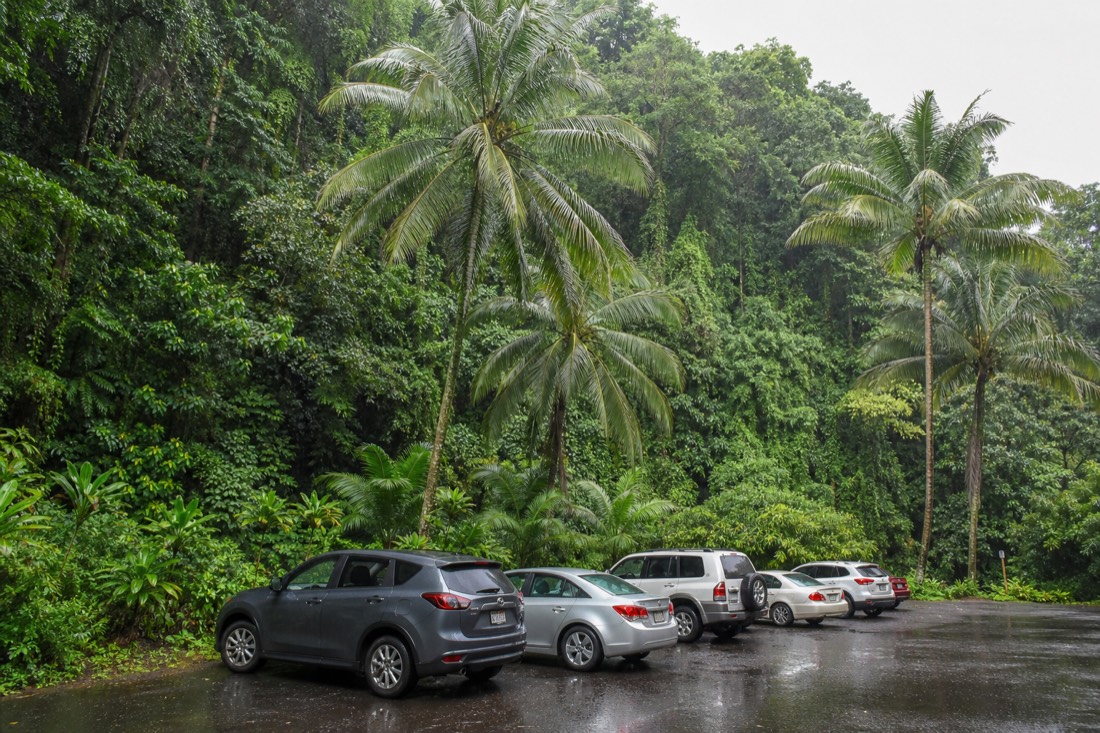
This is the part guests and I usually end up talking about on the drive back down Highway 220, and it is the heart of the whole question. Travellers are trained to price experiences by the day. Half-day snorkel, full-day volcano, sunset sail. Set against that habit, a forty-minute waterfall stop looks like poor value simply because it is small, and people go looking for a way to make it bigger. They add a second lap. They sit at the lookout waiting for something to happen. Nothing happens. Water falls.
Flip the unit and the picture changes completely. Count the minutes that genuinely made your jaw drop on a Big Island week and be honest about the total. It is usually small: the first sight of a lava field, ten minutes of a turtle at the surface, the moment a whale breaches near enough to hear. ʻAkaka Falls hands you two or three of those minutes for a walk that costs you forty and a fee that costs a couple of you twenty dollars. Very little else on the island converts at that rate. The volcano is extraordinary and asks for most of a day. Mauna Kea is unforgettable and asks for an evening plus altitude. This one asks for the gap between two other things.
That reframe also settles the pacing argument. Roughly forty minutes is not a stingy allowance, it is the correct one, which is why the guided days that stop here schedule between about half an hour and a full hour and none of them schedule three. I have written up the time question in detail if you want to see the pacing broken out by visitor type.
The useful follow-up is not "how do I stretch the falls" but "what fills the rest of the morning". Sometimes the answer is coffee in Honomū and a slow coast drive. Sometimes guests want something with a pulse to it, and the zipline that crosses the 250-foot KoleKole Falls a few minutes from the park gate turns a short waterfall stop into a genuine half-day out.
Better than most on effort and cost, smaller than all of them on scale. Volcanoes National Park, Mauna Kea and a Waipiʻo Valley shuttle each ask for a large slice of a day. ʻAkaka Falls asks for forty minutes and returns a 442-foot waterfall, which is why it survives every itinerary cut I have ever helped make.
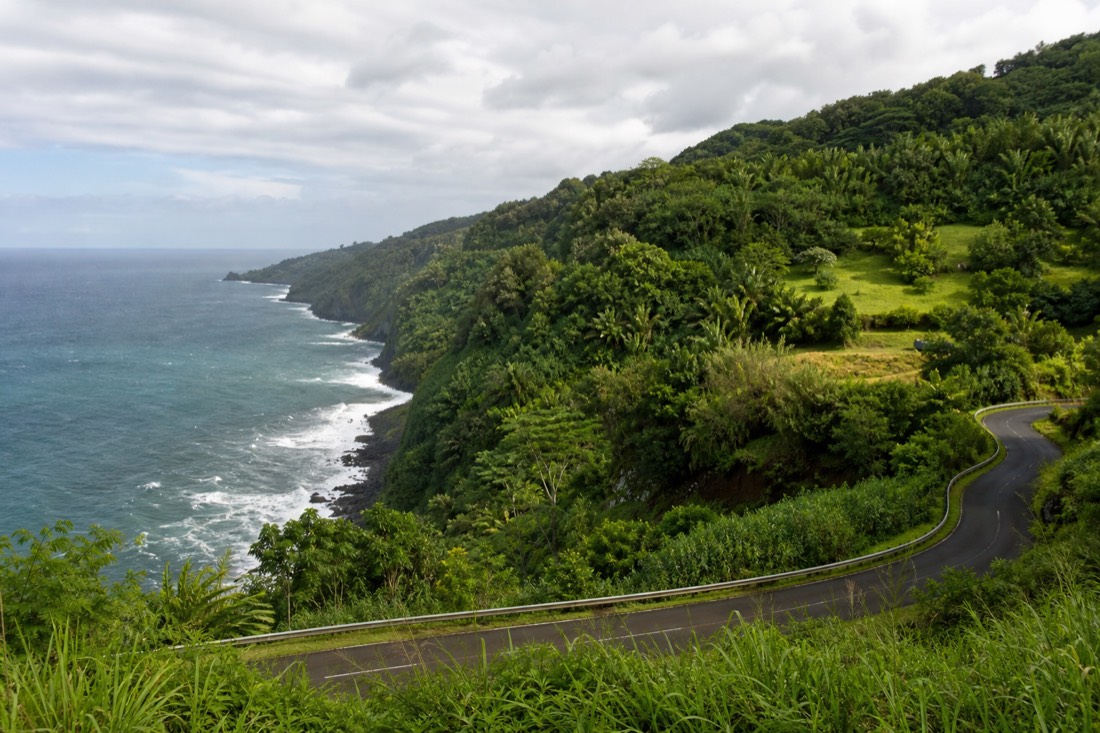
Guests almost never ask whether the falls is worth it in isolation. They ask whether it is worth it instead of something else, usually while holding a rental car map with six circled things on it and four days to fit them into. So here is the comparison as I actually make it out loud, with no prices attached, because what separates these stops is time and effort rather than money.
| Big Island stop | Getting there | Time on site | Effort | What makes it stick |
|---|---|---|---|---|
| ʻAkaka Falls | About 11 miles north of Hilo, up Highway 220 from Honomū | 30 to 45 minutes | Paved loop with stairs, some exertion | A single unbroken 442-foot drop, seen from near the top |
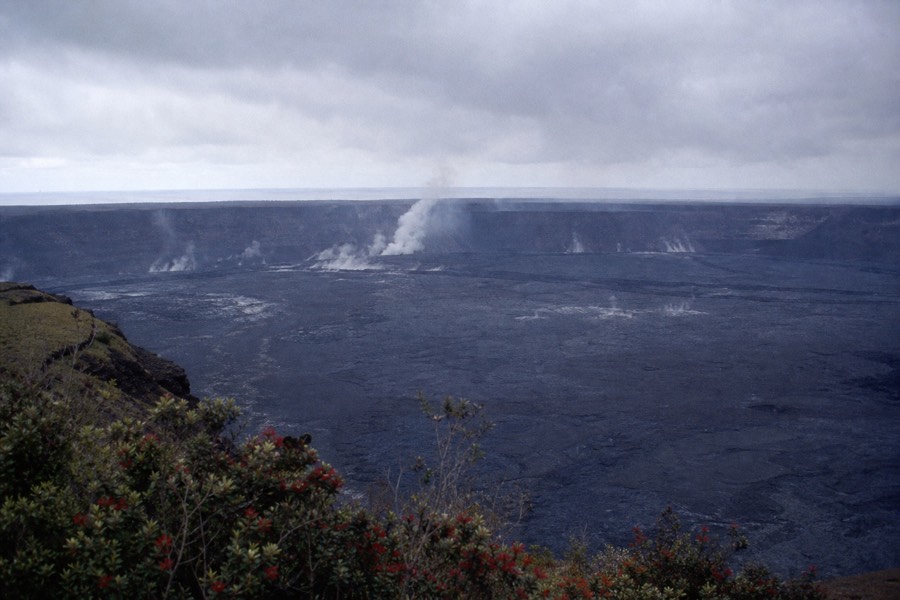
| Volcanoes National Park | About 45 minutes south of Hilo | Half a day minimum, longer if you walk | Easy to hard, entirely your choice of trails | Ground that is still being built, steam through cracks in the road |
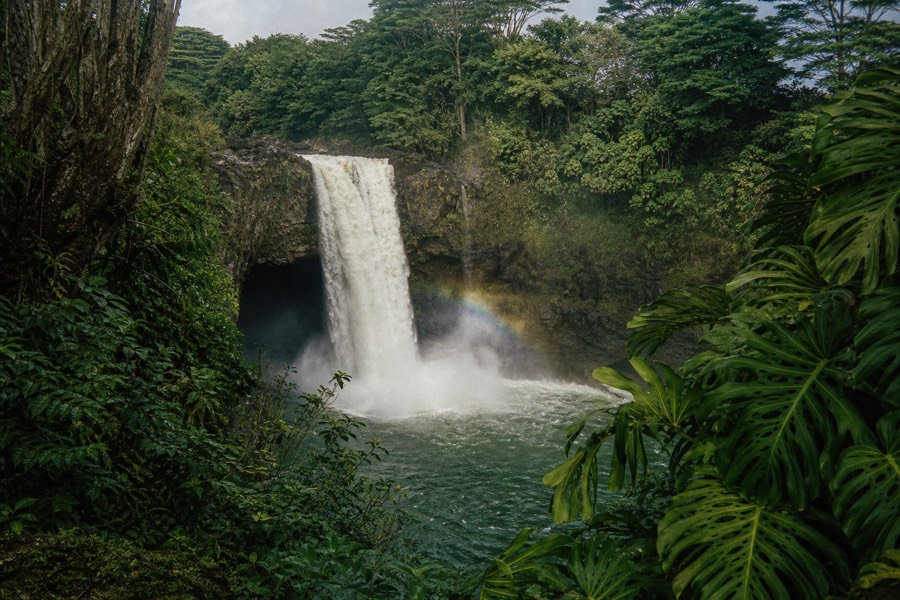
| Rainbow Falls, Hilo | Downtown Hilo, about 25 minutes from ʻAkaka Falls | 15 to 20 minutes | A few steps from the car park | An 80-foot fall with a rainbow in the mist on sunny mornings |
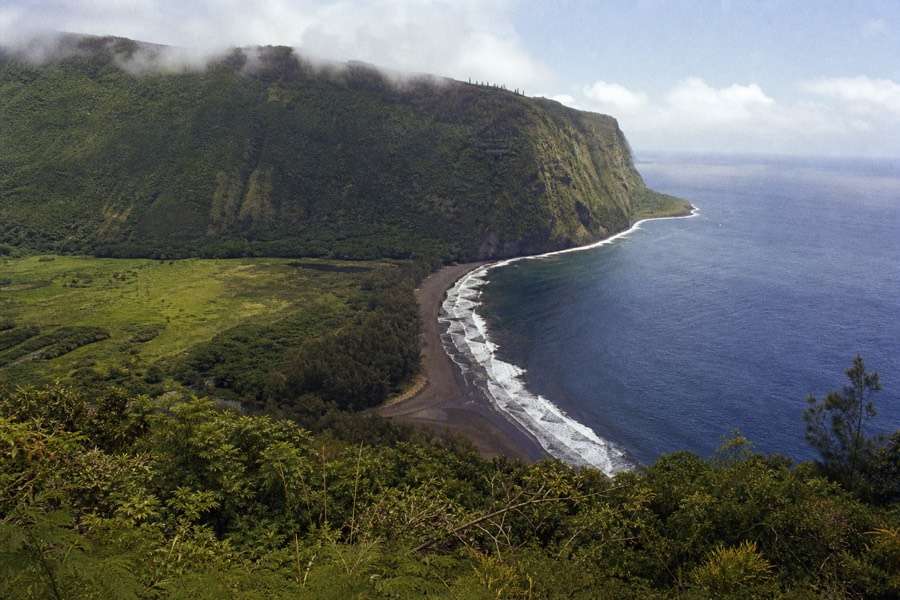
| Waipiʻo Valley Lookout | The far north end of the Hamakua Heritage Corridor | 20 minutes at the platform | Short walk from the parking lot | Cliffs, a black beach far below, and a valley you cannot drive into |
| Punaluʻu black sand beach | South side of the island, on the circle route | 30 to 45 minutes | Flat, easy | Black sand instead of gold, and a break in a long driving day |
| Mauna Kea evening | Above the saddle, a dedicated trip | Most of an evening | High, cold, and not right for everyone | Stars with almost nothing between you and them |
Look down the "time on site" column and the pattern jumps out. The falls is the only entry that gives you something genuinely enormous for less than an hour of your life. That is also why it appears on nearly every organised island day: it slots into the gaps that a volcano or a valley leaves behind. The circle-island run that most Kona-side visitors take stops here for around 35 minutes between the volcano and the coast, and you can see how the full day is routed before you decide whether to build it yourself.
If your shortlist has Rainbow Falls on it too, do not treat them as rivals. They are 25 minutes apart, they cost the same, and the head-to-head comparison explains why most people should simply do both in one morning.
A 0.4-mile paved loop, several flights of steps, and a state rating of "requires some physical exertion". Not wheelchair accessible, and honestly not stroller-friendly either. In return: no mud, no navigation, no bad-weather bailout, railings the whole way, and a 442-foot waterfall at the end of it.
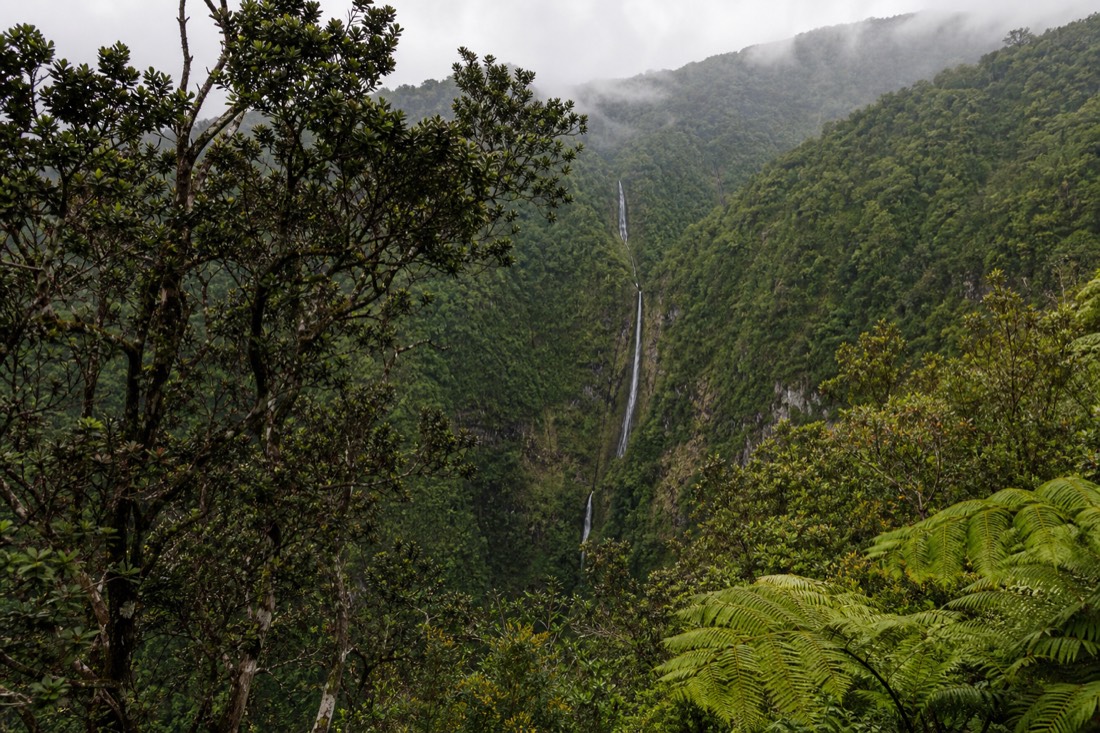
People underrate how much the paving matters until they have done a Hawaii waterfall without it. Wet volcanic soil under a rainforest canopy turns into something closer to grease than mud, and the difference between a trail you can walk in your travel sneakers and one that needs real shoes is the difference between a stop and a project. Here you can arrive in whatever you were already wearing, walk the loop, and get back in the car without changing anything. In eleven years I have watched exactly one category of footwear cause trouble, and it is flip-flops on wet steps.
The steps are the real variable, and the state is upfront about them. There are multiple stair sections, some of them long enough that a guest who is fine on the flat will still want a pause halfway. That is not a warning, just a pacing note: allow forty minutes rather than twenty-five if anyone in the group takes stairs slowly, and use the handrails, because the concrete stays damp under the canopy even on a dry afternoon. My full walkthrough of the loop, junction by junction, is in the trail guide, and there is a separate page on how it goes with kids and older travellers.
What you are buying with that effort is certainty. No route-finding, no stream crossing, no permit, no gate that might be closed, no chance of walking half an hour and finding the view blocked. You park, you walk, you see the thing, you leave. On an island where a surprising number of famous sights are conditional on the road, the tide, the weather or the county, a stop that simply works has real value.
If you want the maximum version of that walk without hurrying, the Hilo-side day that spends a full hour at the falls is the only routing I know of that gives you time to walk the loop twice, once for the waterfall and once for the plants.
First-time visitors, photographers, families with walking-age kids, cruise passengers with a half day, rainy-afternoon refugees, and anyone whose itinerary has a forty-minute hole in it near Hilo. If you fit any of those, stop reading and go. The exceptions are narrower than people expect, and they are all about access rather than taste.
Over a decade of watching faces at that railing, the pattern of who lights up is consistent enough that I can predict it from the parking lot. It is not about fitness or how many waterfalls someone has seen. It is about what they came to Hawaii wanting.
| Traveller type | Why the falls lands for them |
|---|---|
| First-timers on the Hilo side | It delivers the picture-book Hawaii waterfall on day one, with no logistics attached |
| Photographers | Two waterfalls, a bamboo corridor and soft rainforest light, all inside forty minutes of walking |
| Families with kids who walk | Short enough to hold attention, railed the whole way, and genuinely impressive to a seven-year-old |
| Cruise passengers | Close enough to the Hilo pier to fit a half day comfortably, with time left for town |
| Rainy-day visitors | Rain makes the falls heavier and the forest better; a beach day cannot say the same |
| Anyone driving the Hamakua Coast | It sits three and a half miles off the highway, which is a small detour for a big sight |
Now the other list, and I would rather give it honestly than pretend this park suits everyone. Two of these are hard access limits, not preferences.
| Who should skip it | The real reason | Better move |
|---|---|---|
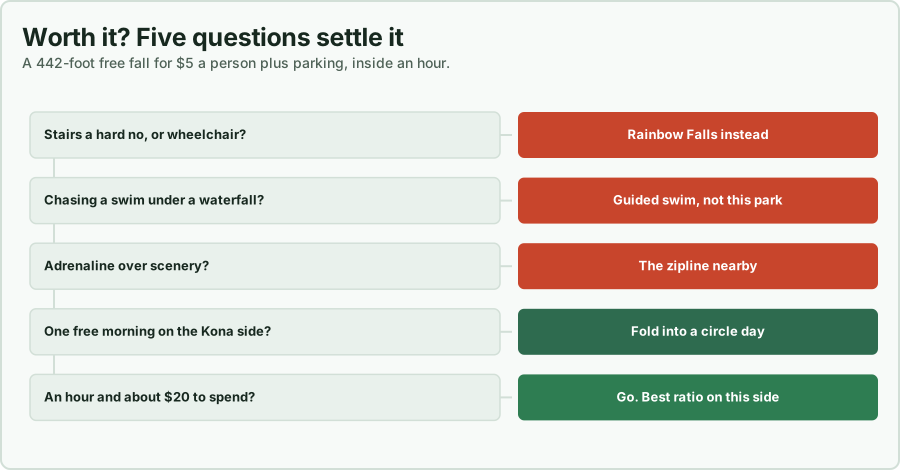
| Wheelchair users, and anyone for whom stairs are a hard no | The loop has multiple stair sections and no accessible route to the main lookout | Rainbow Falls in Hilo, where the view is a short level walk from the parking area |
| Travellers who only count a sight if they can swim in it | The gorge is fenced and closed, with no water access anywhere in the park | A guided waterfall hike and swim at a falls you can actually get into |
| Adrenaline-first visitors | It is a walk to a railing, calm by design, and it will not raise your pulse | The zipline over KoleKole Falls, minutes from the park gate |
| Kona-side visitors with one spare morning | Roughly 90 minutes of driving each way for a forty-minute stop is a poor trade on its own | Fold it into a full island day instead of a dedicated round trip |
| Anyone arriving after about 4:15pm | The gate closes at 5:00pm and the loop deserves more than a jog | Come back at opening, when the light is better and the lot is empty |
Notice who is not on the skip list: seniors who manage stairs fine, small children, non-hikers, people who have already seen waterfalls elsewhere. In my experience all of those groups do well here, and the fifth row is the one that catches the most people out. If Kona is your base, read the Kona-to-the-falls drive before you commit a morning to it.
Almost never the waterfall. The disappointment is nearly always an expectation that the park never set: a jungle trek, a swim, a full afternoon, or a photo taken from a spot that does not exist. Fix the expectation and the same visit turns into a highlight, which is exactly what the reviews show.
I read the unhappy reviews of this park the way a guide reads weather, and the causes repeat so reliably that you can inoculate yourself against every one of them in about two minutes.
| The complaint | What actually caused it | The fix |
|---|---|---|
| "It was over too fast" | Treating a viewpoint as the day's activity | Book it as a stop, not an outing, and plan what comes next before you arrive |
| "We could not get to the water" | Expecting a swimming hole under the falls | Accept the fenced loop, and go somewhere with legal water access instead |
| "Just a walk to a railing" | Wanting adventure from a park designed for access | Add the zipline or a hike nearby the same morning |
| "We only saw it from a distance" | Taking the shortcut and skipping the loop by accident | Walk the full loop unless stairs are a problem, so you get both falls |
| "It was raining and we saw nothing" | Assuming rain ruins a waterfall on the wet side | Go anyway; the flow is heavier and the crowds vanish |
| "We rushed and it was closed" | Arriving near the 5:00pm gate close | Arrive before 4:00pm, or make it the first stop of the morning |
The fourth row deserves a note, because it is the sneakiest one. From the first junction there is a left-hand path that reaches ʻAkaka Falls directly, which the state lists as the shortcut for people who only want the main waterfall. It is a genuinely useful option and I use it constantly with guests who are unsteady on stairs. But visitors who take it by accident, walk to the railing, look, and turn around, come away having seen a waterfall from a viewing platform and nothing else. That version of the visit is the one people call underwhelming, and it is a fifteen-minute misunderstanding rather than a fault in the park.
The other pattern I would flag: people arriving straight from Volcanoes National Park, still full of steam vents and lava fields, and finding a waterfall a bit tame by comparison. Order matters more than anyone thinks. Waterfall first, volcano after, and both land properly. There is more of this in what I wish visitors knew.
Never make the falls the whole outing. Ten minutes downhill is Honomū, an old sugar town with coffee and plantation storefronts. From there you choose a direction: Hilo and Rainbow Falls to the south, or the Hamakua Coast running north towards the Waipiʻo Valley Lookout. Either turns forty minutes into a good morning.
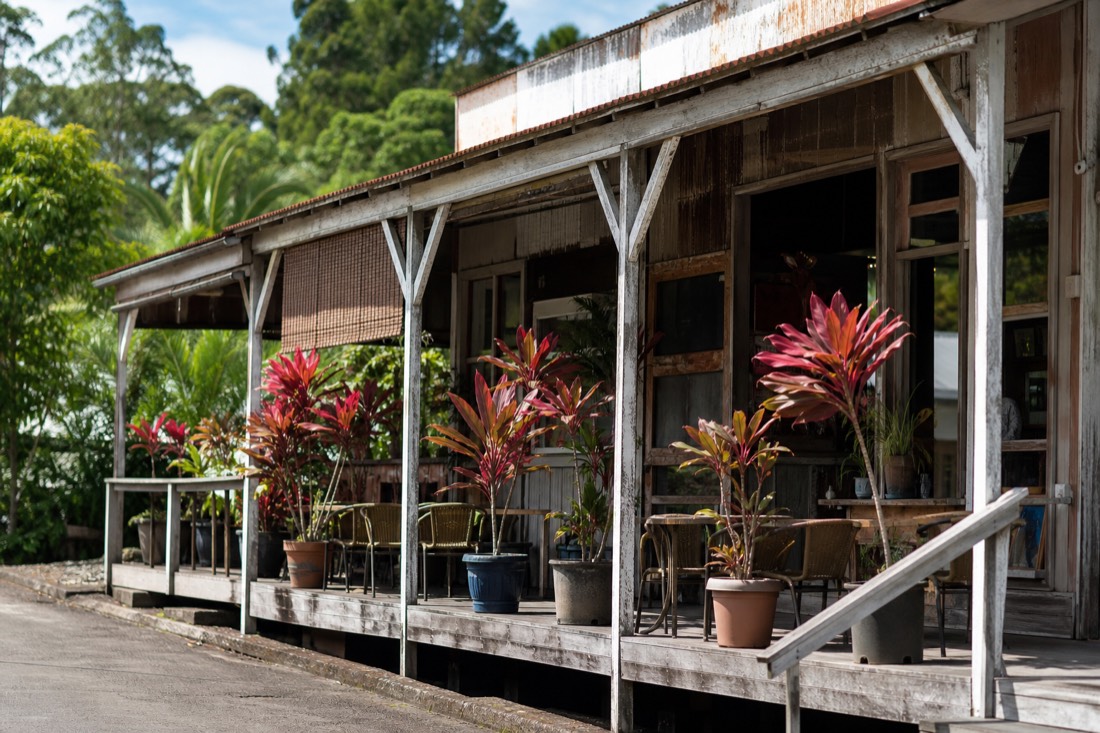
The park sits at the end of Highway 220, three and a half miles above Honomū and about eleven miles north of Hilo. Geographically it is a hinge, not a destination, and the visitors who leave happiest treat it that way. Hawaii's official tourism site lists the Hamakua Heritage Corridor from Hilo up to the Waipiʻo Valley Lookout as a scenic drive in its own right, and that is the direction I point most people after the falls.
| Pair it with | Why it works | Time to allow |
|---|---|---|
| Honomū town | Coffee, banana bread and plantation-era storefronts, ten minutes downhill from the gate | 30 to 45 minutes |
| Hilo town and Rainbow Falls | Two waterfalls, a farmers market and a working town in one unhurried morning | Half a day |
| Hamakua Coast north | Botanical gardens, deep green gulches and ocean overlooks all the way to the valley | Half a day or more |
| Waipiʻo Valley Lookout | The far end of the corridor, free, and a short walk from the parking lot to the cliff edge | Add 90 minutes plus driving |
| Volcanoes National Park | Waterfall in the morning, lava country in the afternoon, in that order | The rest of the day |
| Full island circle | Falls, volcano, black sand and coffee country in one long loop | The whole day |
One caution on Waipiʻo. The lookout is open and free, and the view from the platform is one of the best on the island, but the road down into the valley has been closed to visitor driving since February 2022 and county emergency rules bar pedestrians from walking it. The only way to the floor is a licensed shuttle. Plan for the lookout, not the valley, and read the Waipiʻo and Hamakua guide before you drive up there expecting more.
If you are staying on the Kona or Kohala side and this pairing sounds like a lot of steering wheel, it is: that is a whole day of driving to see it properly. The waterfall-first day that starts on the resort coast strings the Waipiʻo Lookout, the coast drive and about forty minutes at ʻAkaka Falls into one ticket, which is the version I recommend to guests who want the coast without the map-reading. For a self-drive plan built hour by hour, the perfect ʻAkaka Falls day has the whole thing written out.
Yes. Twenty-five minutes is enough for the shortcut version: park, take the left path from the first junction, see the 442-foot drop, walk back. That is the routing I use on cruise days and with guests who have one free hour before a flight. Pay the fee online first, because the signal at the gate is poor.
Three situations come up over and over. A cruise ship in Hilo with a hard all-aboard time. A rental car day that lost two hours to something else. A last morning before a Kona flight. All three are workable, and none of them require rushing the walk itself, because the shortcut exists for exactly this.
From the first junction, the left-hand path leads straight to the ʻAkaka Falls overlook. You give up Kahuna Falls and part of the bamboo corridor, and you keep the thing you came for. Guests who take it deliberately, knowing what they are trading, are never the ones who complain afterwards. Fifteen minutes of walking, five or ten at the railing, and you are back in the car.
Two pieces of admin protect a tight visit. The fee is credit card only and the state encourages paying before you arrive through the online park payment portal, which matters because cell reception at the park is unreliable and fumbling for signal at the kiosk is the one thing that reliably eats a tight schedule. And the gate closes at 5:00pm, not "around five". I have seen a 4:40pm arrival turn into a jog down the path and a photograph taken while walking, which is a sad way to see a 442-foot waterfall. Arrive by 4:00pm if the afternoon is your only window.
Cruise passengers have their own page, Hilo cruise port to the falls, with the timings that actually fit a port day. The short version: there is no public bus to the gate, so it is a rental, a taxi, or an organised half day, and the half day is the only one of the three that also solves lunch.
Very little, which is unusual for a Hawaii sight. The Hamakua Coast takes nearly 84 inches of rain a year and the falls runs every month. Wet weather raises the flow and thins the crowds. What changes is the trail: damp steps, mist in the gorge, and afternoon cloud building over the valley.
The single most common mistake I see people make with this park is rescheduling around rain. You are on the wet side of the island, in a rainforest, standing at a waterfall. Rain is the reason the waterfall is there. A grey morning with drizzle usually means a heavier drop, more spray coming up out of the gorge, greener light through the canopy, and half as many people on the loop. I have taken guests up in steady rain and had them tell me at the end that it was the best hour of their trip. There is a whole blog post about that, rain at the falls, because I get asked so often.
| Time of year | What the falls does | What the trail does | How to plan around it |
|---|---|---|---|
| Winter, roughly December to March | Highest, heaviest flow, spray rising well up the gorge | Steps stay wet, handrails earn their keep | Go early, wear grippy shoes, accept that you may get damp |
| Spring | Strong flow, long stretches of clear light between showers | Green at its most intense, some slick patches | The best all-round window if you get to choose |
| Summer | Reliable but visibly lighter after a dry stretch | Driest underfoot, busiest on the loop | First hour after opening, before the tour vans arrive |
| Autumn | Flow builds again as the rains return | Damp, quiet, fewer people | Good for photographers who want the loop to themselves |
| Any afternoon | Unchanged | Cloud tends to build over the valley, light flattens | Mornings are better for photographs almost every day |
There is no closed season and no bad month. If your trip is fixed and you are just wondering what to expect, the best time to visit page breaks it down further. The one weather note that genuinely matters: when the coast is getting a hard, sustained downpour, the steps get slippery enough that I slow guests right down. Take the handrail, take your time, and do not carry a camera in both hands.
Not if you are staying in Hilo with a rental car. It is twenty minutes away, the fee is small, and self-driving is plainly the better deal. A guided day earns its price when you are based in Kona, arriving by ship, or want the falls bundled into a full island circle with admissions and the routing handled.
I will be straight about this, since I make part of my living around visitors and I watch the decision play out both ways every week. Driving yourself to ʻAkaka Falls is cheap and easy, and nobody should pretend otherwise. Nothing about the park rewards having a guide with you at the railing. The water does not need explaining.
What a guided day actually sells is everything around the falls. The pickup from the Kona side so nobody loses three hours to the wheel. The routing that fits six or seven stops into a day without backtracking across the island twice. Admissions already handled at each gate. A driver who has been watching the Hamakua weather all week and knows whether to run the coast first or the volcano first today. For a couple staying in Waikoloa, a self-drive falls day means most of the daylight spent driving; on a circle day the same waterfall is one stop among many, and somebody else takes the wheel on the way home in the dark.
The honest decision rule I give guests: if you are sleeping in Hilo, drive. If you are sleeping in Kona or Waikoloa, or stepping off a ship, price the guided day against a rental plus a full tank plus a day of your holiday spent as a chauffeur, and it stops looking expensive. There is a full cost breakdown in what a waterfall day really costs if you want the arithmetic rather than my opinion.
So, worth it? Yes, and more confidently than almost any stop I get asked about, precisely because it promises so little of your day and then over-delivers inside that promise. Know the entry cost before you reach the kiosk, give it an honest forty minutes, and let the rest of the coast do the heavy lifting. The waterfall has been rehearsing its part for a very long time.
About 11 hours
from $276per person, varies by date Check availability →7 to 8 hours
from $179per person, varies by date Check availability →